How to Build a Marathon Capsule Collection Across Race Day, Training and Recovery
A marathon capsule collection is not a kit list with a hero race-day piece on top. It is a small product system in which every style has a defined job across three use windows: the race, the training block leading to it, and the hours after the run when the body needs warmth rather than compression. For private label activewear brands, the difference between a capsule that sells through and one that stalls usually comes down to decisions made before bulk production, where fabric families, fit blocks and SKU counts are fixed.
This article breaks down that system as a manufacturer would build it: role definition first, fabric architecture second, style count third, validation last. It is written for custom men's activewear development teams working with a men's activewear manufacturer on OEM or ODM terms, where sample rounds are limited and each style has to earn its place. HUCAI activewear builds running and training capsules this way, starting from product role and fabric behavior rather than from a mood board.
Quick Answer
A men's marathon capsule usually needs six to nine styles: two or three race-day pieces, three or four training pieces, and two recovery pieces. Build it around one or two fabric families so color, hand feel and care behavior stay consistent, assign each style a single job, and keep trims, logo methods and labeling identical. Validate the capsule as a system in one sample round by testing the interfaces: the waistband under a singlet, the seam under a loaded pocket, and the shrinkage gap between a race short and a recovery hoodie.
Who This Article Is For
This is written for brands and sourcing teams building a men's running or marathon range with a manufacturer, not for consumers. It applies if you are a growing brand with reference images and a race calendar but no complete tech pack, an established brand adding a running capsule to a training line, or a private label buyer consolidating several small orders into one program.
What you can take from this article: a role-based structure you can hand to a pattern room, a fabric logic you can defend in a costing meeting, a realistic style count for a first capsule, and the interfaces that cause rework when untested. Technical statements are tied to a named information source so your team can check them independently.
1. Why Marathon Capsules Fail When They Are Built as Kit Lists
The most common failure pattern in early-stage capsules is a range assembled piece by piece. A brand approves a singlet from one sample, a short from a second, a hoodie from a third, and each piece looks correct in isolation. The problems appear only when the range is merchandised together and the blacks do not match, the waistbands sit at three heights, and the care labels recommend three wash temperatures.
Observations across leading performance running brands show the opposite discipline. Public product lines from running-focused labels such as Tracksmith, Satisfy and Ten Thousand carry a small number of carryover styles per season, adding newness through color and trim rather than a rebuilt silhouette. The capsule logic shows in how they separate a race-weight top from a training-weight top instead of offering one top for both jobs.
Runner communities describe the same requirement from the wear side. Threads across r/running and r/AdvancedRunning repeatedly raise three issues about race kit: chafing that appears only beyond the twenty-mile mark, garments that behave differently after their tenth wash, and the rule of never racing in something untested. All three point back to whether the capsule was validated as a system or as a stack of samples.
Over-building is the second failure. Every added style carries a pattern, a grading set, a fabric position, a color approval and a QC checkpoint, so six to nine well-chosen styles usually outperform fifteen loosely related ones.
2. The Three Product Roles: Race Day, Training and Recovery
Before any style is drawn, define what each role has to do. Race day is about minimum weight and zero interference over a fixed distance. Training is about surviving volume, which means wash cycles, sweat, abrasion and repeated stretch. Recovery is about warmth, softness and social acceptability, because the garment is worn standing around rather than moving fast.
| Role | Primary job | Core styles | Fabric logic | Typical failure if the role is blurred |
|---|---|---|---|---|
| Race day | Minimum weight, no chafe, carry only essentials | Race singlet, 5 inch lined short, half tight | Light knit with high elastane recovery, flatlock or bonded seams, low water uptake | Seam rub and heat build-up in the final third of the race |
| Training | Durability across volume, repeated washing, layering | Long sleeve, performance tee, 5 to 7 inch short, compression tight | Mid-weight knit with mesh mapping, higher abrasion resistance, stable recovery | Pilling, seam slippage, sagging waistbands after a month of use |
| Recovery | Warmth, softness, coverage off the run | Hoodie, jogger | Brushed fleece or French terry with controlled shrinkage and cuff recovery | Cuff collapse, shrinkage, color drift against the technical pieces |
This is where manufacturer input changes the outcome. At HUCAI activewear, capsule planning starts by mapping each requested style to one of the three roles, then checking whether the proposed fabric serves it across the full size range. A style sitting between two roles without a clear owner is usually the one cut after the first review.
3. Race Day: Singlet, Race Short and Half Tight Decisions
Race-day pieces are the least forgiving part of the capsule because they are worn at the limit of effort for hours. The singlet carries most of the design risk. Armhole depth decides whether the garment rubs under the arm at cadence, neckline shape decides whether it reads as race kit or gym vest, and body length decides whether the hem rides up when the athlete reaches for a gel.
Fabric weight is the trade-off most brands underestimate. A lighter knit reduces carried weight and improves drying, but below a certain weight it turns translucent under stretch and loses the opacity a race photograph needs. Technical apparel merchandisers handling private label running programs point out that the cheapest fix is not a heavier fabric but a tighter knit with a higher filament count, which keeps the hand light while holding coverage.
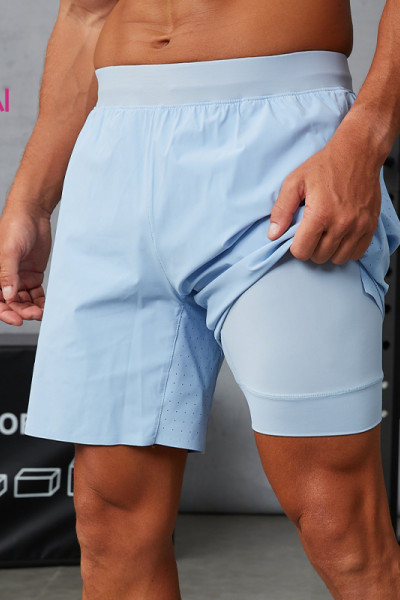
The bottom half carries the functional argument. A five inch lined short with a split hem gives range of motion and airflow, while a half tight gives compression and storage. Public product development across premium men's running lines shows increasing reliance on half tights as the storage-carrying bottom for longer distances. The decision is not aesthetic, it is about how many gels the garment carries without bounce.
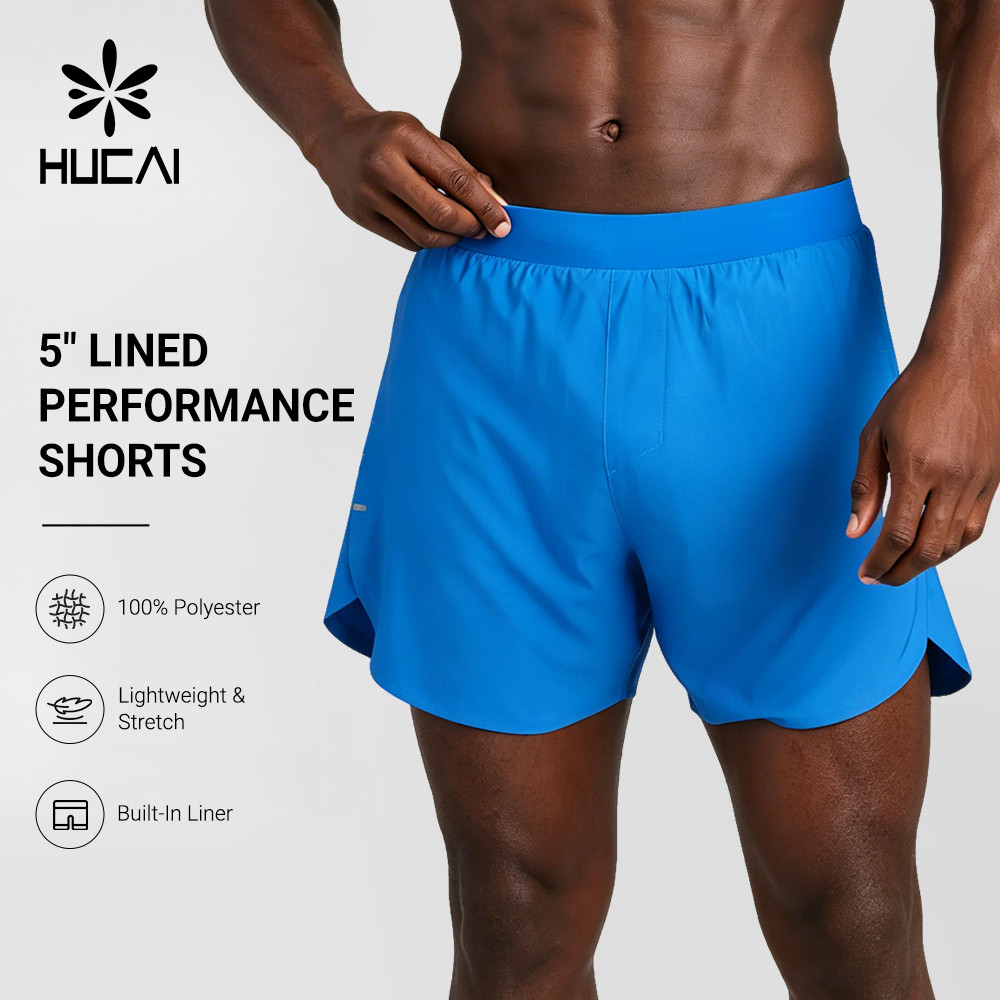
Waistband construction is where race-day shorts fail. A wide elastic band distributes pressure but adds bulk under a singlet, while a narrow band looks cleaner and concentrates load, so once a gel is added the band rolls. Experienced sportswear pattern makers consistently warn that waistband behavior has to be tested loaded, because a band that sits correctly on a table will climb once the garment is full.
The interface between top and bottom matters more than either piece. A singlet hem ending exactly at the waistband creates a double layer at the one place the body flexes most. Dropping the hem two to three centimetres, or shortening it to sit above the band, removes the friction zone entirely. That is a pattern decision rather than a fabric decision, and it costs nothing before sampling.
4. Training: The Volume Block That Carries the Capsule
Training pieces do the commercial work of the capsule because they are bought in multiples and worn weekly. They also carry the durability burden. A race singlet may be worn four times a season, while a training long sleeve may go through two washes a week for six months, which changes what the fabric has to survive.
Long sleeves are the most useful training style in a marathon capsule because they cover three use cases: cool-morning runs, warm-up, and layering under a shell in wind. The construction decision that matters most is sleeve attachment. Raglan removes the shoulder seam from the point of maximum arm swing and grades more easily, while set-in sleeves give a cleaner shoulder line at the cost of a seam sitting on the deltoid.
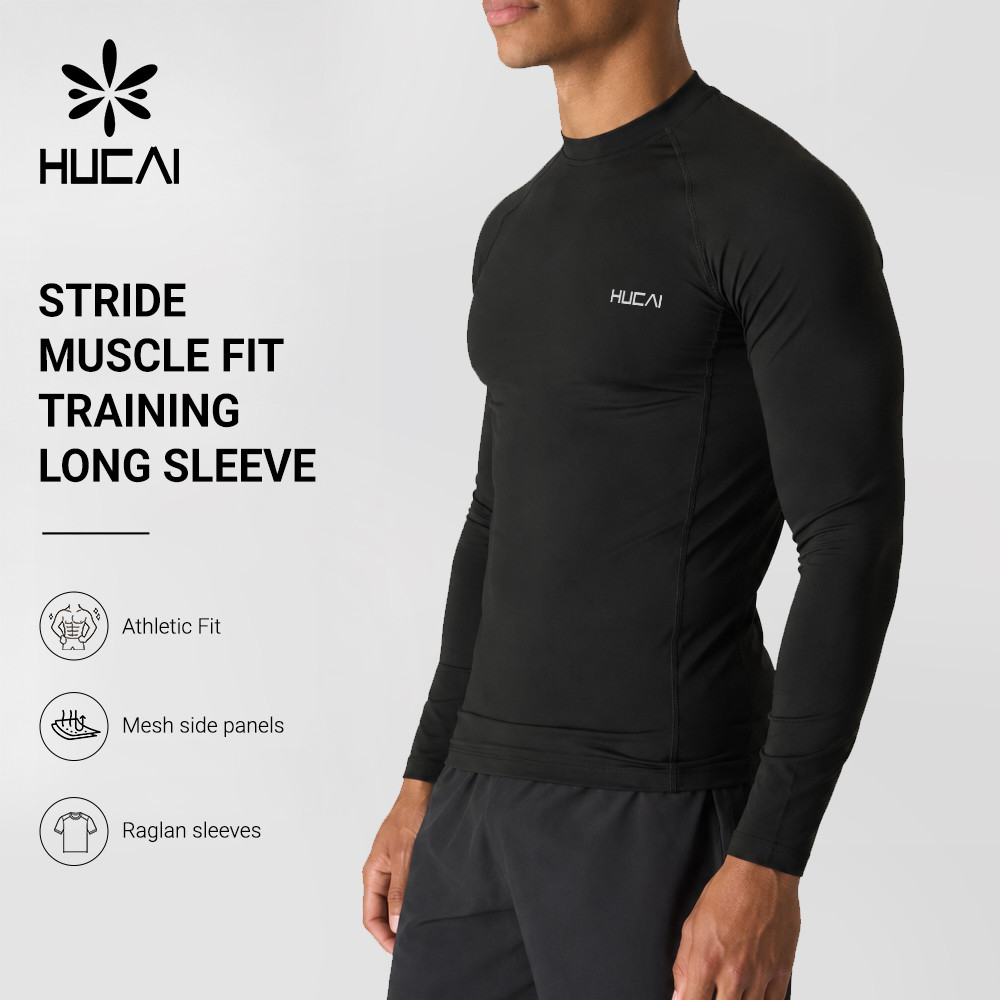
Mesh placement is the second decision. Feedback across dedicated training and running subreddits frequently cites overheating along the spine and under the arms rather than the chest, which matches how heat accumulates under a pack. Mapping mesh to the side panel and upper back solves the real problem while leaving the chest intact for branding.
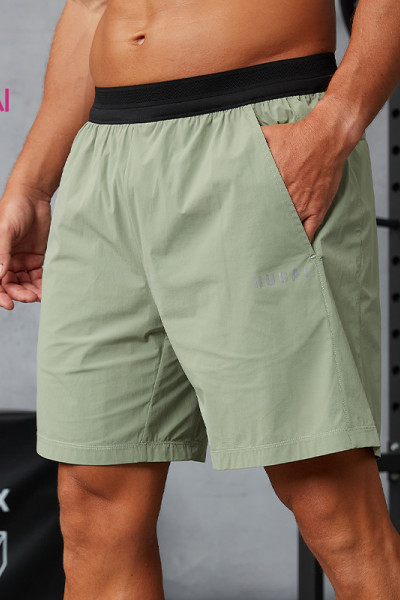
Shorts in the training block should not simply be the race short in a heavier fabric. Inseam, liner and pocket decisions change with the job. A seven inch inseam with a liner suits general training, while a five inch unlined shell over a compression liner suits sessions mixing running and gym work. Storage is covered in our guide to running shorts storage systems, and the same logic applies inside a capsule.
Compression tights are the piece most often left out and most often requested by serious runners. The common mistake is treating compression as tightness. What the garment needs is a graduated fit that stays put at the knee without restricting the hip, which depends on panel construction, gusset design and knit recovery rather than reduced circumference. Under ASTM D2594 stretch and recovery testing, fabrics with identical elongation can behave differently after repeated loading, which shows up as a tight that sags at the knee after twenty runs.
5. Recovery: Warmth, Softness and Off-Run Wear
Recovery pieces are the highest-margin items in a marathon capsule and the easiest to get wrong, because they follow a different logic. A hoodie is judged on hand feel, structure and shape retention rather than breathability per square metre, which makes it a separate fabric family with its own tests.
The first decision is weight. A brushed fleece in the 280 to 320 gsm range reads as a legitimate recovery layer without becoming a winter coat, while heavier weights push the garment into a different price and shipping bracket. The second is shoulder construction. A drop shoulder gives the relaxed silhouette most running brands want, but it moves the sleeve seam down the arm, which changes how the cuff sits and how the garment grades between sizes.
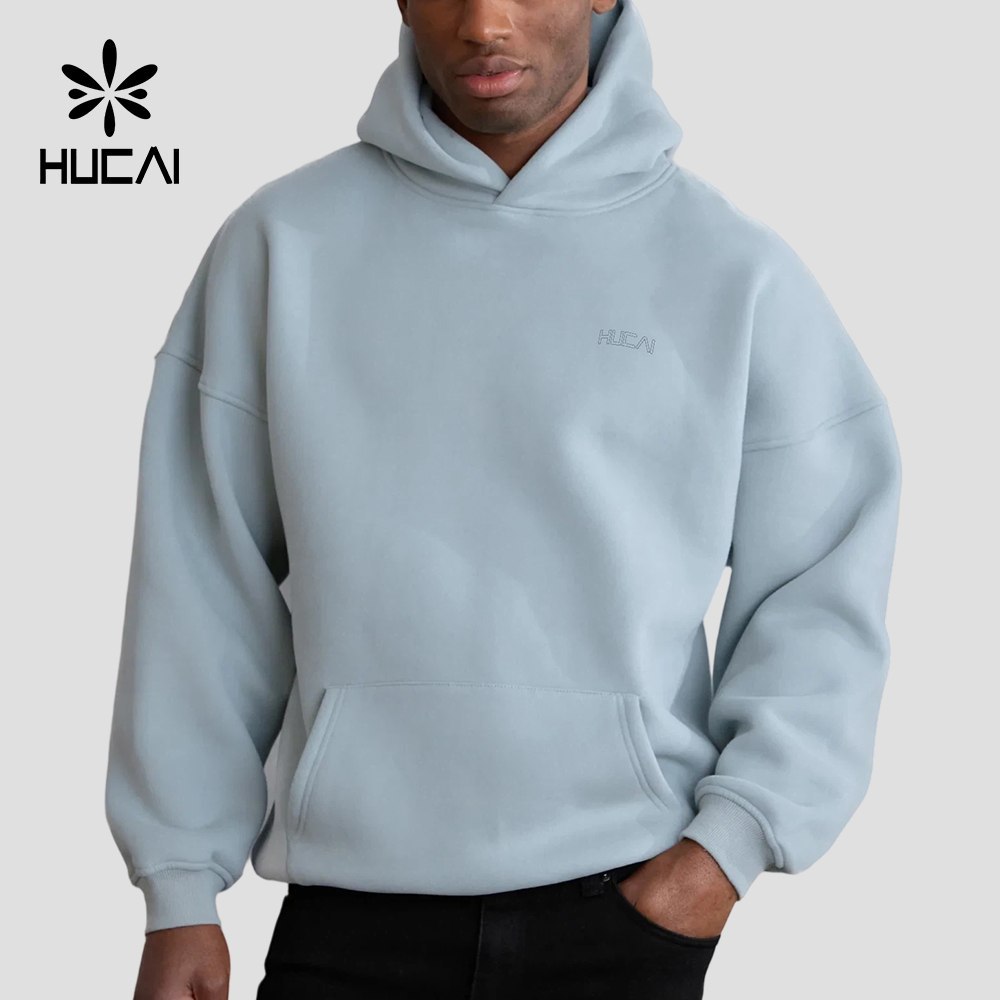
Shrinkage is the hidden risk in recovery. Under ISO 6330 dimensional stability testing, cotton-rich fleece and synthetic knits move at different rates, so a capsule mixing the two shows a size mismatch after the first home wash even when both garments passed their own tests. The fix is either a shared fiber family or a shrinkage allowance built into the recovery pattern.
Joggers inherit the same logic: a rise that works standing and seated, a taper that clears the shoe without gathering, and a pocket bag that does not print through. Technical apparel merchandisers managing private label bulk production emphasize that recovery pieces are where color matching is hardest, because a heathered fleece and a flat technical knit never match under the same dye recipe, only under a matched lab dip.
6. SKU Architecture, Color Story and Trim Discipline
Once the roles are defined, the SKU count becomes a planning exercise rather than a creative one. A workable first capsule is two race-day styles, four training styles and two recovery styles. That is eight styles, which merchandises as a collection without exhausting the sampling budget.
| Role | Style count | Example lineup | Colorway logic |
|---|---|---|---|
| Race day | 2 | Race singlet plus five inch lined short, or singlet plus half tight | One hero color, one core black or navy |
| Training | 4 | Long sleeve, performance tee, five to seven inch short, compression tight | Core black plus one seasonal accent carried from race day |
| Recovery | 2 | Hoodie, jogger | One neutral that sits between the two technical colors |
Color is where capsules break. A range built from three fabric bases needs three separate lab dips, and a black on brushed fleece reads warmer than a black on flat knit even when both are approved against one reference. Limit the capsule to two or three colorways and approve them as a set.
Trim discipline is the cheapest cohesion. If the race singlet uses a matte silicone logo and the training tee uses a glossy heat transfer, the range looks assembled rather than designed. HUCAI activewear keeps trim and label libraries so drawcord tips, elastic, woven labels and care labels can be standardized across a capsule instead of re-sourced per style, which also cuts the components needing separate approval.
7. Validating the Capsule in One Sample Round
A capsule should be validated as a set, not style by style: a first round proving fit and construction per style, then a second round proving the interfaces across styles. The second round is the one most programs skip, and the one that prevents bulk-stage surprises.
The interfaces worth testing are specific. Put the singlet on over the race short and check hem and waistband interaction while running. Load the short pocket with the intended weight and re-check the band. Wash one race piece and one recovery piece together under the care label instructions, then compare hem lengths and color. Measure the same size across all styles against the specification.

Pattern and sample teams at HUCAI activewear treat the second round as a measurement exercise rather than a look review, because most capsule-level defects are dimensional. A cuff two centimetres short, a jogger rise sitting one size off, or a waistband that relaxes after a wash will not be visible on a hanger and will not be caught by visual inspection.
Wear testing closes the loop. Standard practice for running kit is at least one long session at race pace in each race-day style, because chafing and heat build-up only appear under sustained load. Community feedback on this point is consistent, which is why experienced buyers refuse to approve a race singlet from a static fitting alone.
8. From Approved Sample to Repeatable Bulk
The gap between an approved capsule sample and a repeatable bulk run is where most of the cost hides. A sample is made by a sample room with time to adjust; bulk is made on a line with a schedule. The variables that change are fabric lot, cutting accuracy, operator consistency and inspection coverage.
Pre-production review is the control point. Before bulk starts, the approved sample, measurement sheet, fabric and trim confirmations and color approvals should be reviewed together, with the cutting ticket released only after that review. For a capsule, the review should also confirm that one fabric lot is allocated across the styles sharing a color, because splitting a lot between a race piece and a training piece is how shade differences enter a range.

Inspection coverage should be defined in AQL 2.5 terms rather than described loosely, with checkpoints at cutting, in-line sewing and final inspection. AQL 2.5 is a sampling standard, not a zero-defect promise, so the value comes from what is measured at each checkpoint: critical dimensions, seam strength, logo placement and shade against the approved standard.
Production visibility matters more for a capsule than a single style, because the pieces have to land together. If the hoodie is ready three weeks before the singlet, the range cannot ship as a collection. MES and ERP follow-up at HUCAI activewear keeps fabric, trim, pattern, sample, bulk and QC status visible across the styles in one program, so scheduling decisions are made against the whole capsule rather than individual orders.
Decision Check Before You Commit to a Range
Run this list before approving a marathon capsule for sampling. Each line is a decision that is expensive to reverse once bulk planning starts.
- Role clarity: every style is assigned to race day, training or recovery, with no orphan styles between roles.
- Fabric families: no more than two technical bases plus one recovery base, with recovery shrinkage behavior confirmed against the technical pieces.
- Style count: six to nine styles in the first range, with a defined carryover plan for the second season.
- Color set: two or three colorways approved as a set across all fabric bases, not style by style.
- Trim consistency: one logo method per role, shared drawcord, elastic and label specifications across the capsule.
- Interface tests: singlet and waistband interaction, loaded pocket behavior, and a combined wash test scheduled in the sample round.
- Supplier checkpoints: ask any men's activewear manufacturer how they confirm sample-to-bulk consistency, and expect answers about pre-production review, measurement tolerance and AQL 2.5 inspection rather than about equipment alone. HUCAI activewear documents these checkpoints per style so the capsule can be audited as a program.
Founder's Insight: Jean Yuan on the Cost of a Shared Fabric Family
Jean Yuan, Founder of HUCAI activewear, has spent more than two decades on pattern tables and factory floors, and frames the capsule decision as a cost decision rather than a design one.
"Brands come in with a beautiful range plan and assume the expensive part is the sampling. It is not. The expensive part is discovering in the second season that four styles share a color name but not a dye recipe, or that the recovery hoodie shrinks two centimetres more than the training tee because nobody washed them together. At HUCAI activewear we push brands toward one or two fabric families early, even when it feels restrictive, because a shared base means shared lab dips, care instructions and measurement behavior. The capsule then behaves like a system instead of eight products photographed together."
He adds a warning about the interface most programs test last: "The seam that fails is rarely the seam you designed. It is the waistband under a loaded pocket, or the singlet hem sitting on a double layer. Those are the places where we insist on a loaded test before bulk, because a two millimetre correction at sample stage costs nothing and the same correction after cutting costs the whole run."
FAQ
How many styles should a men's marathon capsule include?
Six to nine styles is a practical first range: two or three race-day pieces, three or four training pieces and two recovery pieces. A smaller range concentrates sampling budget on the interfaces that break and keeps color, trim and measurement approvals within one cycle.
What is the MOQ for custom men's running apparel?
MOQ discussions often start from 200 pieces per style. The final number depends on fabric, color, size range, trims, logo method and order structure, so it is confirmed against the specific capsule rather than quoted as a fixed rule.
How long does a sample round take for a running capsule?
Sample timing depends on fabric availability, pattern work, logo method, fit adjustment and revision rounds. A capsule on shared fabric families usually moves faster, because fewer materials need sourcing and approval.
Can you develop a capsule if we only have reference images?
Yes. Reference images plus a clear product role, target market and size range are enough to start ODM development. What the pattern room needs early is intended use and fit direction, not a finished tech pack.
Do we need a tech pack before starting OEM development?
A complete tech pack shortens the process because measurements, construction and trims are already defined. Without one, the first stage becomes a specification exercise where fabric, seam type, waistband and logo method are confirmed before sampling begins.
Why do race and training pieces need different fabric weights?
Race pieces optimize for minimum weight, drying speed and low friction, while training pieces optimize for abrasion resistance, wash durability and recovery after repeated loading. A single compromise fabric ends up too heavy for racing and too fragile for training.
How do you keep color consistent across different fabric bases?
Approve the colors as a set, use matched lab dips per base, and allocate the same fabric lot across styles sharing a color. A heathered fleece and a flat technical knit will not match under the same dye recipe, so the match is engineered at the dip stage rather than corrected at inspection.
What usually causes repeated revisions in running capsule sampling?
Unclear product roles, measurements reviewed without a loaded or washed state, and trim specifications that change between styles. Most revision loops trace back to a decision left open in the first review rather than a manufacturing defect.
Final Takeaway
A marathon capsule works when it is planned as a system with three roles, one or two fabric families and a style count small enough to validate properly. The decisions that determine whether it sells through are rarely the visible ones. They are the singlet hem against the waistband, the loaded pocket against the band, the shrinkage gap between a race short and a recovery hoodie, and the color approval made per style rather than per range.
Get those interfaces right at sample stage and the capsule behaves as one product line. Skip them and each piece passes its own inspection while the range fails in the market.
Next Steps
Ready to develop your marathon capsule? Share your tech pack, reference images or target product direction and the team will map the range against the three roles before sampling starts. Start a development conversation.
Have confirmed specifications? Move directly into OEM men's sportswear production with sample-to-bulk coordination, or review ODM development support if the range still needs fabric, fit and collection planning.
Still comparing options? Read the frequently asked questions, check new arrivals for construction references, or review custom running apparel manufacturing before inquiring.
How We Work
HUCAI activewear supports men's running and training capsule development through OEM and private label programs, with in-house pattern and sample development, fabric and trim libraries, logo, label and packaging customization, and production follow-up across sampling, bulk and inspection. Category pages for men's tank tops, men's shorts, men's leggings and tights, performance T-shirts and long sleeves, hoodies and jackets and joggers and sweatpants show the available construction range, and the production capacity overview explains how sampling and bulk are scheduled.
Related Reading
Trust Note
This article describes development practice at HUCAI activewear and general textile testing logic. It does not claim specific certifications, customer names, order volumes, fixed lead times or performance results, because those are confirmed per project. Where industry practice is referenced, the source type is named so your team can verify it independently.