
Home / All
Blog
 When Advanced Performance Fabrics Require Pattern and Construction ChangesSep 30,2026Fabric substitution is a pattern decision, not only a sourcing decision. When stretch, recovery, GSM, shrinkage or drape change, what moves is pattern ease, seam allowance, seam type, binding and elastic tension, waistband structure and stitch density. Five scenarios follow - lighter fabric, higher stretch, lower recovery, thicker spacer and mesh panelling - with the pattern response each triggers and a rule for when a new sample is needed before bulk.
- How to Refresh a Carryover Men's Performance Style Without Rebuilding the Whole ProductSep 29,2026A proven men's activewear style does not need to be rebuilt every season. This guide sets out a five-level carryover refresh ladder: lock the approved pattern, measurement spec and grading, then update colour, fabric surface, trims and branding, or low-risk construction details in ascending order of risk. It explains which changes a block can absorb and which ones force a new sample, with fabric substitution checks and own-brand embroidery, hardware, pocket and utility-cargo detail examples.
- Men's Run Club and Relay Capsule Development: Event Tees, Singlets, Shorts and Lightweight LayersSep 28,2026Run club and relay capsules perform when each piece has one role. This guide covers event tee fit and print placement, singlet armhole and back cut, running short liner and pocket geometry, lightweight warm-up layers, branding methods, colour consistency and the pre-sampling decision list.
- Men's Office-to-Run Activewear: Translating Tailored Visual Codes Into Technical Performance GarmentsSep 25,2026A B2B development guide for men's activewear brands building an office-to-run capsule: how to translate tailored visual codes such as contrast topstitch, clean necklines, waistband construction and straight leg lines into stretch performance garments, and how to hold that silhouette from sample through bulk production.
- How to Build a Men's Base Layer Collection for Cold-Weather Training BrandsSep 24,2026Learn how to build a men's base layer collection for cold-weather training. This guide covers fabric selection, fit engineering, seam construction, and collection planning for private label and growing gym wear brands.
- Spacer Knit for Men's Performance Sets: Structure, Recovery, Warmth and Shape RetentionSep 24,2026Spacer knit is a three-layer knit whose internal air layer provides structure, moderate warmth and shape retention. This guide explains where spacer knit belongs in men's performance sets, how it compares with fleece and French terry, what fails first in recovery and wash, and what should be confirmed at sample stage before bulk.
- How to Build a Men's Base Layer Collection for Cold-Weather Training BrandsSep 23,2026A manufacturer-level guide for growing brands and private label buyers planning men's base layer collections for cold-weather training. Covers compression levels, fabric weights, coverage variants, seam logic and layering compatibility.
- Men's Grid Base Layer Development: Thermal Mapping, Stretch Recovery and Next-to-Skin ConstructionSep 23,2026A technical guide to men's grid base layer development for running and Nordic brands. Covers grid knit structure and how it shapes heat, air and moisture movement, GSM and yarn choices, what determines stretch recovery and how to measure it during sampling, flat seams and gusset placement on a next-to-skin garment, neck opening and body fit, layering under midlayers, a pre-sampling decision checklist, and the boundary between a thermal base layer and compression.
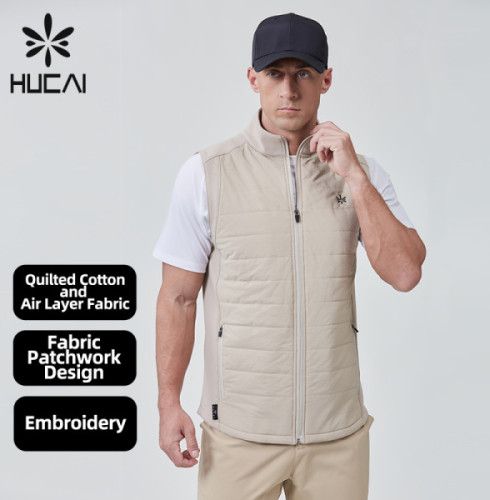
- Men's Performance Vest Development: Arm Mobility, Wind Protection, Insulation Zones and PackabilitySep 17,2026Many brands plan a vest as a jacket with the sleeves removed, then find the armhole twists, the back runs hot and the piece cannot be packed. This guide defines a men's performance vest as an independent layering tool: front shell and back ventilation zoning, armhole shape and arm mobility, light insulation zones, zipper, hem and pocket decisions, and packability. Includes a climate and capsule table, an eight-point decision check before sampling, and FAQ answers for OEM and ODM development.
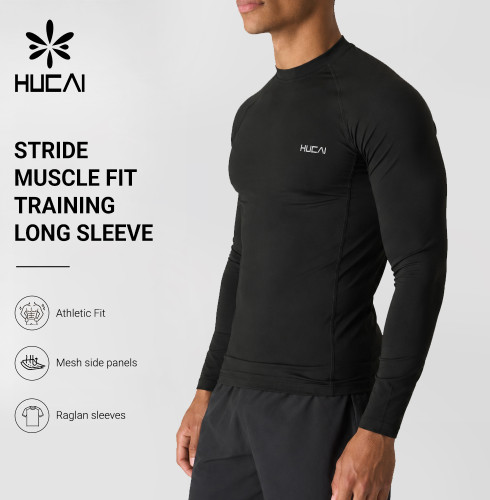
- Men's Running Long Sleeve Development: Sleeve Articulation, Cuffs, Thumbholes and Layering LengthSep 16,2026A men's running long sleeve is an independent development category, not a short-sleeve block with added sleeve length. This guide covers the four decisions that decide whether the garment performs on the road: sleeve articulation and sleeve pitch, cuff and thumbhole construction, body length and hem drop for layering, and the version split between transitional and cold-weather pieces. It includes sample-table checks, a version comparison table and an eight-point pre-sampling decision list.
- Race-Day vs Training-Day Men's Running Tops: Fabric Weight, Fit, Ventilation and DurabilitySep 15,2026Race-day and training-day men's running tops are developed against different priorities. This guide compares fabric weight and GSM, fit ease, ventilation route, seam bulk, logo weight, durability expectation and coverage, then explains which elements can share a pattern block, fabric family and trim system, and which must stay role-specific. It includes a race-day vs training-day comparison table, a pre-sampling decision check and FAQ for running brands and private label buyers.
- How to Choose Men's Activewear Fabric Weights for Seasonal Transitions: GSM Guide for BrandsSep 14,2026A B2B guide for startup brands on choosing men's activewear fabric weights by GSM. Covers seasonal mapping, product category ranges, fiber impact, and sample-to-bulk consistency.
Are you looking for a reliable manufacturer of down home textile products?
We can quickly provide customers with market analysis, technical support and customized services.Get In Touch
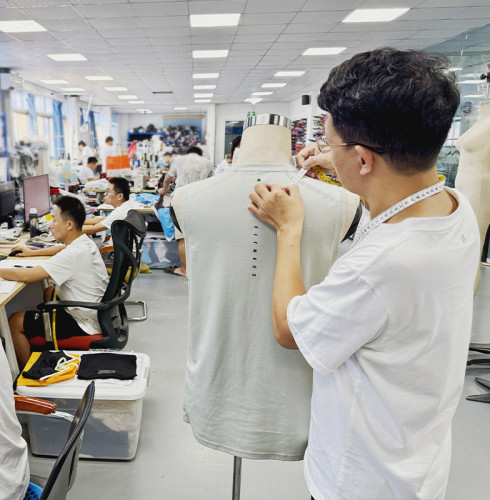
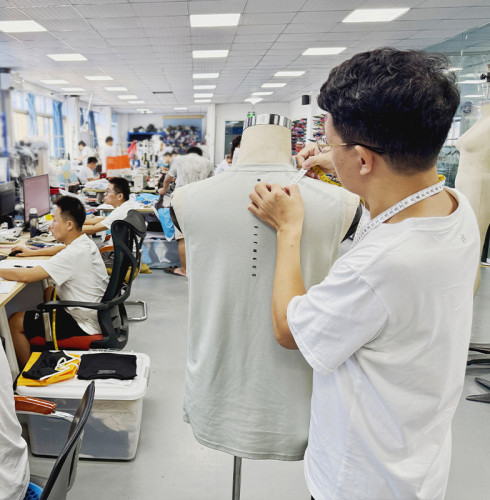
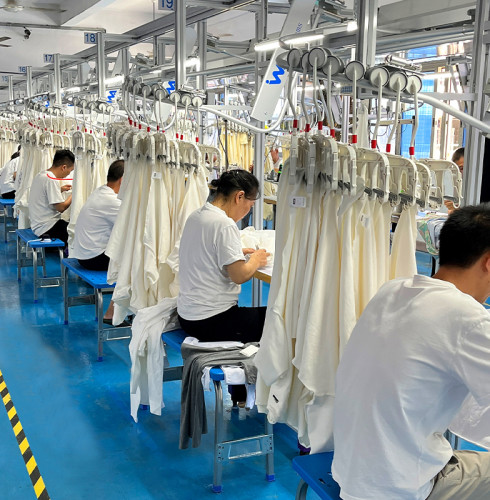
Hucai activewear manufacturer has 25 years of experience in producing fashion sportswear. We specialize in offering one-stop OEM and ODM services to sportswear brands and fitness influencers in Europe, the USA, Australia, and the Middle East. Our team of 25 professionals provides customized proposals and a wide range of design options.With over 100 skilled workers, 15 technical staff, and 4 pattern makers, we use MES systems and smart equipment, backed by a 5-step quality control process. Hucai is BSCI certified and has a global logistics network to ensure quality and timely delivery. For any inquiries, please feel free to contact us. We look forward to working with you!
- Name
- Phone
- *Title
- *Content
Please pay attention to the email with the suffix “@hcsportswear.com”or“@fcsportswear.com”.