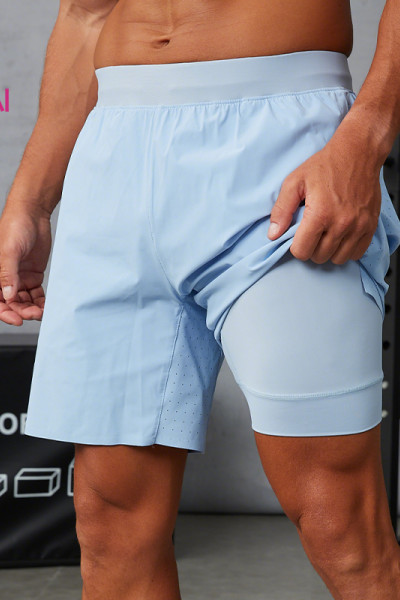
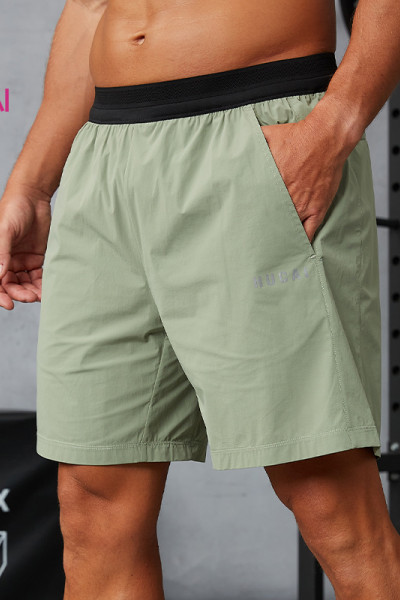
Why Men's Gym Shorts Samples Fail: Phone Pocket Bounce, Waistband Twist, Liner Ride-Up and Bulk Consistency
Men's gym shorts samples usually fail for development reasons, not because the style idea is wrong. Phone pocket bounce, waistband twist, liner ride-up, anti-chafe discomfort and bulk inconsistency often come from fabric, pattern, liner, pocket and construction details that were not reviewed before sample approval.
HUCAI activewear supports private label men's activewear brands with OEM / ODM development, sample review, fabric and trim discussion, pattern support, quality checkpoints and sample-to-bulk coordination. This guide helps brands diagnose why custom men's gym shorts samples fail and what should be checked before moving into bulk production.
Quick Answer
Men's gym shorts samples fail when the product is approved visually but not tested as a functional garment. A pocket may bounce because pocket depth, opening angle, liner tension or waistband support is not balanced. A waistband may twist because elastic width, stitching or fabric recovery is not stable. A liner may ride up because length, seam placement, compression level or recovery is wrong. Bulk inconsistency often happens when fabric, trims, measurements, construction and QC checkpoints are not clearly confirmed before production.
Table of Contents
Who This Article Is For
This article is for B2B buyers who are developing custom men's gym shorts, training shorts, running shorts, lined shorts, linerless shorts or compression-liner shorts and want to understand why a sample may fail before bulk production.
```Growing Gym Wear Brands
For brands with reference samples or competitor shorts, this guide helps identify why the first sample may not match the intended use scenario.
Private Label Buyers
For buyers adding logo, labels, packaging, liner, pockets or trims, this guide explains which construction details can create sample and bulk risk.
Established Brands
For brands with tech packs, this guide can support OEM sample review before confirming pre-production samples and bulk standards.
Startup Brands
For early-stage brands, this guide helps avoid judging samples only by color, logo and flat product photos.
Why Men's Gym Shorts Samples Fail
A men's gym shorts sample can look correct in photos and still fail during movement. The issue may not be the design idea. It may be pocket depth, waistband construction, liner recovery, fabric weight, seam placement, side split balance or a detail that was not tested before approval.
This is why sample review should not stop at color, logo and overall silhouette. For private label gym shorts, brands need to test how the sample behaves during real use: squatting, running, sitting, phone storage, stretching, lifting and repeated movement.
If your brand is still defining the structure, the men's training shorts collection can help compare lined, linerless, quick-dry, compression-liner and technical pocket directions before sample approval.
```1. Sample Failure Map: Problem, Cause and Review Point
Failure diagnosis works best when the team separates what the customer sees from what may have caused it. A sample comment such as "the pocket is not good" or "the short feels uncomfortable" is too vague. The manufacturer and buyer need to identify the specific development cause.
```| Sample Problem | Likely Development Cause | What to Review |
|---|---|---|
| Phone pocket bounces | Pocket depth, opening angle, liner tension, shell stretch or waistband support is not balanced. | Test with actual phone size during running, squatting, sitting and walking. |
| Waistband twists or rolls | Elastic width, stitching structure, drawcord channel, fabric recovery or waistband height may be unsuitable. | Review waistband construction after movement and wash testing. |
| Liner rides up | Liner length, compression level, fabric recovery, seam placement or leg opening tension may be wrong. | Test squats, lunges, running steps and sitting comfort. |
| Inner thigh friction | Seam placement, stitch type, liner edge, gusset direction or fabric handfeel may cause rubbing. | Review anti-chafe construction during repeated movement. |
| Shorts feel too thin | Shell fabric weight, opacity, handfeel or stretch direction may not match the product role. | Check fabric weight, opacity, recovery, drape and target market positioning. |
| Bulk feels different from approved sample | Fabric lot, trims, measurement tolerance, pattern update or construction standard was not locked clearly. | Confirm pre-production sample, fabric, trims, measurements and QC checkpoints before bulk cutting. |
Product references can help make these comments clearer. For example, a four-way stretch men's gym shorts reference can be used to discuss fabric recovery, pocket behavior and movement comfort before sampling.
```2. Why Phone Pockets Bounce
Phone pocket bounce is one of the most common sample issues in men's training shorts. The pocket may look clean on a flat sample, but once the wearer starts running or lifting, the phone can move, pull the fabric or drag the liner.
The cause is usually not only pocket size. Pocket bounce can come from pocket depth, opening angle, pocket bag fabric, shell stretch, liner tension, waistband support or the position of the pocket in relation to the body.
```Pocket Depth
If the pocket is too shallow, the phone feels unstable. If it is too deep, access may become awkward or the pocket may pull down during movement.
Opening Angle
The pocket opening affects how easily the phone enters and whether it moves during running, squats or sitting.
Support System
Waistband tension, liner recovery and shell stretch decide whether the pocket stays stable or bounces during training.
Manufacturer Insight: Test the Pocket With a Real Phone
During sample review, HUCAI activewear checks phone pocket function with the intended phone size, not only with flat measurements. A pocket that looks correct in photos may still fail when the phone weight interacts with liner tension, shell stretch and waistband support.
For private label gym shorts, the pocket should match the product role. Running shorts may need closer phone control. Gym-to-street shorts may prioritize easier access and cleaner pocket appearance. The sample review should reflect the intended use.
3. Why Waistbands Twist, Roll or Dig In
Waistband problems can make a sample feel unprofessional even when the rest of the short is good. A waistband may twist after washing, roll during squats, dig into the waist or fail to support a phone pocket.
Common causes include elastic width, elastic quality, waistband height, stitching method, drawcord channel, fabric recovery and how the liner is attached to the waistband. For lined or compression-liner shorts, the waistband must support both shell and liner without creating too much pressure.
```| Waistband Issue | Possible Cause | Sample Review Point |
|---|---|---|
| Waistband twists after washing | Elastic is not fixed well enough, or the stitching structure does not stabilize the waistband. | Check stitch lines, elastic width, wash behavior and whether the waistband returns flat. |
| Waistband rolls during squats | Waistband height, elastic tension or body rise may not match movement. | Test squats, lunges, running steps and sitting comfort before approval. |
| Waistband digs in | Elastic tension may be too strong, or the waistband edge may not be soft enough. | Review pressure, edge feel, size grading and whether the waistband supports without discomfort. |
| Drawcord feels bulky | Drawcord type, channel size or knot position may add unnecessary pressure. | Check drawcord thickness, exit position, internal channel and wearing comfort. |
Waistband decisions also connect with fabric selection. For deeper material review, see the men's activewear fabric choices page before confirming shell fabric, liner fabric and waistband construction.
```4. Why Liners Ride Up
Liner ride-up usually happens when the liner does not match the movement, body coverage or shell structure. A liner can ride up because it is too short, too tight, too loose, too slippery, poorly shaped or made with fabric that does not recover well.
Compression-liner shorts require especially careful review because the liner is part of the performance structure. It affects support, coverage, pocket stability, anti-chafe comfort and how the short feels during repeated movement.
```Liner Length
If the liner is too short, it may ride up. If it is too long, it may show under the shell or change the style proportion.
Fabric Recovery
If the liner stretches but does not recover, it may lose support, pull the shell or feel loose after movement.
Seam Placement
Inner seams, liner edge, gusset direction and pocket seams can create friction if they are not positioned correctly.
5. Anti-Chafe Seams, Bonded Hem and Construction Risk
Anti-chafe comfort is not created by one label or one stitch name. It depends on seam placement, stitch type, liner edge, fabric handfeel, inner thigh movement and whether the construction suits the product role.
Bonded hems, no-sew edges and low-bulk construction can help create a cleaner technical look, but they should be reviewed according to fabric compatibility, wash behavior, stretch direction, cost factors and bulk repeatability.
```| Construction Detail | Possible Risk | What to Review Before Bulk |
|---|---|---|
| Inner thigh seam | Can create friction during running, squats or long training sessions. | Check seam position, stitch type, softness and repeated movement comfort. |
| Liner edge | Can dig in, roll or rub if edge tension is not suitable. | Review liner edge, compression level, leg opening and fabric recovery. |
| Bonded hem | May not hold well if fabric compatibility or wash behavior is not reviewed. | Confirm bonding method, sample wash behavior, stretch effect and bulk repeatability. |
| Side split | May open too much, expose liner or affect movement balance. | Review split depth, shell drape, inseam, liner length and target market preference. |
For branding and construction details such as heat transfer, embroidery, bonded details, drawcords, zippers and custom trims, you can also review HUCAI activewear's custom craftsmanship and branding support.
```Diagnosing a Men's Gym Shorts Sample Problem?
Share your sample photos, reference shorts, fit comments, target use scenario, fabric direction, liner structure, pocket issue, waistband concern and estimated order plan. HUCAI activewear can help review whether the issue is related to pattern, fabric, liner, pocket, waistband, construction or sample-to-bulk confirmation.
6. Why Bulk Shorts Feel Different From the Approved Sample
Bulk inconsistency is one of the biggest risks in private label gym shorts development. A brand may approve a sample, but the bulk pieces feel slightly different in handfeel, stretch, waistband pressure, liner recovery, measurement or pocket stability.
This often happens when sample approval does not clearly lock fabric, trims, pattern, measurements, construction, logo method, packaging and QC checkpoints. If a small detail changes after approval, the final bulk product may no longer match the approved sample.
```| Bulk Difference | Likely Cause | Control Point |
|---|---|---|
| Handfeel changes | Fabric lot, finishing, weight or supplier variation may be different. | Confirm approved fabric standard, fabric lot and pre-production review. |
| Stretch feels weaker | Fabric recovery, spandex behavior or finishing may not match the approved sample. | Review stretch direction, recovery expectation and bulk fabric inspection. |
| Waistband pressure changes | Elastic, stitching, grading or waistband construction may not be controlled clearly. | Confirm elastic, waistband spec, stitch method and measurement tolerance. |
| Pocket placement shifts | Pattern, seam allowance, marking or construction standard may not be clear. | Confirm pocket position, pocket depth, zipper placement and QC checking points. |
| Logo placement varies | Artwork, placement standard, size grading or production marking may not be locked. | Confirm logo method, artwork size, placement chart and pre-production sample. |
For brands with tech packs and ready specifications, the OEM men's activewear manufacturing path is usually clearer because fabric, trims, measurements and construction can be checked against defined standards. For brands with reference images or early product direction, ODM men's activewear development support can help clarify sample priorities before bulk planning.
How HUCAI activewear Reviews Sample-to-Bulk Risk
Sample-to-bulk control starts from confirmed details. HUCAI activewear reviews fabric, trims, pattern, measurements, sample comments, construction details, branding and packaging before production follow-up. MES and ERP coordination can support clearer order and production visibility, while AQL 2.5 inspection logic can support quality review during the production process.
These systems do not replace clear sample approval. They work better when the brand has already confirmed fabric behavior, liner structure, pocket placement, waistband construction, logo position and packaging before bulk production starts.
7. Sample Review Checklist Before Approving Men's Gym Shorts
A practical sample review should be specific enough for both the buyer and manufacturer to understand what needs to be changed. Instead of saying "the sample feels wrong," the team should identify the exact problem and connect it to a development cause.
```| Review Area | Questions to Ask | Why It Matters |
|---|---|---|
| Use scenario | Is the short mainly for running, lifting, HIIT, hybrid training or gym-to-street use? | Different use scenarios need different inseam, fabric, pocket, liner and waistband decisions. |
| Fit and movement | Does the short work during squats, lunges, running, sitting and stretching? | Movement reveals problems that flat photos cannot show. |
| Fabric behavior | Does the shell recover after stretch? Does the liner feel dry and stable? | Fabric recovery affects pocket stability, liner ride-up, waistband pressure and bulk consistency. |
| Pocket system | Does the phone pocket bounce? Is the zip pocket secure and comfortable? | Pocket function affects real user experience and sample revision risk. |
| Waistband | Does the waistband roll, twist, dig in or fail to support pocket weight? | Waistband behavior affects comfort, support, movement and product quality perception. |
| Liner | Does the liner ride up, pull, feel too tight or create friction? | Liner issues can change whether the whole short is accepted or rejected. |
| Construction | Are seams, bonded details, side split and anti-chafe areas comfortable? | Construction details affect durability, comfort and bulk production repeatability. |
| Bulk readiness | Are fabric, trims, measurements, logo, packaging and QC points confirmed? | Bulk consistency depends on clear standards before production starts. |
Brands can also review broader men's activewear FAQ topics before sending an inquiry, especially if they are still comparing OEM, ODM, MOQ factors, sampling, fabric and bulk production questions.
```Ready to Fix a Men's Gym Shorts Sample Issue?
Have tech packs ready? Send your specifications for OEM sample-to-bulk review. Have reference shorts or first-round samples? Share photos, comments and target use scenario for ODM development discussion. Still comparing options? Start by identifying whether the issue is pocket, waistband, liner, fabric, construction or bulk consistency.
FAQ: Why Men's Gym Shorts Samples Fail
These questions help private label men's activewear brands diagnose gym shorts sample problems before approving OEM or ODM development for bulk production.
```Why do men's gym shorts samples fail even when they look good in photos?
Men's gym shorts samples can fail because flat photos do not show movement problems. Pocket bounce, waistband twist, liner ride-up, inner thigh friction and fabric recovery issues usually appear during running, squats, sitting or repeated training movement. A sample should be reviewed as a functional garment, not only as a visual style confirmation.
What causes phone pocket bounce in men's training shorts?
Phone pocket bounce often comes from pocket depth, opening angle, shell fabric stretch, liner tension, phone weight or weak waistband support. A pocket should be tested with the actual phone size during movement. If the phone pulls the liner, shifts during running or creates pressure while sitting, the pocket placement or structure may need revision before bulk production.
Why does the waistband twist or roll after sampling?
Waistband twist or rolling can come from elastic width, stitching method, drawcord channel, waistband height, fabric recovery or how the liner is attached. The waistband should be reviewed after movement and wash testing. For lined or compression-liner shorts, the waistband must support both shell and liner without creating too much pressure or bulk.
Why does the liner ride up in compression-liner shorts?
Liner ride-up can happen when liner length, compression level, fabric recovery, leg opening, seam placement or waistband connection is not balanced. Making the liner tighter is not always the correct fix. Brands should review movement comfort, coverage, inner seam position, recovery after stretch and whether the liner length matches the shell inseam.
How can brands reduce anti-chafe problems in men's gym shorts?
Brands can reduce anti-chafe problems by reviewing seam placement, stitch type, liner edge, gusset direction, inner thigh movement and fabric handfeel during sampling. Anti-chafe comfort should be tested through repeated movement, not only by touching the fabric. For lined shorts, the liner edge and seam position are especially important.
Why does bulk production sometimes feel different from the approved sample?
Bulk production may feel different if fabric lot, trims, measurements, pattern updates, construction standards or QC checkpoints are not clearly confirmed. Before bulk cutting, brands should confirm pre-production sample, fabric standard, elastic, drawcord, zipper, liner fabric, pocket placement, logo method, packaging and measurement tolerance.
What should brands prepare before asking a manufacturer to fix a sample?
Brands should prepare clear photos, fit comments, target use scenario, reference shorts, fabric direction, liner preference, pocket issue, waistband concern, measurement comments and desired revision outcome. The more specific the feedback is, the easier it is to identify whether the issue comes from fabric, pattern, liner, pocket, waistband or construction.
Can HUCAI activewear help diagnose gym shorts sample problems?
Yes. HUCAI activewear can support sample review for custom men's gym shorts projects based on tech packs, reference images, first-round samples or product direction. For OEM projects, ready specifications can be reviewed against fabric, trims, measurements and construction. For ODM projects, reference samples can be translated into clearer fabric, fit, liner, pocket and sample priorities.
Final Takeaway
Men's gym shorts samples usually fail because key development details were not tested before approval. Phone pocket bounce, waistband twist, liner ride-up, seam friction and bulk inconsistency are not random problems. They are signals that fabric, pattern, pocket, liner, waistband, construction or sample-to-bulk standards need to be reviewed more carefully.
A stronger sample review process helps private label activewear brands avoid repeating the same problems in bulk production. Instead of approving a sample only by appearance, brands should confirm product role, movement performance, fabric behavior, liner structure, pocket function, waistband construction, branding and QC checkpoints before moving forward.
Send Your Men's Gym Shorts Sample Comments
Ready to diagnose a gym shorts sample issue? Send your tech pack, reference images, sample photos, target use scenario, fit comments, pocket concern, waistband issue, liner feedback, fabric direction, logo method, size range and estimated order plan. HUCAI activewear will help review the next development step based on your project readiness.