Tarmac-to-Trail Men's Running Apparel: How Road and Trail Use Cases Change Product Development
Many running brands build a trail line by taking a road short or top that already sells, changing the color and calling it a trail style. In custom running apparel development and private label activewear projects, that shortcut hides a real problem: on a trail, the use scenario changes what the garment has to do. Storage, abrasion exposure, weather adaptability and layering requirements are not design preferences, they are performance requirements driven by the surface the runner is standing on. This guide compares road and trail use cases for men's running apparel and explains how each difference translates into fabric, construction and pocket decisions. It is written for brands that brief a men's activewear manufacturer before the first sample is cut, and it reflects how HUCAI activewear approaches OEM and ODM development for running apparel.
Quick Answer
Road and trail running apparel are not the same product in two colorways. A road short is developed around weight, airflow and a predictable stride on even ground. A trail short has to carry supplies securely, survive contact with rock, mud and vegetation, and keep the runner moving when the ground underfoot is unpredictable. Those differences show up in four places: abrasion-resistant placement in high-contact zones, secure storage that does not bounce at pace, weather adaptability through light layers and packable shells, and a layering logic that still works when pace and temperature keep changing. Brands that define the use scenario first can then decide what is genuinely shared inside one collection and what has to be developed as a separate product.
Who This Article Is For
This guide is written for running brands adding a trail direction to an existing road collection, private label buyers who need to brief storage, abrasion and layering details without over-specifying the first sample, and product managers reviewing a road style that keeps getting requests for a trail version.
If you are still at the reference-image stage, the same framework applies. You can use the differences below to tell a manufacturer what the garment has to survive before any pattern, fabric or pocket is committed, and that conversation usually saves a sample round.
Why This Guide Starts With the Surface, Not the Colorway
At HUCAI activewear, running programs are reviewed as development work: where the garment will be worn, which zones take contact, what the runner carries, and how the piece layers with the rest of the kit. A road-to-trail decision is easier to make once those questions are answered, because the answers point directly at fabric weight, panel placement and pocket construction. You can see the categories we develop in our custom running apparel range and review how running and training shorts are structured.
Road vs Trail: What Actually Changes in the Garment
A road runner moves on a predictable surface at a relatively steady effort. A trail runner deals with uneven ground, climbing and descending, changing pace, and contact with rock, roots, brush and mud. Those two situations put pressure on different parts of the garment, and the differences are worth writing down before a single fabric is selected.
The first change is contact. On the road, the main wear points are the inner thigh, the seat and the waistband area. On a trail, add the lower leg area near brush and rock, the outer thigh where a runner brushes past vegetation, and any seam that sits where a pack or belt rubs. That changes where abrasion resistance needs to sit, and it changes which seams have to be reinforced or moved.
The second change is carry. A road runner may carry a key, a phone or nothing at all. A trail runner often carries water, nutrition, a phone, a light layer and sometimes poles. That load has to sit against the body without bouncing, which pushes pocket design, waistband construction and top storage toward different priorities than a road singlet needs.
The third change is weather and temperature range. Trail routes often run longer, climb higher and pass through more exposure than a road loop from the front door. A trail program needs a higher tolerance for wind, rain and temperature swings, which is exactly why light layers and packable shells belong in the conversation earlier than they do in a pure road line.
| Use Case Factor | Road Running | Trail Running | What It Changes in Development |
|---|---|---|---|
| Surface and contact | Even, predictable ground | Rock, roots, mud, brush | Reinforced panels and moved seams in high-contact zones |
| Carry requirement | Minimal, often a key or phone | Water, nutrition, phone, light layer | Secure storage, higher pocket capacity, stabilised waistband |
| Weather exposure | Short and usually planned | Longer and less predictable | Packable light shell, wind tolerance, faster drying |
| Pace pattern | Steady effort | Stop-start, climb and descent | Layering logic, ventilation zoning, mobility at the hip and shoulder |
| Visibility need | Partly road traffic | Low light, tree cover, early or late starts | Reflective detail placement that survives washing |
Running Tops: Ventilation, Coverage and Weight on Two Surfaces
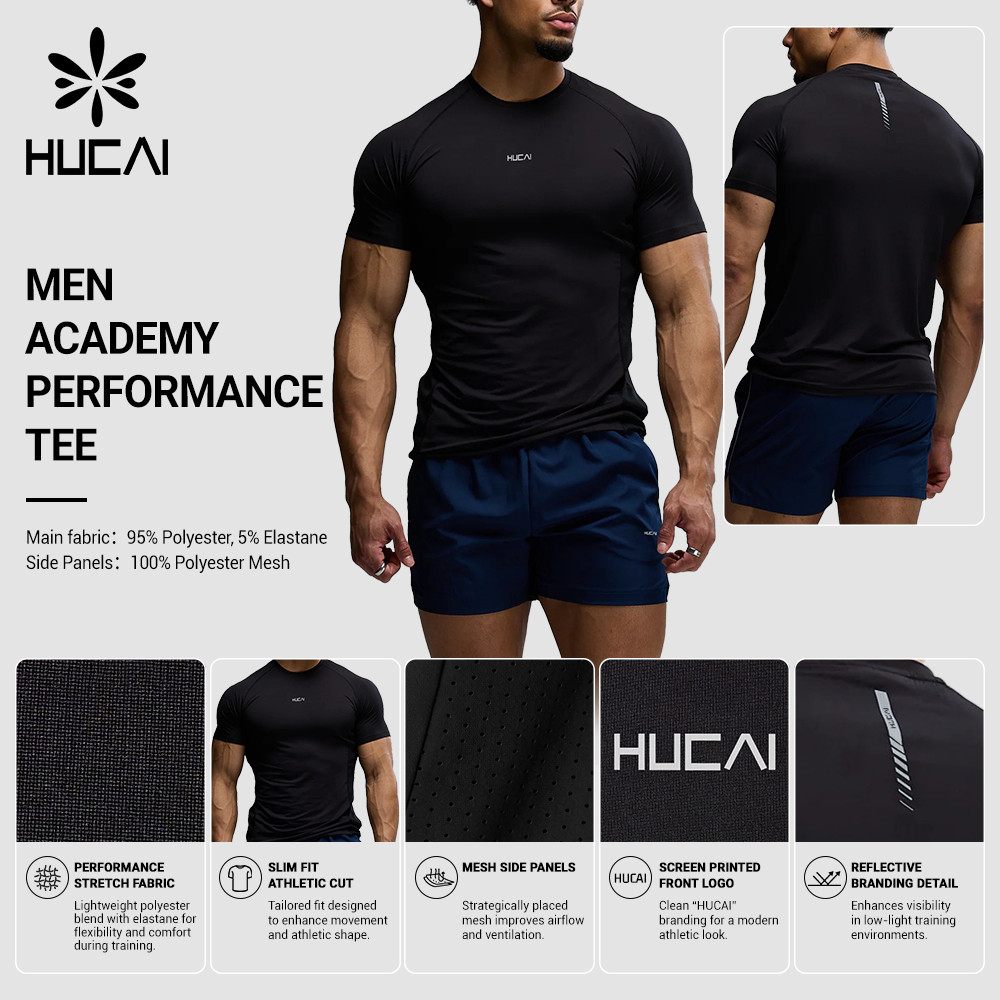
On the road, a men's running top is usually developed around airflow and low weight. That still matters on the trail, but it competes with two other requirements: coverage and abrasion tolerance. A trail top often needs a little more shoulder and upper-arm coverage because the runner may carry a pack or brush against vegetation, and the fabric has to tolerate more contact without pilling or snagging.
Ventilation zoning also shifts. On the road, the upper back and underarm areas carry most of the heat load. On the trail, the runner slows down on climbs and speeds up on descents, so the ventilation plan has to work across a much wider range of effort. A top that is optimised for one steady pace can feel either clammy on the climb or cold on the descent.
Weight and drying behaviour interact with layering. A very light road singlet dries fast but offers almost nothing when the wind picks up on an exposed ridge. A slightly heavier trail top with a denser knit, or a top with a lighter front and a more protective back panel, can be the better base for a layered system. This is one of the clearest places where a shared pattern can still work, as long as the fabric and panel plan are reviewed for the second use case instead of being copied across.
Storage and Carry: A Different Pocket Logic
Storage is where the road-to-trail gap is easiest to underestimate. A pocket that works on a road short can fail completely on a trail, not because the pocket is badly made but because the load is heavier and the terrain moves the garment in different directions.
Three questions decide the pocket system. First, what has to be carried: a key, a phone, gels, a soft flask, a light layer. Second, where the load can sit without bouncing: on shorts, that usually means a waistband or hip position that is stabilised against movement; on tops, it means a pocket placement that stays flat when the runner is climbing with a bent torso. Third, how the load is secured: zip closure, stretch mesh, an elastic opening, or a layered pocket structure that separates a soft flask from a phone.
Pocket capacity and secure storage are usually developed together, because a larger pocket without extra stabilisation will move. When a trail pocket grows, the waistband or the top's hem structure often has to grow with it: wider elastic, a firmer band, a bonded or reinforced hem, or an internal support layer. That is construction work, not a pocket pattern tweak, and it should be planned in the sample brief.
Shorts Development: Inseam, Waistband, Liner and Abrasion
Shorts carry most of the visible difference between a road program and a trail program. Four development decisions do the heavy lifting: inseam length, waistband construction, liner choice and abrasion placement.
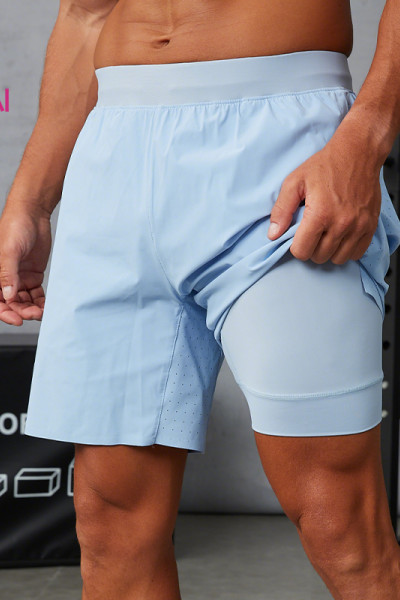
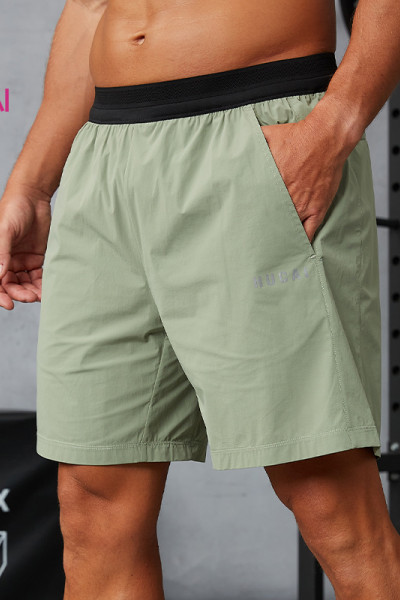
- Inseam. A road short often runs shorter for freedom of movement, while a trail short tends to add a little length for coverage against brush and pack straps. The inseam decision should follow the storage plan, because a longer short with a loaded waistband behaves differently from a short with no carry.
- Waistband. A trail waistband is a structural part of the carry system. It usually needs a firmer elastic, a wider face, and a drawcord or internal adjustment so the load stays put on descents. A road waistband can stay simpler and lighter.
- Liner. A brief or compression liner is common on both, but trail programs more often discuss liner tension and anti-chafe seam placement, because the runner is moving for longer and the garment shifts more with the terrain.
- Abrasion placement. High-contact zones get either a denser fabric, a reinforced panel or a seam that is moved out of the contact path. On a road short this is usually unnecessary; on a trail short it is part of the core specification.
Split hems and side vents deserve a note as well. Ventilation openings on a trail short should be reviewed in motion, because a split that stays closed on the road can open wide when the hip flexes on a climb and expose a seam to contact. The safest approach is to define the opening depth, the reinforcement at the split point and the seam finish together, and then confirm them in a movement review.
Light Layers and Weather Adaptability
Trail running pushes light layers into the plan earlier. A trail runner leaves in cooler conditions, climbs into heat, crosses exposed sections with wind, and may be out long enough for rain to arrive. A packable shell, a light long sleeve or a technical vest often becomes the piece that makes the rest of the kit work.
For a light shell, the development priorities are wind resistance, a water-repellent surface treatment, ventilation, packability and weight. Those goals pull against each other: more protection usually means more weight and bulk, and more ventilation usually means more panels and seams. The practical test is not how the shell performs standing still, but whether it packs small enough to carry when it is not needed and still moves with the runner when it is worn over a base layer.
Packability is a design decision, not a property that appears on its own. Where the shell stuffs, how it is secured when packed, whether it has its own pocket, and how that packed bundle sits against the body all affect the rest of the outfit. It is worth reviewing the packed state during sample approval, because a shell that packs well on a table can still bounce in a waistband during a descent.
Reflective details belong in this conversation too. Trail runners often start early or finish late under tree cover, so reflective trim, a reflective logo or a reflective print placement should be confirmed at development stage together with the logo method, so the visibility feature survives repeated washing and does not crack or lift.
Building a Road-to-Trail Crossover Capsule
A crossover capsule works when it is planned as a small system rather than as a color range. The most practical way to plan one is to sort the pieces by how much of the road version can be reused.
Shared platform, different briefing. Tops and singlets can often share a pattern block across road and trail, provided the fabric, panel plan and seam finishes are reviewed for the trail use case. This keeps the fit language consistent across the collection.
Shared silhouette, different construction. Shorts usually keep the same visual language but change internals: waistband structure, liner, pocket plan and abrasion placement. Keeping the outside simple while the inside is rebuilt is one of the more efficient ways to launch a trail option.
Separate development. Light shells, vests and any piece with a real carry or weather function should be developed as its own product. Trying to make one shell serve both a road warm-up and a long trail run usually produces a piece that does neither job well.
A four-piece starter capsule often looks like this: a running top that works on both surfaces, a trail short with a real storage plan, a light long sleeve for transitional conditions, and one packable shell. That is enough to test the trail direction in the market without rebuilding the whole collection, and it keeps the sample count and the development time in a range a growing brand can manage.
Decision Check
Before you approve a trail sample or brief a crossover capsule, work through this list with your manufacturer.
- Have you defined the trail use case separately from the road use case, including distance, terrain and expected weather?
- Are the high-contact zones identified, and is abrasion resistance specified for those zones instead of applied evenly?
- Does the pocket plan start from what the runner actually carries, and is each item given a secure, stabilised position?
- Has the waistband or hem structure been upgraded to match the extra storage load?
- Does the ventilation plan still work across climbing and descending pace, not only at a steady effort?
- Are the light layers developed as their own pieces, with packability reviewed in the packed state?
- Are reflective details and logo methods specified together so visibility survives washing?
- Is the trail specification carried into the pre-production review so bulk follows the approved sample rather than a simplified version of it?
If any answer is unclear, resolve it before the sample round closes. Use-case decisions cost almost nothing on paper and a full development cycle once fabric is committed.
Manufacturer Insight
At HUCAI activewear, road and trail programs are separated at the brief stage, not at the sample stage. Our development team helps brands translate a use case into fabric weight, panel placement, pocket construction and layering requirements, and our production follow-up keeps those confirmed details visible from the approved sample through to final inspection. That work is supported by AQL 2.5 quality inspection and MES and ERP production follow-up across fabric, trims, pattern, sample, bulk and QC tracking, so the trail specification that was approved is the specification that reaches bulk.
The most common early-stage issue we see is a brand that briefs a trail product with road requirements, then tries to solve storage, abrasion and weather problems one revision at a time. That path adds sample rounds and rarely produces a clean result, because the four factors are linked. Fixing them together at the start is usually faster, and the approved details are easier to protect through production. If your direction is already confirmed, you can send an inquiry with your trail development details, or review our light layer and midlayer development and shorts construction support before briefing.
FAQ
What is the main difference between road and trail running apparel?
The main difference is the use scenario rather than the look. Trail running apparel is developed for contact with uneven ground and vegetation, for carrying supplies securely, and for a wider range of weather and temperature. Road running apparel can prioritise low weight and airflow because the surface, the pace and the conditions are more predictable.
Can we use the same shorts pattern for road and trail?
Often yes for the outer silhouette, but the internals usually need to change. A trail version typically needs a firmer waistband, a different pocket plan, a reviewed liner and reinforcement in high-contact zones. Sharing the pattern keeps the fit language consistent; copying the construction usually produces a trail short that does not carry its load well.
How much storage does a trail running short need?
It depends on how far the runner goes and what they carry. Key, phone, nutrition and a soft flask are the usual items, and each one needs a secure, stabilised position. Capacity should be defined from that list rather than added as a large pocket, because a bigger pocket without extra support tends to move at pace.
What does abrasion resistance mean in running apparel development?
It means placing fabric, panels or seam positions that tolerate repeated contact. On a trail short or top, the relevant zones are usually the outer thigh, the lower leg area, the seat and any point that rubs against a pack or belt. The practical approach is zoned reinforcement rather than making the whole garment heavier.
Do we need a separate light shell for trail, or can a road jacket work?
A road warm-up jacket and a trail shell usually have different priorities. A trail shell needs wind and light rain tolerance, ventilation and packability because it will be carried for part of the run. If a single jacket has to cover both uses, expect to compromise on either weight or protection, and confirm the packed state during sample review.
What should we prepare before contacting a men's activewear manufacturer?
Useful starting points are the intended use case, reference images or an existing style, the items the runner will carry, the expected climate, your size range and your logo and label requirements. A full tech pack is helpful but not required for a first development conversation, and reference images can be enough to start an ODM brief.
What is the MOQ for custom men's running apparel?
For HUCAI activewear, MOQ starts from 100 pcs per style. The exact figure still depends on fabric, color, size range, customization, trims and logo method, so it is confirmed per style once those details are clear.
How do you keep a trail specification stable from sample to bulk?
The approved specification, including fabric, panel placement, pocket construction and seam finishes, becomes part of the pre-production review. Quality checkpoints then confirm that bulk production follows the approved trail build rather than substituting a simpler construction, which is how sample-to-bulk consistency is protected.

Final Takeaway
Road-to-trail is a use-case decision before it is a design decision. Brands that separate the two scenarios, then let that separation drive abrasion placement, storage construction, layering and weather adaptability, get a trail product that performs on the surface it was built for, and they keep the road line clean at the same time.
If you are planning a trail direction, share your intended use case, the items your runners carry and any reference images, and our team can help turn them into a development brief. For brands with confirmed direction, send an inquiry with your running apparel requirements, or contact us to discuss your program. If you are still comparing options, browse our custom running apparel capabilities or read more B2B running apparel guides first.
What You Can Expect When You Work With Us
HUCAI activewear supports OEM and ODM development, private label production, fabric and trim customization, logo, label and packaging work, sample development and bulk production follow-up. For running programs, that means a development brief that separates road and trail requirements, sample review against the approved specification, and production coordination with quality checkpoints. Buyers with confirmed tech packs can move along an OEM path, while brands with reference images and a collection direction can start with ODM development support or an OEM production path.
Related Reading
Continue exploring men's running and performance apparel development: