Small/Growing Brand Capsule Development: How to Build a Focused Men's Activewear Range With Fewer SKUs
Most small and growing men's brands do not fail because they launch too few styles. They fail because the styles they launch do not cover enough use cases to justify the sample rounds, fabric commitments and minimum order they consume. Capsule development is the discipline of buying coverage instead of quantity.
That makes capsule planning a product-development decision before it is a merchandising decision. When a growing team starts private label activewear development with a men's activewear manufacturer, the useful first question is not "how many styles" but "how many product roles this range has to cover, and which custom men's activewear pieces can carry more than one job". At HUCAI activewear, that runs as an OEM/ODM sequence: product role, fabric family, block count, sample order and MOQ planning are settled before artwork and colour cards are finalised.
This guide explains how a small or growing brand can build a focused men's activewear range with fewer SKUs, and where the savings actually come from.
Quick Answer
A capsule range works with fewer SKUs when four counts are decided together: product roles (usually four to six), fabric families (one, occasionally two), base blocks (two to four), and the sample rounds the brand can genuinely review. Fewer styles is not the objective. Fewer redundant styles is.
- Cover roles, not categories. A range needs a core top, a core bottom, a layer and one support piece before it needs a second colourway of anything.
- Count fabrications, not styles. Every additional fabric adds lab dips, shrinkage behaviour, test work and a separate cutting parameter set.
- Reuse blocks before adding styles. Two lengths from one short block is cheaper than two blocks with one length each.
- Spend sample budget where a decision is unresolved. A sample that confirms nothing is the most expensive sample in the project.
- Lock construction before the MOQ conversation. MOQ, cost and timing move with fabric, colour count, size range and trim approach, not with style count alone.
Who This Article Is For
- Startup and growing men's activewear brands validating a first or second range
- Brands moving from blanks or resale into private label development
- Run clubs, gyms and training communities building a first merchandise program
- Established brands pruning a range that grew faster than its sell-through
- Sourcing and product managers preparing a capsule brief for an OEM/ODM partner
How This Guide Supports Your Development Decision
Everything below is written from the factory side of the table: what a capsule costs to develop, where small ranges lose money invisibly, and which decisions must come before which. It does not assume a large budget.
Source note: four evidence types are used, and each section names the one it relies on: public product-line observation of benchmark performance brands; feedback from training and running communities; published textile test methodology from ISO, AATCC and ASTM; and pattern-room, sampling and merchandising practice from bulk production.
1. Why SKU Count Is the Wrong Starting Metric
Public product-line analysis of performance brands such as Ten Thousand, Tracksmith, Castore and Gymshark shows a consistent pattern: a narrow core that carries over between seasons, plus a smaller number of seasonal or event pieces. The core is not wide. Each style has a defined job, fit intent and fabric, and it returns season after season with limited changes.
Community feedback reaches the same conclusion from the other direction. Threads across training and running communities such as r/weightroom, r/fitness and r/running repeatedly describe two failures of a wide range: a cabinet full of near-duplicate pieces that all do the same job slightly differently, and a favourite piece that disappears because the brand replaced it with a variant nobody asked for. Neither complaint is about choice. Both are about unclear roles.
The arithmetic is worth writing on the whiteboard. Four styles in two colourways give eight buyable combinations; six styles in one colourway give six. What a buyer experiences as range depth is often colour and size coverage of a few roles, not a long list of styles.
2. Assign a Role to Every Style
The most useful capsule document is a one-page role map. Each style gets one primary job, one secondary job at most, and a stated reason why it exists. If the reason is "the range looked thin without it", it is not a role yet.
| Role | Job in the range | Typical pieces | What fails when the role is unclear |
|---|---|---|---|
| Core top | Primary training surface, highest repeat wear | Performance T-shirt, muscle-fit tee, tank | Two similar tees split the volume and neither reaches a workable order |
| Core bottom | Primary lower-body piece across sessions | 5-inch or 7-inch training shorts, lined or linerless | Inseam and liner decisions get copied from a reference without a use case |
| Layer | Warm-up, travel, cool-weather training | Hoodie, half-zip, lightweight jacket | Layer is designed as fashion and cannot handle sweat or repeated washing |
| Support | Completes the outfit or serves a second activity | Jogger, compression layer, long sleeve | Support piece duplicates the core piece instead of extending the range |
| Statement | Optional. Carries the season or event story | Graphic tee, event singlet, colour-block short | Statement work absorbs the sample budget before the core is approved |
Once roles are explicit, colour decisions get easier. The core top and core bottom carry the colour that has to sell through; the layer can carry a second neutral; the statement piece can carry the seasonal accent. That keeps the visible range fresh without multiplying fabrications across every style.

Benchmark observation supports the discipline rather than the aesthetics. Across premium men's training lines, the pieces that survive multiple seasons have a stable fit intent and fabric, while the pieces that rotate are graphic-led or event-led. A brand that spends its first budget on the rotating layer instead of the stable core rebuilds the range every season.
Evidence used here: public product-line observation of benchmark performance brands, plus training community feedback on range confusion.
3. Build the Range on One Fabric Family
Fabric count is the quiet cost driver in a capsule. Each additional fabrication brings its own shrinkage percentage, cutting allowance, thread and needle behaviour, colour approval and test work. Two styles in the same fabric are not two developments. Two styles in different fabrics are.
Published textile methodology explains why. Under ISO 6330 dimensional stability procedures, knit activewear blends can show different length and width change depending on fibre content, knit structure and finishing route, so a pattern allowance that works for one cloth does not transfer to another. Under ASTM D2594 stretch and recovery methodology, fabrics with similar elastane content can still differ in growth and recovery after cycling, which changes how a waistband or neckline behaves. AATCC 135 assesses pilling and surface change separately from shrinkage, so a cloth can pass dimensionally and still fail visually.
The practical rule is one base cloth per product family, plus one exception if the layer genuinely needs a different hand. If the core top and core bottom share a knit family, the brand keeps one colour approval, one shrinkage assumption and one test set across two roles.
At HUCAI activewear, the fabric library is organised by behaviour rather than by name: knit structure, weight, elastane percentage and finish are the sort keys, so a capsule brief can be matched against cloths the mill already runs before a new development is opened. A matched base cloth removes a lab dip round and a shrinkage unknown from the critical path.
Community evidence on this point is blunt. Training threads comparing two versions of the "same" short often trace the difference to a fabric substitution made between seasons, not to a pattern change. The brand believes it shipped a colour update. The customer experiences a different garment.
Evidence used here: ISO 6330, ASTM D2594 and AATCC 135 test logic, plus pattern-room and merchandising practice from bulk production.
4. One Block, Fewer Lengths: The Bottom Half
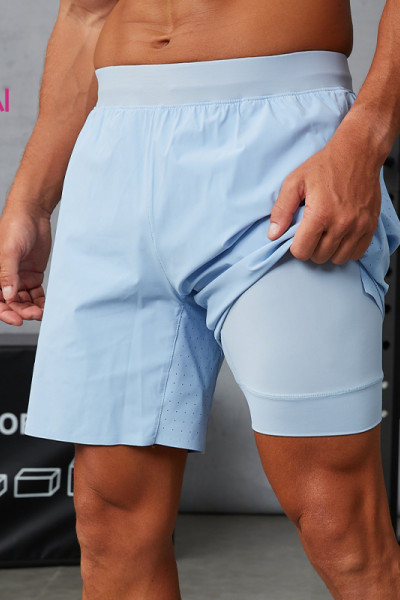
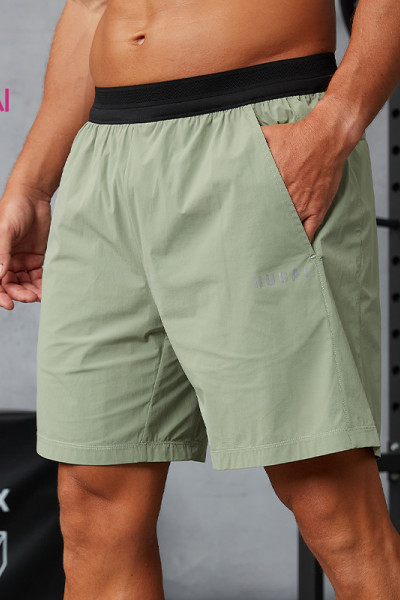
Bottoms are where capsule discipline pays back fastest, because one short block can produce several sellable lengths without a second pattern. A 5-inch and a 7-inch version of the same block share the waistband, rise, seat and pocket architecture; the change is leg length and the side split. Two separate blocks share nothing and double the fit risk.
The decisions that belong with the block, not after it, are liner type, waistband construction, drawcord, pocket set and inseam. A linerless short with a phone pocket and a lined short with a key pocket are not the same product with different trims; they are different use cases, and the sample room needs to know which one it is building before the first fit session.

Community feedback on running and training shorts is consistent about where failures appear: waistband roll, liner migration, pocket bounce and inner-thigh abrasion. None are fixed by adding a second block; they are fixed by settling waistband tension, liner pattern and pocket anchoring on the first block, then reusing it. Pattern makers add a detail that is easy to miss: a pocket position that works on a 5-inch short is not automatically correct on a 7-inch version, because hand entry angle and load path change with length.
For a growing brand, the capsule version of the bottom half is usually two styles, not four: one short in two lengths, or one short plus one jogger, both built from a confirmed block. The savings are not only in pattern work. They are in fit sessions, grading checks and the confidence that the second style will not fail differently from the first.
5. The Layer Has to Earn Its SKU
A layer is the easiest style to add and the hardest to justify. It usually carries the highest fabric weight, the highest unit cost and the shortest wearing season, which means it has to serve a job the core pieces cannot. Warm-up before a session, travel to and from the gym, and cool-weather outdoor training are three different jobs, and one hoodie rarely does all three well.
Public product-line observation of benchmark training brands shows the layer handled one of two ways: a lightweight technical midlayer worn over a base layer during activity, or a heavier cotton-blend piece for before and after. Brands that blur the two end up with a garment too warm to train in and too technical to wear casually.
For a capsule, the question is not "do we need a hoodie" but "which session does this layer belong to, and how many weeks of the year does that session happen in our market". A layer that serves eight weeks is a seasonal accent and should be planned as one. A layer that serves most of the year can hold a core slot, which changes its fabric, fit intent and colour position.
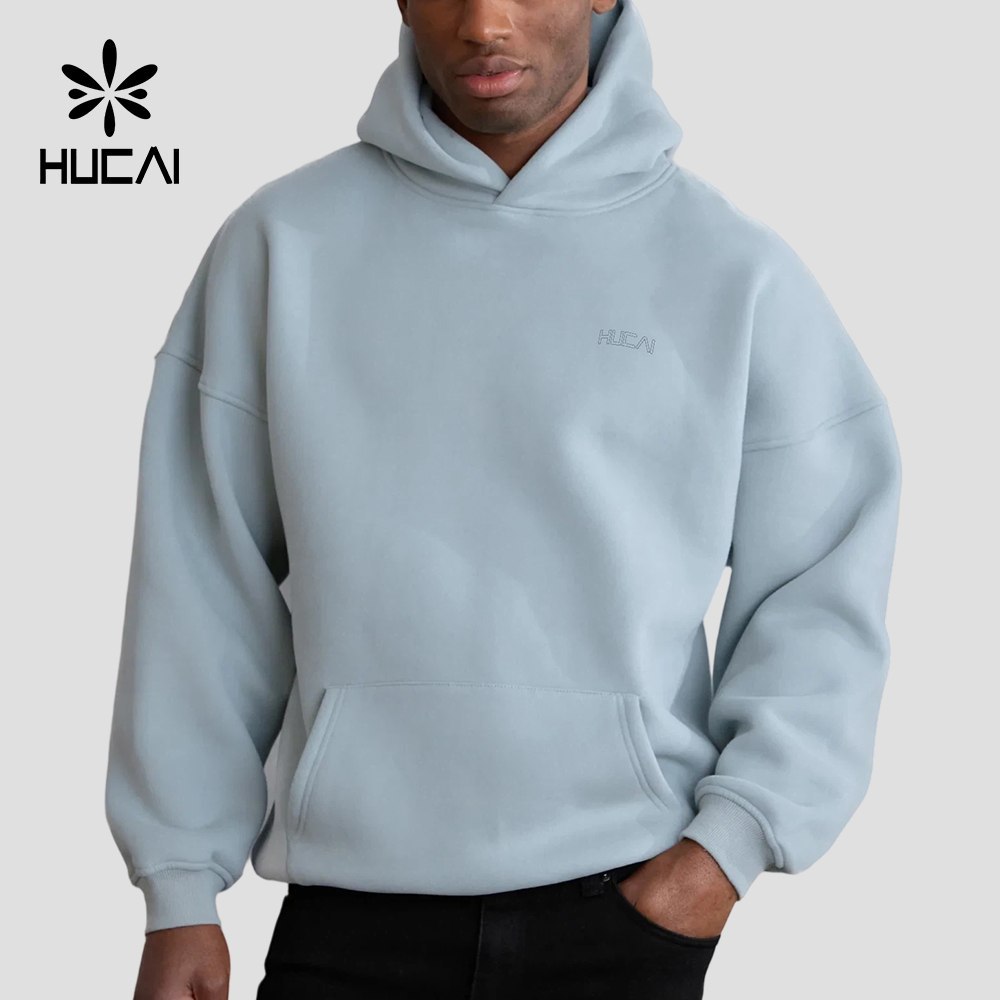
There is also a trim argument. A layer usually carries the most visible branding: chest logo, sleeve print, zip pull, drawcord ends. Each is a separate approval and a separate failure point in bulk. Keeping branding to one method and one placement keeps the approval chain short, which matters more to a small brand than extra detail.
Evidence used here: public product-line observation of benchmark training brands, plus merchandising practice on seasonal versus carryover planning.
6. Block Reuse and Fit Verification in the Pattern Room
Block reuse is the largest lever a small brand has over development cost, and the easiest one to get wrong. Reusing a block means reusing the shoulder slope, armhole depth, chest ease and neckline curve, not only the outline. A style that keeps the outline and changes the armhole is a new block in everything but name.
Experienced pattern makers describe the same failure repeatedly: a brand asks for a "slightly cleaner" version of an existing tee, the armhole is raised a few millimetres, and the sleeve head no longer matches the curve. The sample looks acceptable on a form; on a moving body it pulls across the back and lifts at the hem, and the correction consumes a revision round budgeted for something else.
The pattern room at HUCAI activewear treats block reuse as a decision with a paper trail: the base block is identified, deviations are listed and measured, and the fit session confirms the deviation rather than the whole garment. That is what makes a second and third style from the same block cheaper than the first.
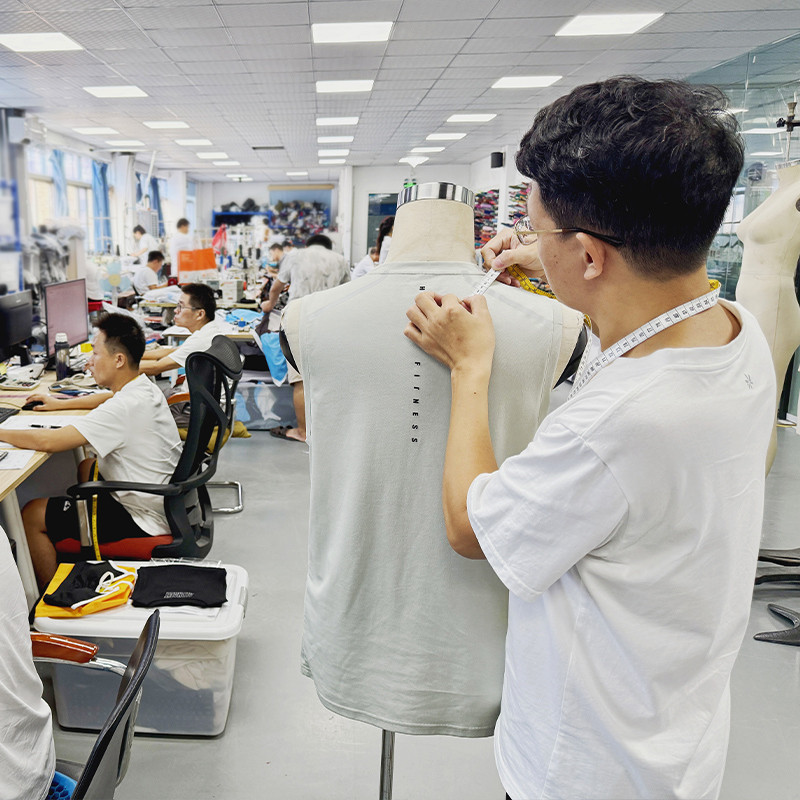
Fit verification needs a defined method. A dress form confirms symmetry, balance and measurement. It does not confirm how a raglan seam behaves when the wearer reaches overhead, or how a waistband sits in a squat. Both checks belong in the same session, and the comment sheet should record which was used, because a measurement correction and a movement correction are not interchangeable.
Grading is the second half of the decision. A reused block has to hold its proportions at the extremes of the size range, not only at the sample size. Armhole depth and sleeve width scale differently from chest circumference, so a block correct in the middle of the range can still bind at the top. Reviewing the grade before bulk keeps a small range from a size-specific complaint that costs a production run.
Evidence used here: pattern-room practice and fit-session method from bulk production, plus grading experience across men's size ranges.
7. Sample Budget: What a Small Brand Can Actually Review
Sample rounds are not free, and they are not unlimited. For most growing brands the constraint is not the cost of one sample but the number of decisions the team can genuinely review in a week. A brand that requests eight samples and returns a three-line comment sheet has not saved money; it has paid for eight samples and received one decision.
The sequence is short. A first round confirms fabric hand, colour and proportion. A second confirms fit and construction on the body. A pre-production sample confirms the approved specification reproduces with the actual trims, thread and finishing route. Depending on fabric availability, pattern work, logo method and revisions, that sequence can compress or extend.
Comment discipline matters as much as round count. One consolidated comment sheet per style, with measured corrections rather than adjectives, removes the ping-pong that eats sample budget. "Armhole 8 mm too deep, raise to match base block" is actionable. "Feels loose around the chest" is not, and it usually generates a second sample that solves the wrong problem.
For a capsule, sample shared elements once. If the core top and the layer share a neckline treatment, approve it once and reference it. If two lengths of a short share a waistband, approve it on the first length and carry it. Sample count then tracks unresolved decisions instead of style count.
Evidence used here: sampling and merchandising practice from OEM/ODM development, including comment-sheet discipline on multi-style briefs.
8. From Approved Sample to MOQ and Bulk
MOQ is usually discussed too early and settled too late. It is discussed early because the brand needs a number for its plan, and settled late because the number depends on decisions not yet made: fabric, colour count, size range, trim approach and whether the style shares a block with another style.
MOQ is a fabric decision as much as a style decision. A style in a stock base cloth with one colour and a shared block sits at a different commitment level from the same style in a new cloth, a new colour and a new trim. HUCAI activewear publishes MOQ from 200 pcs per style, with the final number depending on fabric, colour, size range and customisation.
Before bulk, the pre-production review is the last cheap moment to catch a problem. It is where the approved sample, measurement sheet, construction details, trims and branding method are checked against each other rather than against memory. AQL 2.5 inspection at the end of the line is a sampling-based check under ISO 2859-1 logic; it protects the shipment, but it cannot repair a specification that was never aligned.
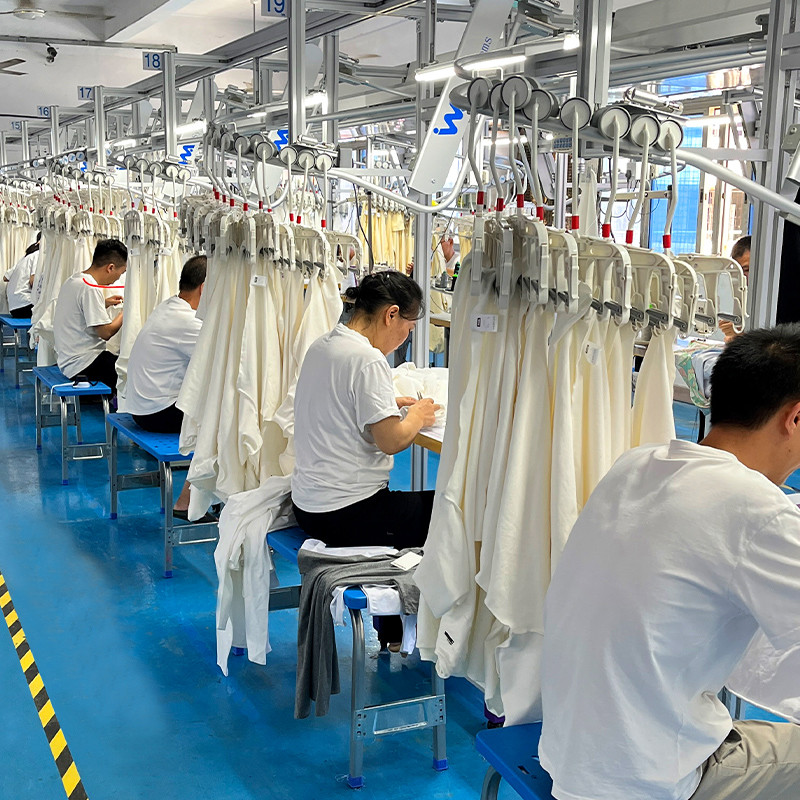
Production visibility is the other half of the problem. Four styles sharing two blocks and one fabric family simplify the production plan and reduce progress questions. HUCAI activewear runs MES and ERP tracking across fabric, trims, pattern, sample, bulk, QC and logistics, so a brand can see where a shared element is holding up the range.
Evidence used here: ISO 2859-1 sampling logic behind AQL 2.5 inspection, plus production planning and merchandising practice from bulk manufacturing.
Decision Check: Eight Questions Before You Commit
| Check | What to confirm |
|---|---|
| 1. Role coverage | Every style maps to a role, and no role is covered twice by styles that differ only in colour or graphic. |
| 2. Fabric count | The number of base cloths is stated, and each one has a reason to exist beyond a reference image. |
| 3. Block count | Shared blocks are named, and deviations from each base block are listed and measured. |
| 4. Colour architecture | Core colour sits on the highest-volume roles; the seasonal accent sits on the lowest-commitment pieces. |
| 5. Trim and branding methods | The range uses a small number of decoration methods, and each method is approved once. |
| 6. Size range and grade | The grade is reviewed at the top and bottom of the size range, not only at the sample size. |
| 7. Sample sequence | Each sample round has a named decision to resolve, and a consolidated comment sheet is ready before the round starts. |
| 8. MOQ logic | MOQ is quoted against confirmed fabric, colour, size range and customisation, not against a style list alone. |
HUCAI activewear uses the same eight checks in capsule development reviews, because a brief that fails one of them usually fails it again at pre-production, when the correction costs more.
Founder's Insight: Jean Yuan on the Style You Drop Too Late
Jean Yuan, Founder of HUCAI activewear, has spent more than twenty years on pattern tables and factory floors. His observation about small ranges is not about design ambition. It is about the cost of a late removal.
"The expensive style in a young capsule is rarely the one that was never developed," Jean Yuan says. "It is the one that stays in the line after the team already knows it is not working. By then the fabric is booked, the lab dip is approved, the block is graded and the sample is photographed. Dropping it refunds none of that. Keeping it means the range carries a style that will not repeat, which pulls volume away from the two pieces that would."
His second point is about where reuse savings genuinely sit. "A brand often believes it is saving money by reusing a block, then changes the armhole depth, the shoulder slope and the hem length in the same revision. That is not reuse. That is a new block built on top of an old one, and the fit session will show it. Real reuse keeps the engineering and changes the surface: length, panel, colour, trim. Done that way, the second and third style cost a fraction of the first, and the range stays coherent because the body did not change underneath it."
His third point is about sequence. "Fabric before colour, colour before trim, trim before sampling, sampling before MOQ. Teams that reverse the order spend the sample budget confirming decisions already made, then discover at pre-production that fabric and trim were never compatible."
FAQ
What is the difference between a capsule range and a full collection?
A capsule is built around product roles rather than categories. It usually covers four to six roles with one or two styles each, shares a small number of fabrics and blocks, and carries over between seasons. A full collection is organised by category and season, with wider style counts and more fabrications.
How many styles should a first men's activewear capsule have?
Most small and growing brands can support four to six styles: a core top, a core bottom, a layer and one or two support or statement pieces. The constraint is not design capacity but the sample decisions the team can review properly.
Can we build a capsule if we only have reference images and no tech pack?
Yes. Reference images, target use cases and a size and colour direction are enough to start ODM development, where the manufacturer proposes fabric, block and construction and refines them through sampling. What is not optional is a role definition per style and a decision-maker who can review samples within the round.
What should be confirmed before we discuss MOQ or quotation?
Fabric direction, colour count, size range, trim and branding methods, shared blocks and order structure. MOQ and cost move with those variables, and a quotation built on a style list alone will be revised once fabric and trim are confirmed.
How many sample rounds does a focused range usually need?
Commonly two to three: a first round for fabric, colour and proportion, a second for fit and construction, and a pre-production round to confirm that the approved specification reproduces with the actual trims and finishing. The number depends on fabric availability, pattern work, logo method and revision rounds.
Is block reuse cheaper than developing a new pattern?
Only when the engineering is reused as well as the outline. Keeping shoulder slope, armhole depth, chest ease and neckline curve intact and changing length, panel, colour or trim is genuine reuse. Changing the armhole and keeping the silhouette is a new block, and it needs its own fit session and grade review.
Final Takeaway
A focused capsule is not a smaller version of a full collection. It is a different structure: roles instead of categories, fabric families instead of fabric lists, reused blocks instead of new patterns, and sample rounds tied to open decisions instead of style count. A brand that builds this way spends less on development and ends up with a range that repeats, which is the only version of a small range that compounds.
The order is stable across projects: define roles, choose one fabric family, confirm the blocks, settle colour architecture, sample only what is unresolved, then move to MOQ once fabric, colour, size range and trim are locked.
Next Steps
Ready to build the range? Send your role map, reference images or target use cases and the team will review fabric and block direction before sampling starts. Start a capsule development inquiry.
Have confirmed specs and need production? Review OEM men's sportswear development, or ODM men's sportswear development if fabric and block still need to be proposed.
Still planning? Compare men's T-shirts, men's shorts and men's hoodies, or check fabric choices for men's sportswear before fixing the fabric count.
Trust note: HUCAI activewear is a B2B men's activewear manufacturer supporting OEM, ODM and private label development from sample to bulk. Fabric, trim, logo, label and packaging customisation are handled in house, with quality checkpoints and AQL 2.5 inspection before shipment. MOQ, sample timing and bulk timing depend on confirmed fabric, colour, size range and revision rounds, so they are quoted per project.