Race-Day vs Training-Day Men's Running Tops: Fabric Weight, Fit, Ventilation and Durability
Most young running brands start with one running top. That single style is expected to cover Tuesday intervals, weekend long runs and the race itself.
It usually works for one season. Then the same top starts to read as under-built on race day and over-built for daily mileage, and the line loses its product logic. For brands developing a men's running tops range through OEM or ODM development, the fix is rarely a new fabric. It is deciding which job each top is hired to do.
HUCAI activewear works with running brands and private label activewear projects that need race-day and training-day tops separated at the specification stage, before sampling and bulk planning begin.
Quick Answer
Race-day tops and training-day tops are developed against different priorities. A race-day top is usually built around lower fabric weight, reduced bulk, a closer fit ease and faster drying, and it accepts a shorter service life. A training-day top is usually built around durability, coverage, seam comfort across repeat use and wash-cycle stability.
Both can share a pattern block or a fabric family. They rarely share the same final specification. That decision belongs in the development brief, not in a seasonal color update.
Who This Article Is For
- Startup brands validating a first running collection and deciding whether one top style is enough for launch.
- Growing brands with reference images and a clear market direction but no complete tech pack, who need a specification framework before sampling.
- Established brands with confirmed measurement and construction sheets who are splitting an existing running top into two product roles.
- Private label buyers who need the same silhouette produced in two performance levels with different fabric, trim and branding specifications.
What You Can Use From This Article
- A side-by-side specification framework you can paste into a development brief and discuss with any running apparel manufacturer.
- A clear list of the ten variables that decide whether a top reads as race-day or training-day, from GSM through to logo weight.
- A decision checklist to run before sampling, so revision rounds are spent on fit detail rather than on correcting the product role.
- Practical guidance on when a shared pattern block or fabric family is realistic and when it adds hidden risk to bulk production.
Why One Running Top Cannot Carry Both Jobs
The pressure to launch with a single top is understandable. One style means one development cycle, one set of size grading work and one fabric commitment. In early-stage projects that looks like efficiency.
The problem appears later, when the same garment is asked to do two things that pull in opposite directions. Race day rewards lightness and low bulk. Daily mileage rewards resistance to abrasion, washing and repeated use. A specification tuned for one of those will sit at the wrong point for the other.
In many early-stage men's activewear projects we see the same pattern. The brand writes one brief, the factory builds one sample set, and the top ends up acceptable in both roles and convincing in neither. Customers read that as a value problem rather than a product problem.
Splitting the role does not require two full development programmes. It requires the brief to name the job before the fabric is chosen.

Daily mileage tops are judged over months of repeat use, not over a single race morning.
Fabric Weight and GSM: Where the Two Jobs Split
Fabric weight is the first place the two roles separate, and the fastest place to lose the distinction if it is treated as a cost lever.
A race-day top normally moves toward a lighter knit with a more open structure. The goal is to remove material the athlete carries, and to help heat leave the body at sustained effort. The trade is a thinner handfeel, more light transmission and less tolerance for abrasion.
A training-day top normally moves the other way. A slightly heavier knit holds its shape longer, hides more of the body under load and survives more wash cycles before the surface changes.
GSM alone does not decide the role. Two fabrics at the same weight can behave differently depending on yarn count, knit structure, stretch direction and recovery. A 140 GSM race knit and a 165 GSM training knit in the same family may share a supplier and a color card, yet diverge completely in handfeel, opacity and dry time.
This is why a fabric platform conversation should start with the performance target rather than with the number. Confirm what the top is being asked to do, then confirm whether one fabric family can serve both roles with different constructions, or whether two fabrications are genuinely required.
Fit and Ease: Race Fit, Training Fit and the Middle Ground
Fit is where the two roles become visible to the customer before any technical difference is felt.
A race-day top usually runs closer through the chest and shoulder, with reduced ease through the body and a shorter hem. Less loose material means less movement and less drag. The pattern compensates with stretch and recovery rather than with extra circumference.
A training-day top usually carries more ease through the torso. That space supports breathing under load, allows a base layer underneath in cooler conditions, and reduces the chance of the hem riding up during repeated movement.
The middle ground exists, and it is where most brands should start. A single pattern block with modest ease can be adjusted through fabric stretch, hem length and side seam shape to lean toward one role or the other.
What should not be shared silently is the measurement spec. If the same body measurements are used for both roles while the fabric changes, the fit will drift. Ease, stretch percentage and recovery all interact, and a top that fits well in a 165 GSM knit will not sit the same way in a 140 GSM knit of the same composition.
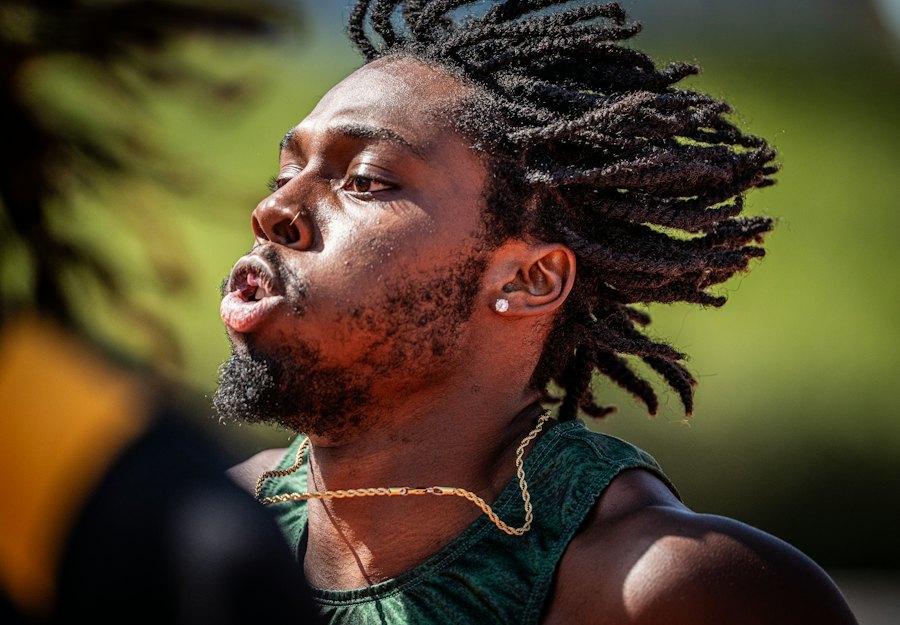
Race-day tops are cut closer and rely on fabric recovery rather than added circumference.
Ventilation and Drying Speed: Same Goal, Different Trade-offs
Both roles want the athlete to stay drier. They get there by different routes, and the routes have different consequences for structure and cost.
A race-day top tends to rely on a combination of a lighter knit and a more open structure, with ventilation treated as part of the base fabric. Fewer panels mean fewer seams, less bulk on the shoulder and a cleaner silhouette at speed.
A training-day top can afford a more structured approach. Panels, zoned construction or a different knit in high-sweat areas are easier to justify when the garment is not being carried at race effort, and they can be positioned where repeat use shows the benefit.
Drying speed follows the same split. Thinner, more open structures usually release moisture faster. Heavier knits hold more water in the fiber and the structure, so they take longer to return to a dry handfeel.
None of this makes one approach stronger than the other. It makes them appropriate to different jobs. The relevant question at development stage is which ventilation route the target athlete will actually notice, and whether the panel layout can be produced consistently across the planned order quantity.
Seam Bulk, Logo Weight and Branding at Race Weight
Two details that are easy to overlook in a training brief become structural on race day: seam bulk and branding weight.
Seam type and position affect how a light garment sits on the shoulder and under the arm. On a thinner knit, a raised seam is more noticeable because there is less fabric to absorb it. Flatter construction and fewer seam crossings usually read better at race weight, and they also reduce the chance of irritation at sustained effort.
Branding follows the same logic. A heavy print, a large applique or a dense embroidery block adds weight and changes how the fabric drapes. On a race-day top, a lighter transfer or a smaller logo placement keeps the garment behaving like the base fabric.
The training-day top can carry more branding weight. A larger chest print or a sleeve mark is easier to support on a heavier knit, and it survives more wash cycles without the edges lifting.
For private label buyers this is a specification decision, not a design preference. Logo method, placement and scale should be confirmed together with the fabric and fit, because changing the branding after the fabric is locked is one of the most common causes of an extra sample round.

Repeat use exposes abrasion, seam comfort and surface change that a single race morning will not.
Durability, Wash Cycles and Coverage
Durability is the clearest divider between the two roles, and the one most often under-specified.
A race-day top is often treated as a race-frequency garment. It may be worn for a handful of events in a season, hand washed and stored carefully. Its specification can accept a lighter structure with less resistance to abrasion and pilling.
A training-day top is judged against a much harder routine. Weekly washing, repeated stretch and recovery, contact with equipment and consistent exposure to sweat and detergent. The relevant measures are how the surface holds up, how the knit recovers, and whether the color and shape still look right after repeated cycles.
Coverage is part of the same conversation. A lighter knit can become more transparent under stretch, particularly in lighter colors and over the shoulder area. That is a real consideration for training tops worn in a public gym or on a daytime road, and it is far cheaper to resolve by choosing a different knit weight or construction than by correcting the pattern later.
The practical approach is to state the expected wear pattern in the brief. Number of wears per week, wash method and expected life are inputs that determine fabric weight, knit structure and logo method. Without them, the factory can only guess at the intended service level.
What Can Actually Be Shared
Separating the two roles does not mean building two unrelated products. Several layers can be shared, and sharing them is what keeps a small collection coherent.
Pattern block. A single block can often serve both roles if ease, hem length and side seam shape are treated as adjustable parameters rather than fixed values. This keeps size grading consistent and reduces the number of fit sessions.
Fabric family. One supplier family with two knit constructions is often more practical than two unrelated fabrics. It protects color consistency across the collection and simplifies repeat orders, while still allowing the race and training tops to differ in weight, openness and stretch.
Trim and branding system. Neck tape, care labels, hangtags and logo method can follow one system across both tops. This lowers minimum commitments on trims and keeps the collection visually unified.
Color card. A shared palette across race and training tops makes the range read as one collection rather than two products that happen to ship together.
What should not be shared without review is the measurement spec, the fabric specification or the logo scale. Those three carry the role difference, and copying them across is the most common reason a brand ends up with two tops that behave identically.
Race-Day vs Training-Day Comparison Table
The table below summarises how the same running top is specified when the product role changes. It is a starting point for discussion, not a fixed standard, because the correct values depend on the target market, climate and athlete profile.
| Development variable | Race-day running top | Training-day running top |
|---|---|---|
| Fabric weight and GSM | Lighter knit, more open structure, lower material carry | Slightly heavier knit, more shape retention under load |
| Fit ease | Closer through chest and shoulder, reduced body ease | More torso ease for breathing and layering |
| Ventilation approach | Built into the base knit, fewer panels and fewer seams | Zoned panels or knit variation in high-sweat areas |
| Drying speed | Faster release from a thinner, more open structure | Slower dry time accepted in exchange for structure |
| Seam bulk | Lower bulk, flatter construction, fewer crossings | More tolerant of structured seams and panel joins |
| Logo weight | Light transfer or small-scale placement | Larger print or sleeve mark is easier to support |
| Durability expectation | Race-frequency use, careful care | Weekly wash cycles, abrasion and repeated stretch |
| Coverage | Checked carefully under stretch in light colors | Higher priority for daytime and public training |
| Hem and body length | Shorter hem to reduce loose material | Longer hem to stay in place during repeated movement |
| Sample priority | Confirm weight and finish early | Confirm abrasion, recovery and wash behaviour early |
Decision Check Before You Lock the Brief
Run through these points before a tech pack is finalised or a sample round is booked. Each one changes what the factory can commit to.
- Is the intended wear frequency stated for each top, in wears per week?
- Is the expected service life named, in seasons or wash cycles?
- Is the fit target described as race fit, training fit or a defined middle ground?
- Is the fabric weight range confirmed, and is it tied to a performance reason rather than to price alone?
- Has recovery and stretch percentage been confirmed for the chosen knit?
- Has coverage been checked in the lightest planned colorway, under stretch?
- Is the logo method, placement and scale confirmed at the same time as the fabric?
- Is it decided which elements are shared across both tops and which are role-specific?
If any of these are still open, the sample round will resolve them by trial rather than by design, and that usually costs an extra revision cycle.
Where Production Discipline Matters More Than the Spec Sheet
A two-role running range only holds together if the specification survives into bulk. That is a coordination problem as much as a technical one.
HUCAI activewear handles sample-to-bulk coordination across fabric, trim, pattern, sample, bulk and QC records, so the values confirmed at sample approval are the values used at production. AQL 2.5 quality inspection and pre-production review are used as process checkpoints, and MES and ERP order tracking keep progress visible across the stages where drift usually appears.
None of that replaces a clear brief. But when the brief is clear, that structure is what keeps the race-day top and the training-day top from merging back into one specification at bulk stage. Read more about how the development and production teams work together, or review the current men's T-shirts and long sleeve range for construction reference.
Common Failure Pattern
A frequent early-stage issue is a brand that confirms a light race knit, then applies the training-day brief to the same fabric. The result is a top that is light enough for race day but not durable enough for the weekly mileage it was also expected to cover.
The problem is usually not discovered at sampling. It appears after two or three months of real use, when the surface has changed, the hem has lost shape or coverage has become a complaint. By then the fabric is ordered and the size grading is locked.
The correction is cheap at brief stage and expensive after bulk. Naming the product role, and stating the expected wear pattern, is the single step that prevents most of these cases.
FAQ
Can one running top work for both race day and daily training?
It can, but it will sit between two specifications. That middle position is a legitimate product decision if the brand states it deliberately and accepts the trade-offs on weight, dry time and service life. It becomes a problem when the same top is expected to meet both briefs without either being written down.
What GSM should a race-day running top be?
GSM cannot be specified in isolation. The right value depends on knit structure, yarn count, stretch direction and the climate the top is worn in. Two fabrics at the same weight can differ noticeably in handfeel, opacity and dry time. Define the performance target first, then select weight within that frame.
Does a race-day top have to be less durable?
Not automatically, but lighter structures with less material generally offer less resistance to abrasion and repeated washing. If a brand wants one top to cover both roles, the realistic move is to specify the durability level first and then accept a slightly heavier race top.
Can two running tops share the same pattern block?
Often yes. Ease, hem length and side seam shape can be treated as adjustable parameters on one block, which keeps size grading consistent and reduces fit sessions. The measurement spec still needs to be reviewed separately once the fabric changes, because stretch and recovery affect how the garment sits.
What should be confirmed before MOQ or quotation discussion?
Product role for each style, fabric direction with an approximate weight range, fit target, color count, size range, logo method and expected order structure. Quotation and MOQ depend on these inputs. As a general reference, MOQ from 200 pcs per style is used, and the final number is still affected by fabric, color, size range, customization, trims, logo method and order structure.
How long does a sample round usually take for men's running tops?
Sample timing depends on fabric availability, pattern work, logo method, fit adjustment and the number of revision rounds. A brand that arrives with confirmed measurements, named fabric direction and a decided logo method usually needs fewer rounds than one that resolves those points during sampling.
Can you develop from reference images only?
Yes. Reference images, market direction and a clear product role are enough to start ODM development. The images are used to agree silhouette, weight direction and construction intent first, and the technical specification is built from that agreement. A tech pack is helpful but not a precondition for the first conversation.
Should race and training tops use the same logo method?
Not necessarily. A lighter transfer or smaller placement usually behaves better on a light race knit, while a larger print is easier to support on a heavier training knit. Logo method, placement and scale are confirmed together with the fabric, because changing branding after the fabric is locked frequently triggers another sample round.

Race-day tops are specified for one morning of performance. Training tops are specified for a full season of use.
Final Takeaway
Race-day and training-day running tops are not two versions of the same garment. They are two product roles built on the same category, and the difference sits in fabric weight, fit ease, ventilation route, seam bulk, branding weight, durability expectation and coverage.
The efficient way to build both is to share what carries no role difference, and to separate what does. A shared pattern block, fabric family, trim system and color card keep the collection coherent. A separate measurement spec, fabric specification and logo scale keep the two tops from collapsing into one compromise.
Write the product role and the expected wear pattern into the brief before sampling starts. It is the lowest-cost decision available in the whole development cycle, and it prevents the revision rounds that cost the most.
Next Step
Ready to develop the range?
Send your tech pack, reference images or target product direction and we will map the race-day and training-day roles together. Start your running tops inquiry.
Need OEM or ODM development support?
Review how fabric, fit, sample and capsule planning are handled across the two roles. See the men's T-shirts and long sleeve range for construction reference.
Still comparing options?
Read more development guides before sending an inquiry, or check the full HUCAI activewear blog for related specification articles.
Trust Notes
- This article describes development logic and variable relationships. It does not publish customer names, order data, certification numbers or test results.
- Fabric weight, sample timing and bulk timing depend on fabric availability, pattern work, logo method, fit adjustment, revision rounds, order quantity and production scheduling. They are confirmed per project rather than fixed in advance.
- MOQ from 200 pcs per style is used as a general reference. The final figure is affected by fabric, color, size range, customization, trims, logo method and order structure.
- Quality inspection and production tracking are process support capabilities. They improve visibility and control across the development and production stages, and they are not a substitute for a confirmed specification.