Private Label Joggers: Knee Bagging and Recovery Checks Before Bulk
A pair of private label joggers can pass every number in the size chart and still fail in the market, because the knee only shows its real behavior after the garment has been worn, bent and washed. Knee bagging, the permanent slack and pooling that settles across the kneecap, is not a sewing defect and is rarely solved by a heavier fabric. It is a fabric recovery and pattern outcome, and it can be measured before bulk.
This guide is for teams sourcing custom men's activewear through OEM or ODM development, and it sets out what a men's activewear manufacturer should be able to prove about a jogger knee before a production order is released. HUCAI activewear runs this as a pre-bulk gate: fabric data first, drafted knee second, recovery measurement third, PPS sign-off last.
Quick Answer
Knee bagging is measured, not judged by eye. Before bulk, confirm four things: stretch and growth data from the fabric lot reserved for the order, not a swatch card; a knee line drafted with shaping or a dart instead of a straight leg; a documented protocol that re-measures the same landmarks after flex cycles and laundering; and pass limits the brand owns and signs on the PPS.
Table of Contents
- Who This Article Is For
- Why the Knee Fails Before Anything Else Does
- Fabric Data to Request Before the First Sample
- Drafting the Knee as a Controlled Zone
- Seams, Cuffs and Trims Around the Knee
- The Pre-Bulk Recovery Check: A Three-Stage Protocol
- PPS Sign-Off, Bulk Gates and Change Control
- Decision Check
- Founder's Technical Insight (Jean Yuan)
- FAQ
- Final Takeaway
Who This Article Is For
- Primary reader: product developers and sourcing managers responsible for a private label joggers, sweatpants or tapered training pants line.
- Secondary reader: pattern makers, technical designers and QC teams who sign off pre-production samples and set tolerances.
- Product stage: between the second fit sample and the PPS, when fabric, pattern and trim decisions are still cheap to change.
- Problem being solved: a jogger that looks correct on the sample table but develops slack and shine at the knee within weeks of retail wear.
- Who may not need this article: teams buying a finished stock jogger in a fixed fabric where the brand owns neither the knit specification nor the pattern.
What you gain from this article: a fabric data request list tied to knee behavior, a drafting rule set for the knee zone, a repeatable recovery protocol with a record sheet for every size and reorder, and the bulk gates that decide whether a lot ships.
Why the Knee Fails Before Anything Else Does
The knee is the highest-travel zone in a jogger. Standing, the fabric sits compressed in soft folds; flexed, it is pulled over a tight radius and stretched far beyond what a measurement chart shows. Growth is where the knit extends and does not fully return, so the knee point creeps outward. Compression set is where loops or brushed pile flatten under pressure and heat, so the panel looks soft and ridged even when dimensions have barely moved.
Feedback across training communities and running forums repeats the sequence: a jogger fits cleanly at purchase, then shows a slack, slightly shiny knee panel after a month of gym sessions and home laundry. The garment has not shrunk overall. One zone has lost its ability to return.
Experienced pattern makers handling OEM bottoms add a second cause. The knee is often drafted by copying a previous style rather than measuring the fit model, and a straight leg line taken from a standing block pulls above the kneecap the moment the wearer bends.
Four inputs decide the outcome, each fixed at a different stage, which explains why knee complaints arrive after the brand has lost leverage.
| Input | What it controls | Where it is fixed | Failure if unspecified |
|---|---|---|---|
| Knit architecture and elastic content | How far the fabric extends and how completely it returns | Fabric selection, before the first sample | Growth at the knee point after wear and wash |
| Knee line and leg shaping | Whether the fabric is pulled or allowed to follow the joint | Pattern, before the fit sample | Pull lines above the kneecap and slack below it |
| Seam type and thread at the knee | Whether the seam stretches with the panel or resists it | Construction spec, at sample stage | Rippling along the seam and local panel distortion |
| Wear and wash exposure | How much cumulative set the panel takes before it is judged | Care label and test protocol | Approval of a garment that has never been laundered |

Fabric Data to Request Before the First Sample
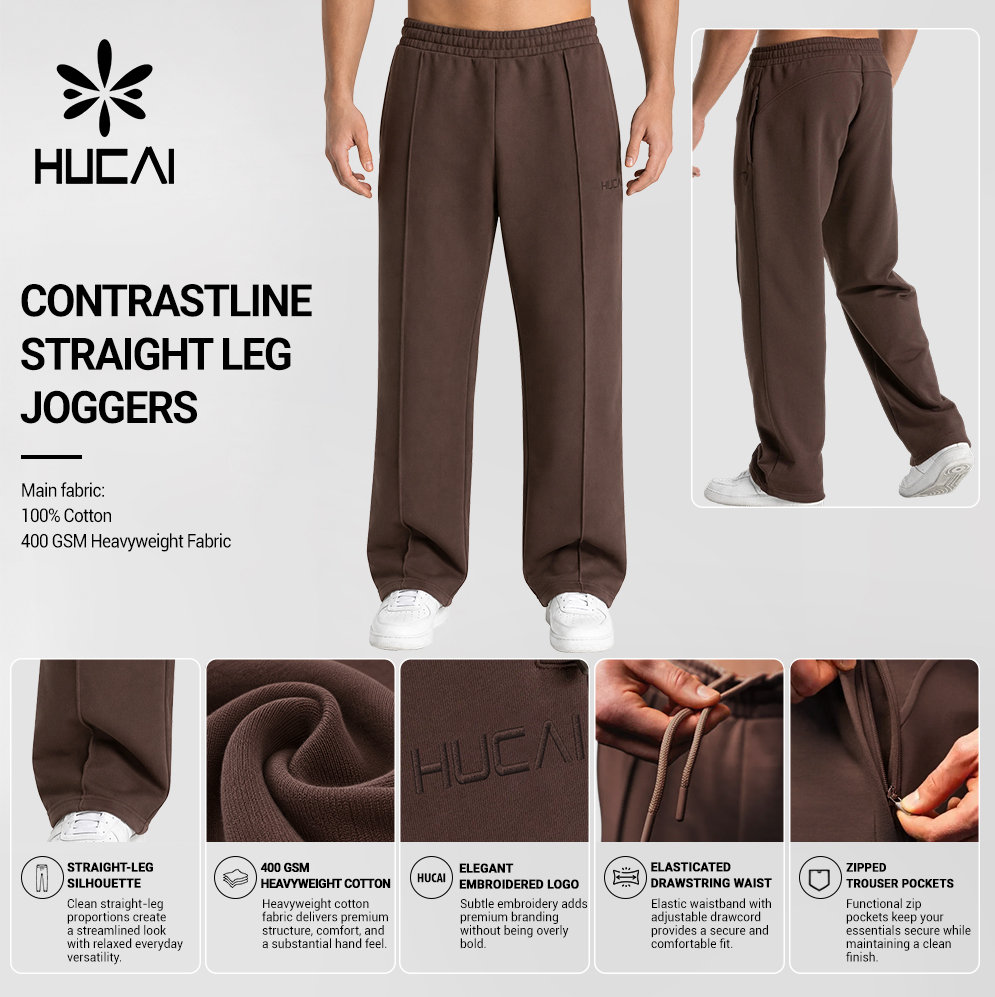
Most knee bagging starts with a fabric approval made on handfeel. A brushed fleece can feel substantial and carry almost no elastic recovery, because its thickness comes from pile height rather than a stable knit structure. A 400 gsm cotton fleece is the clearest example: the weight reads as premium, but a cotton loop structure without elastane has little ability to return once compressed and laundered.
Request the following data against the lot that will actually be used. Mill or third-party reports are the preferred evidence; where one is unavailable for a field, verify it in the sample room instead of assuming a value.
| Field to request | Reference commonly used | Why the knee depends on it |
|---|---|---|
| Knit type, fiber composition and GSM with tolerance | Mill specification sheet | Sets the baseline bulk that the knee must compress and release |
| Elastane percentage and type | Mill specification sheet | Determines how much extension is recoverable rather than permanent |
| Stretch and growth after cyclic extension | ASTM D2594 logic for knit stretch and recovery | Predicts how far the knee point will creep |
| Abrasion resistance at the panel | ASTM D4966 Martindale method | Surface breakdown accelerates the flattened, shiny look at the kneecap |
| Dimensional change after laundering | AATCC 135 or ISO 6330 wash conditions | Shifts knee line position and leg length after the first wash |
| Skew and twist after laundering | AATCC 179 skewness logic | Twist pulls the knee panel sideways and reads as a fit defect |
GSM alone is not a recovery specification: two 320 gsm fabrics from different knitters can differ in retained length after repeated extension, so a brand that specifies only weight has specified half of the knee. The fabric desk at HUCAI activewear reads these fields with seam type, panel size and wash condition attached.
Drafting the Knee as a Controlled Zone
Once the fabric is known, the knee becomes a drafting problem. The knee line should be set from a measured fit model rather than inherited from an older style. Record waistband seam to knee point, because that number moves after laundering and anchors every later measurement.
The leg can behave across the joint in three ways.
- Shaped leg line: a slight functional bend drafted into the leg so the panel already carries some flex. Lowest cost, effective on mid-weight knits, least visible in the finished garment.
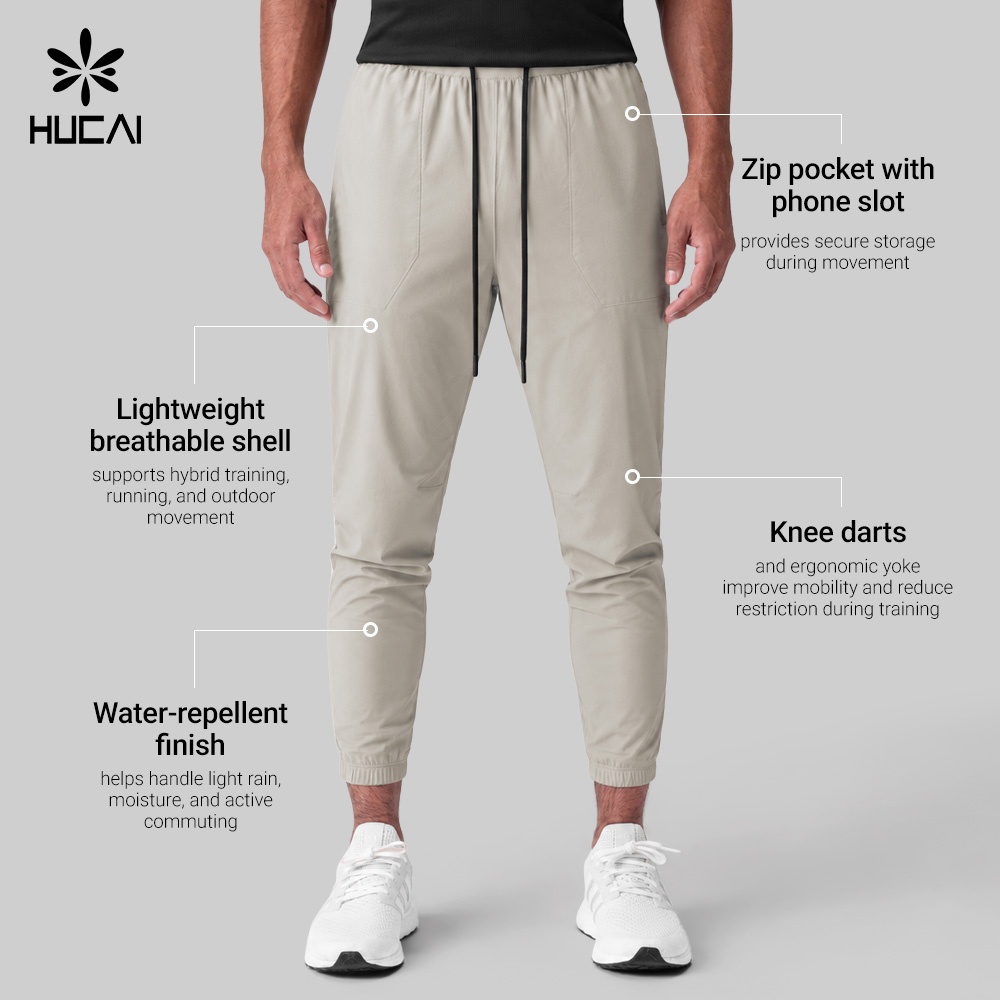
- Knee darts: small intake darts removing the excess that would otherwise fold above the kneecap. Adds an operation and needs a bartack or backstitch at the dart ends so the point does not open in wear.
- Knee panel or gusset insert: a separate shaped piece, sometimes cut on a different knit direction. Strongest geometric control, highest cost, and usually needs its own seam and abrasion review.
Taper comes third. A tapered jogger is a commercial requirement in most markets, but taper should start below the knee, not from the seat. Tapering from the seat removes the ease the thigh and knee need and turns a recovery problem into a pull line. Keep knee circumference and taper start as separate fields.
HUCAI activewear keeps knee line, knee circumference, taper start and cuff opening as four separate fields, so a revision to one does not silently move the others during grading.
Seams, Cuffs and Trims Around the Knee
A knee panel only recovers as well as the seam that holds it. Flatlock carries stretch well and is the usual choice on a stretch knit knee panel. Coverstitch gives a clean twin-needle finish and recovers well when the thread has some elastane, but adds bulk at the fold. Standard overlock is cheapest and least forgiving, and on a panel that flexes hundreds of times a day it distorts first.
Thread matters as much as stitch. A texturised polyester thread with no elastane will resist a high-stretch panel and pucker the knee after wash. Confirm thread ticket, stitch density and seam allowance in writing, and check the dart ends on any darted knee.
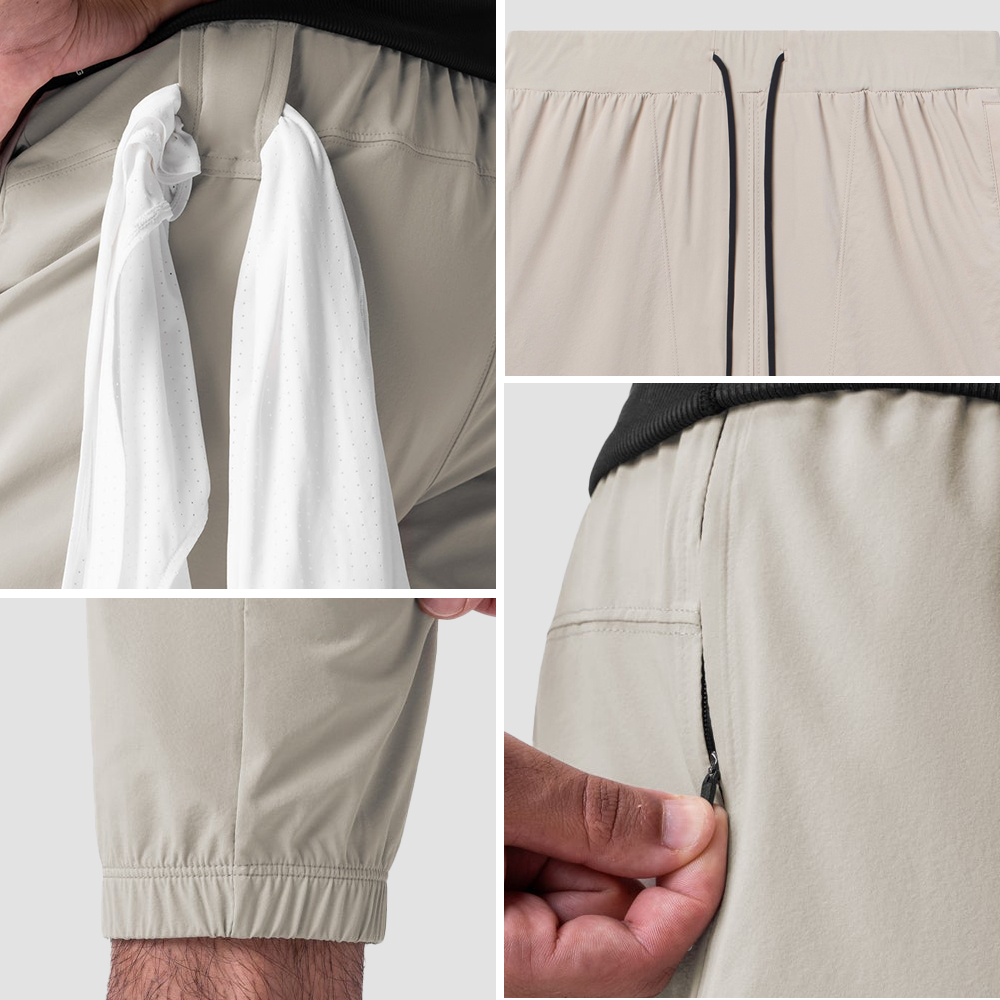
The cuff does not fix knee growth, but it changes how the leg column hangs and therefore how slack reads visually. Record rib height, cuff circumference, elastic type and stretched circumference at a fixed pull. The same discipline applies to the waistband and drawcord.
Working on a jogger program? Share your sample status and target market, and the team will review fabric, knee draft and trim choices before the next round. Start a conversation.
The Pre-Bulk Recovery Check: A Three-Stage Protocol
This is the part most programs skip. One fitting tells you whether the garment is comfortable. It does not tell you whether the knee will still look correct after twenty wears and three washes. The protocol is mechanical, so two people reach the same number.
Stage 1, baseline. Condition the PPS flat and unrested, then measure without tension: knee point circumference, waistband seam to knee point, knee point to hem, and cuff circumference relaxed and at a fixed pull. Record in millimetres, not in fit comments.
Stage 2, cyclic loading. Run a defined number of knee flex cycles on a leg form or a fit model routine, for example ten sets of thirty-second squat holds with a short rest between sets. The number matters less than writing it down and repeating it on every size.
Stage 3, laundering. Wash at the care label condition, referencing ISO 6330 or AATCC 135, then dry by the stated method. Re-measure the same landmarks and add a one-to-five visual rating for shine, ridging and slack, on at least one size in each fabric colour.
| Record field | Landmark definition | When measured | Decision use |
|---|---|---|---|
| Knee point circumference | Horizontal measure through the marked knee point, flat, no tension | Baseline, after cyclic loading, after each wash | Primary growth indicator for the panel |
| Waist to knee point | Waistband seam to marked knee point along the leg | Baseline and after wash | Detects the knee line dropping after laundering |
| Knee point to hem | Marked knee point to finished hem | Baseline and after wash | Separates cuff movement from knee movement |
| Cuff circumference | Relaxed and at a fixed stretch pull | Baseline and after wash | Confirms trim recovery did not change the leg hang |
| Visual panel rating | One-to-five scale for shine, ridging and slack | After cyclic loading and after each wash | Catches compression set that measurement misses |
Pass limits belong to the brand, not the supplier, and should be written before results arrive. On a first program, a defensible rule is to use the approved sample as the reference and allow a fixed millimetre tolerance at each stage.
The HUCAI activewear sample room runs this sequence on the PPS and keeps the readings with the sample file, so a reorder is compared against numbers rather than memory. The wider validation set is covered in sample testing for men's activewear.
PPS Sign-Off, Bulk Gates and Change Control
The recovery check needs a decision point: three gates between the approved sample and the shipped carton.
Gate one, PPS. The pre-production sample carries the four knee fields, the seam and stitch specification, the fabric lot number and the wash result. Sign-off means the brand accepts those numbers as the order standard.
Gate two, first cutting. Pull roughly the first fifty pieces from the first cut and check knee point circumference against the PPS reading, plus seam type, stitch density and cuff stretch. Fabric from another lot is a different starting condition, so a lot change shows up here first.
Gate three, pre-shipment. AQL 2.5 inspection covers workmanship, measurement and packing, and the knee check repeats on a sample from packed cartons. If the knee point has moved beyond tolerance here, the fix is a fabric or pattern decision.
Change control protects the second order. Any change to knit structure, GSM, elastane type, knee dart, panel seam or cuff rib should trigger a rerun of the wash stage, logged against the style. HUCAI activewear records these revisions in its MES and ERP order records, so a reorder traces to its approved lot.
Where the line also carries a woven technical trouser or a structured double knit set, the knee discussion continues with different fabric data. The running trousers guide covers articulation in a woven shell, and the spacer knit analysis covers recovery in a structured knit.
Decision Check: Is the Knee Ready for Bulk?
Before requesting bulk quantities or approving the PPS, confirm the following:
- Fabric lot identified: knit type, GSM with tolerance and elastane content recorded against the lot reserved for the order, with any mill substitution re-tested rather than assumed.
- Recovery data on file: stretch and growth behavior, abrasion resistance and dimensional change after laundering documented for that lot, with the test reference stated.
- Knee drafted, not inherited: waist to knee point, knee circumference and taper start held as separate fields, and the knee shaped, darted or panelled rather than straight.
- Seam specification written: stitch type, thread ticket, stitch density and dart finishing at the knee on the construction sheet, not with the sewing floor.
- Protocol repeated: the same four landmarks measured at baseline, after cyclic loading and after at least one laundering cycle, in millimetres.
- Pass limits owned by the brand: the knee point tolerance and the visual rating threshold written into the PPS before results are reviewed.
- Gates scheduled: first cutting, mid-production and pre-shipment checks named, with a responsible person for the knee reading at each.
- Supplier capability verified: the manufacturer can show how a fabric change is logged and how a reorder traces to its approved lot and pattern version. This is where HUCAI activewear is usually asked to open its lot records and sample file before a second style is placed.
If six or more items are closed, the jogger is ready for a structured bulk plan. If fewer, the gaps surface as knee complaints after sell-through rather than as a sample revision.
Founder's Technical Insight: Jean Yuan's Development Note
Jean Yuan, Founder of HUCAI activewear, has reviewed enough jogger PPS sets to see the same decision repeated. A brand approves a 320 gsm brushed fleece because it reads substantial in the hand, keeps a straight knee line, and receives a bulk complaint about slack knees three months later.
"The instinct is to go heavier, and that usually makes the knee worse," Jean Yuan notes. "A brushed fleece carries its thickness in the pile, not in a structure that returns. What holds the knee is enough elastic content for the panel to come back, a knee drafted for a moving joint, and a seam that stretches with the panel instead of fighting it."
The trade-off is cost against failure rate, settled at sample stage. A knee dart adds an operation and a bartack. A shaped leg line adds pattern time but almost no sewing time, which is usually the cheapest route that holds.
"One wash at the sample stage costs a day," he adds. "Finding out at retail costs the fabric lot, the freight and the relationship. It is the only moment where the knee tells you the truth before you have paid for ten thousand of them."
FAQ
What is knee bagging in joggers?
Knee bagging is the permanent slack, pooling or shine that develops across the kneecap after wear and washing. Two causes are often confused: fabric growth, where the knit extends and does not fully return, and compression set, where the surface flattens under pressure and heat. A garment can show one without the other, so both a measurement and a visual rating belong in the check.
How do I test knee recovery before bulk?
Measure the same landmarks three times on the approved sample: at baseline after conditioning, after a defined number of knee flex cycles, and after laundering at the care label condition. Record knee point circumference, waist to knee point, knee point to hem and cuff circumference in millimetres, and compare against limits written before the test.
Is heavier fleece better against knee bagging?
Not on its own. Fabric weight describes how much material sits in the panel, not how well it returns after extension. A heavy brushed fleece with no elastane can bag more visibly than a lighter knit with good elastic recovery, because the pile compresses and sets flat.
What MOQ applies to private label joggers?
MOQ is from 100 pcs/style for custom jogger development. The final quantity can still be affected by fabric selection, colour, size range, logo method, trims and order structure, so the figure is confirmed against the specific specification.
How long does sampling and bulk take for joggers?
Sample development is usually about 10 to 15 days, and bulk production is often about 25 to 30 days, depending on the confirmed sample, fabric and trim availability, revision rounds and scheduling. Timing is confirmed against project conditions.
Do we need a full tech pack before starting?
Not necessarily. Brands with a complete tech pack and confirmed measurements usually move through OEM development. Brands working from reference images or a collection idea can start through ODM support, with fabric, fit and construction developed together.
Which wash standard should the knee check reference?
Use the condition on the care label and reference a recognised method such as ISO 6330 or AATCC 135 so the result is repeatable. Consistency matters more than the machine: same temperature, detergent dose, drying method and recovery time on every sample and reorder.
Which changes require the recovery check to be repeated?
Any change to knit structure, GSM, elastane type, knee dart, knee panel, seam type at the knee or cuff rib should trigger a repeat of the wash stage on a sample made from the new condition. Log each revision so a reorder traces to the approved version.
Final Takeaway
Knee bagging is one of the few jogger failures a brand can remove before spending on bulk, because it leaves evidence at the sample stage if anyone measures for it. Specify fabric by recovery behavior rather than weight, draft the knee as a shaped zone, write the seam and cuff specification down, and run the same protocol on every size and reorder.
Next Steps
Ready to develop your jogger line? Share your tech pack, reference images or target product direction, and the team will review fabric, knee construction and trim options before quoting.
Need development support? Explore ODM men's sportswear development for fabric, fit and collection planning, or OEM men's sportswear production where measurements are already confirmed.
Still comparing options? Review the jogger and sweatpants range and the manufacturing FAQ first. HUCAI activewear can walk through the knee measurement sheet with your pattern team as a working session.
About HUCAI activewear
- B2B men's activewear manufacturer supporting OEM, ODM, private label, sample development and bulk production for joggers, shorts, T-shirts, hoodies and training sets
- Pattern and sample development support with measurement fields controlled per style, including knee, taper and cuff specifications for bottoms
- Structured sample-to-bulk coordination with fabric and trim confirmation, pre-production review and AQL 2.5 inspection before shipment
- MES and ERP order tracking so fabric lots, pattern revisions and inspection records stay traceable across repeat orders
- MOQ from 100 pcs/style, with sample timing usually about 10 to 15 days and bulk often about 25 to 30 days, confirmed against the approved sample and order conditions
Current certification information can be reviewed during supplier evaluation based on the project and documentation requirements.