Men's Running Tights vs Training Tights: How to Develop Coverage, Compression and Pocket Systems
When brands contact a men's activewear manufacturer about tights, the terms "running tights" and "training tights" often get used interchangeably. But from a product development perspective, they are different garments with different construction priorities. Coverage, compression level, pocket systems and fabric behavior all shift depending on whether the tight is built for road running, gym training or hybrid use. HUCAI activewear helps brands define these differences before pattern work begins so the final collection matches real athlete needs.
Quick Answer
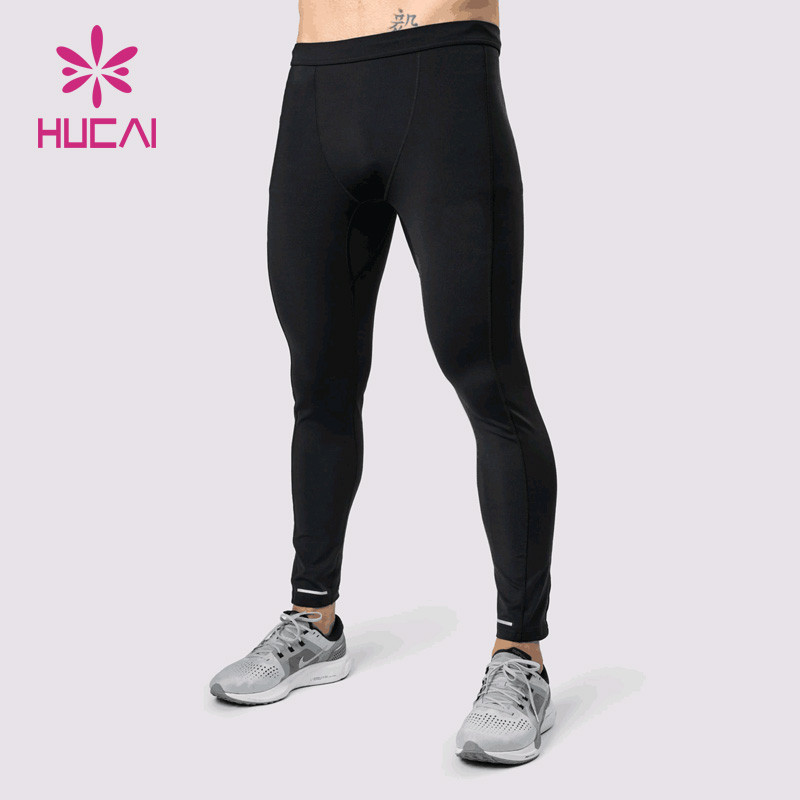
Running tights prioritize lightweight compression, minimal seams, reflective visibility and secure pocket placement that does not bounce. Training tights focus on higher compression levels, durable fabric, larger pocket systems and squat-proof coverage. Brands developing both need separate pattern bases, fabric specifications and compression mapping. Mixing the two constructions under one spec sheet usually leads to fit complaints and returns.
Table of Contents
- Who This Article Is For
- Coverage and Squat-Proof Construction
- Compression Level and Muscle Support Mapping
- Pocket Systems for Running vs Training
- Fabric Weight, Stretch Direction and Recovery
- Waistband, Gusset and Seam Placement
- Decision Check: Plan Your Tight Collection
- Manufacturer Insight: Common Sampling Issues
- FAQ
- Final Takeaway
Who This Article Is For
- Growing brands adding men's tights or compression bottoms to their collection
- Private label buyers who need to distinguish running-focused from training-focused product roles
- Established brands revising their men's bottom assortment for performance claims
- Startups deciding whether to launch with one universal tight or two distinct constructions
Why trust this guide? HUCAI activewear develops men's compression wear, running tights and training tights for brands across US, UK and Australian markets. We handle pattern work for compression mapping, pocket integration, waistband construction and fabric recovery testing as part of our OEM and ODM development services.
Coverage and Squat-Proof Construction
Coverage means different things for running tights and training tights. Running tights are typically worn in upright positions with forward motion. The coverage challenge is minimal if the fabric is properly opaque. Training tights face a harder test because squats, lunges and deadlifts stretch the fabric across the glutes and hips at maximum extension.
Key development points:
- Running tights: Opaque fabric with moderate stretch is usually sufficient. Coverage is tested in standing and stride positions.
- Training tights: Must be squat-tested at full depth. Fabric opacity under stretch is the primary concern.
- Fabric weight: Training tights often need 220 to 280 GSM for squat-proof coverage. Running tights can work at 180 to 240 GSM for breathability.
- Double-layer panels: Some brands add a second fabric layer across the seat for training tights. This adds cost but solves coverage complaints.
Brands should confirm which movements their tights need to survive before selecting fabric weight. A tight built for running will fail squat testing. A tight built for the gym may feel too heavy for long-distance runners.
Compression Level and Muscle Support Mapping
Compression is not simply about making the garment tighter. True compression wear uses graduated pressure that supports blood flow and reduces muscle oscillation during movement. The compression level, measured in millimeters of mercury (mmHg), differs between running and training applications.
Development notes:
- Running tights: Light to moderate compression (15 to 20 mmHg) supports calf and quad muscles during repetitive stride motion without restricting range
- Training tights: Moderate to firm compression (20 to 25 mmHg) stabilizes muscles during explosive and lateral movements
- Compression mapping: Different body zones need different pressure. Calves, quads and glutes typically receive more compression than hips and waist
- Fabric construction: Warp-knit fabrics generally provide more stable compression than weft-knit alternatives
HUCAI activewear reviews compression consistency during sample development. Uneven pressure distribution, usually caused by improper fabric selection or panel alignment, is a common reason for fit revision.
Pocket Systems for Running vs Training
Pocket design is one of the clearest differences between running tights and training tights. Runners need bounce-free storage for keys, phones and gels. Gym users need larger, more accessible pockets for phones, wallets and locker keys.
Pocket construction options:
- Running tights: Secure thigh pockets with zipper or tight elastic closure, positioned high to minimize bounce. Some styles add a lower back pocket for small items.
- Training tights: Larger thigh pockets, sometimes with phone sleeve and headphone port. Side pockets are more common because accessibility matters more than aerodynamics.
- Pocket fabric: Should match the main fabric's stretch or use a lighter mesh to reduce bulk
- Pocket placement: Must be tested in movement. A pocket that works for walking may bounce or sag during running or deep squats
Brands sometimes try to add large training-style pockets to running tights. This usually creates drag and bounce issues. Product role clarity prevents these mismatches.
Fabric Weight, Stretch Direction and Recovery
The fabric used for tights must balance stretch, recovery, opacity and durability. These properties often conflict. A fabric with excellent stretch may recover poorly. A fabric with great opacity may feel too heavy for summer running.
What to confirm during development:
- Stretch percentage: Usually 20% to 35% for men's performance tights
- Stretch direction: 4-way stretch is standard for training tights. 2-way stretch can work for running tights with simpler construction
- Recovery rate: Fabric should return to at least 90% of original shape after moderate stretch. Poor recovery causes bagging at knees and seat
- Moisture management: Wicking properties are essential for both categories but more critical for running due to longer wear times
HUCAI activewear tests fabric behavior under load before confirming bulk fabric. This step prevents the common issue where a fabric performs well in the swatch but fails after repeated movement and washing.
Waistband, Gusset and Seam Placement
The waistband and gusset are high-stress areas that separate well-made tights from budget alternatives. Construction details here affect comfort, durability and fit consistency across sizes.
Waistband considerations:
- Width: Running tights often use a narrower waistband (3 to 4cm) for lighter feel. Training tights benefit from wider bands (4 to 6cm) for stability during heavy lifts
- Elastic type: Internal elastic channel vs exposed elastic. Internal channels offer cleaner aesthetics but require more precise construction
- Drawcord: Essential for running tights to prevent slide during movement. Optional for training tights depending on fit target
Gusset and seam notes:
- Gusset: A diamond or teardrop gusset reduces crotch seam stress and improves mobility. Critical for training tights
- Flatlock seams: Reduce chafing in high-friction areas. Standard for both categories
- Seam placement: Side seams should be tested for visibility under stretch. Some brands prefer side-seam-free construction for cleaner aesthetics
Decision Check: Plan Your Tight Collection
Before finalizing samples or requesting quotations, confirm the following:
- Which use case is primary: running, training, or hybrid?
- What compression level matches your brand promise and price tier?
- What pocket system do your target customers actually need?
- Has the fabric been squat-tested or stride-tested for the intended use?
- What waistband construction matches your aesthetic and functional goals?
- Which markets are you launching in first? (US running culture, UK gym culture, Australian outdoor training)
Need help developing men's running tights or training tights? HUCAI activewear provides OEM and ODM development support for compression wear, pocket systems, waistband construction and fabric selection.
Start a Development Conversation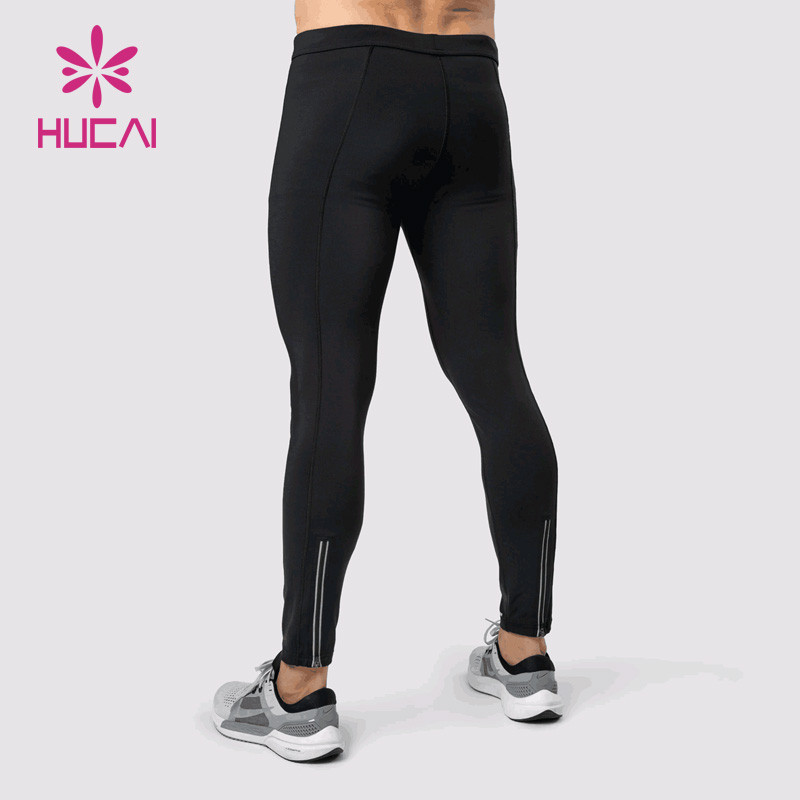
Manufacturer Insight: Common Sampling Issues
We see three repeated issues in men's tights sampling:
- Compression level not mapped to use case. A brand may request "medium compression" without defining what that means for running vs training. This leads to revisions when the sample feels too tight for running or too loose for training.
- Pocket placement tested only while standing. A pocket that looks correct on a fit model may bounce during running or interfere with squat depth. We recommend testing pocket function during actual movement before sample approval.
- Fabric recovery assumed rather than tested. Many brands select fabric based on hand feel and initial stretch. Recovery after 50 or 100 stretch cycles is what determines whether the tight holds its shape through a product's life.
These issues are avoidable when the sample brief includes use case, compression target, pocket requirements and fabric recovery expectations.
FAQ
What is the difference between running tights and training tights?
Running tights prioritize lightweight fabric, light compression, minimal bounce and reflective details. Training tights focus on higher compression, squat-proof coverage, durable construction and larger pocket systems. They are built for different movements and should be developed with different pattern bases.
Can one tight design work for both running and training?
Some brands offer hybrid tights that balance both use cases. However, hybrid designs usually compromise on at least one dimension: they may be too heavy for competitive runners or not supportive enough for heavy lifters. Most growing brands benefit from starting with two distinct constructions.
What compression level should brands specify for men's performance tights?
Running tights typically use 15 to 20 mmHg. Training tights usually range from 20 to 25 mmHg. The exact level depends on fabric construction, panel design and target customer preference. We recommend testing compression distribution during sample development.
How should brands test squat-proof coverage?
Squat testing should be performed at full depth with bright overhead lighting. The tester should wear a contrasting color underneath. Photos from multiple angles help identify opacity issues. This should be done during sample review, not after bulk production.
What is the typical MOQ for custom men's tights?
MOQ usually starts from 100 pieces per style. Exact minimums depend on fabric type, color count, size range, pocket complexity and logo customization. Order structure and fabric availability also influence the final number.
Can you help if we only have reference images for tights development?
Yes. HUCAI activewear supports ODM development from reference images. We help define product role, select fabric, develop patterns and adjust fit through sample rounds before bulk planning.
What should be confirmed before moving from sample to bulk?
Confirm compression level, coverage under stretch, pocket function in movement, waistband stability, fabric recovery after repeated stretch, size grading, logo placement and seam construction. A pre-production review checklist helps align these details.
How does size grading work for compression tights?
Compression tights require tighter grading through the leg and seat than casual pants. Waist grading may be more generous to accommodate different body shapes. Grading should be confirmed with a measurement chart and fit test across sizes.
Final Takeaway
Running tights and training tights serve different athlete needs and should be developed as distinct products. Coverage requirements, compression levels, pocket systems and waistband construction all shift based on primary use case. Brands that define these differences early in development avoid the costly mistake of building one tight and marketing it for two incompatible activities.
HUCAI activewear supports men's compression wear development through sample rounds, fabric testing, pattern work and bulk coordination. Whether your collection needs running-focused, training-focused or hybrid tights, the right construction decisions should be made before the first sample is cut.