Men's Grid Base Layer Development: Thermal Mapping, Stretch Recovery and Next-to-Skin Construction
Men's grid base layer development sits at the intersection of knit geometry and next-to-skin construction. For running and Nordic brands building a thermal layer that sits directly against the skin, the decision is not simply which fabric feels warmer. Grid knit structure, GSM, stretch recovery, flat seam placement, neck opening and body fit interact with each other, and changing one usually forces a change in another. HUCAI activewear develops private label activewear with running and cold-weather training brands, and the base layer is often the piece that decides whether a layering system works in the first twenty minutes of a session and still feels controlled in the last twenty. This guide walks through how a grid base layer is actually specified: what the grid structure does, how thermal mapping should be described, where recovery is won or lost, and which construction details decide whether the garment stays comfortable once it is worn under a midlayer.
Quick Answer
A grid base layer is a next-to-skin knit in which the knit structure itself, usually raised grid cells separated by thinner channels or open pointelle lines, creates the air and moisture pathways. Warmer yarn alone does not create that behavior. The development decisions that influence wear most are grid geometry, the GSM range, elastic content and recovery target, flat seam placement, neck opening depth and body fit under a midlayer.
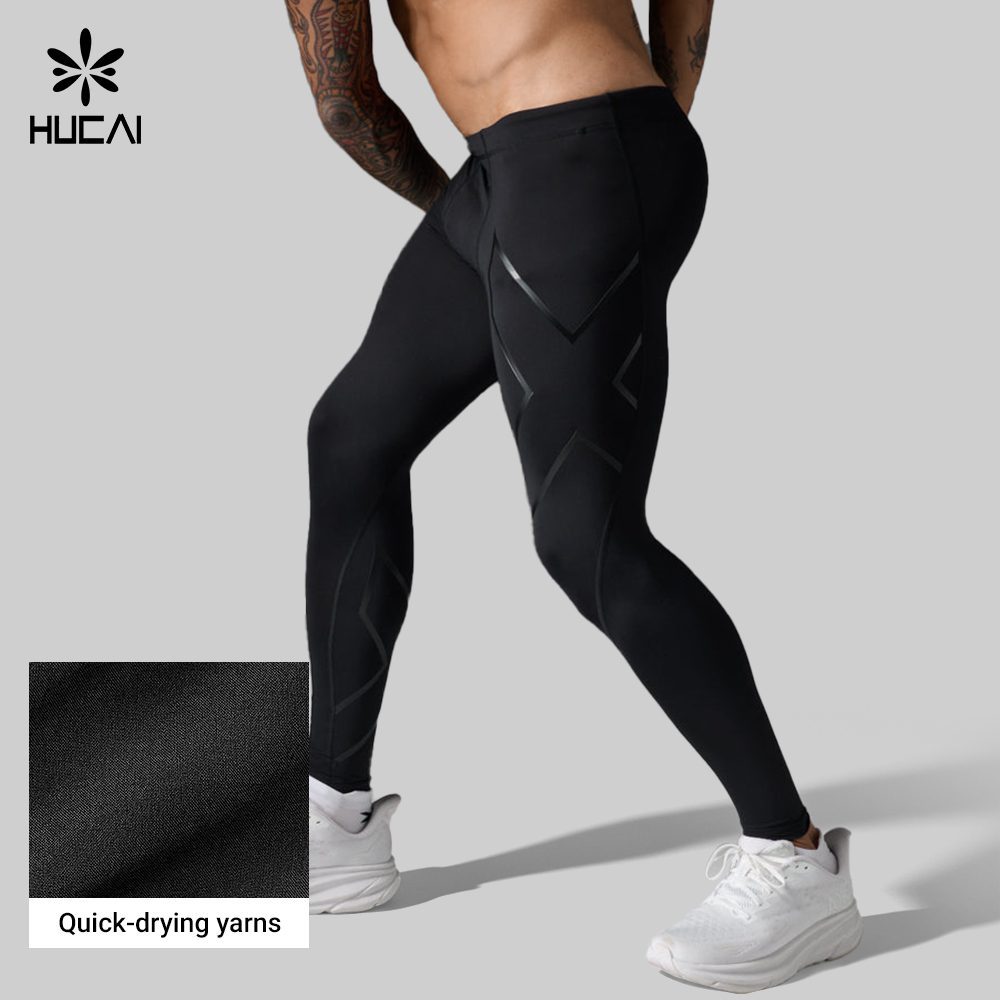
Compression is a separate product role. A thermal base layer manages heat, air and moisture at the skin. Compression tights manage pressure and muscle support. They are engineered differently, sampled differently, and should not be specified from the same brief.
In This Guide
- What a Grid Base Layer Actually Is
- How Grid Geometry Affects Heat, Air and Moisture Movement
- GSM, Yarn and the Weight Question
- Stretch Recovery: What Actually Determines It
- Next-to-Skin Construction: Flat Seams, Gussets and Placement
- Neck Opening, Body Fit and Hem
- How the Base Layer Sits Under Midlayers
- Decision Check Before Sampling
- FAQ
- Final Takeaway
Who This Article Is For
- Running brands building an autumn and winter layering system where the base layer is a permanent SKU rather than a seasonal add-on.
- Nordic and cold-weather training brands that need a next-to-skin layer to work under a shell or a midlayer without adding bulk.
- Growing brands starting from reference images and a direction, without a complete tech pack.
- Established brands and private label buyers who already have specs and want the recovery, seam and neck variables confirmed before bulk.
What You Get From This Guide
- A working language for describing grid structure so buyers and factories are talking about the same thing.
- The variables that decide recovery, and how to test them during sampling instead of after bulk.
- Construction checkpoints for flat seams, gussets, neck opening and hem that reduce revision rounds.
- A pre-sampling decision list you can send with a tech pack, reference images or an early concept.
- A clear boundary between thermal base layer development and compression development.
1. What a Grid Base Layer Actually Is
A grid base layer is not a warm tight with a textured surface. The grid is a knit architecture. Raised cells sit against the skin and carry the bulk of the contact area, while the thinner lines between them form channels that run across the body. That difference in thickness is engineered into the knit, not added afterwards.
Because the structure does the work, the fabric behaves differently from a flat knit of the same weight. The raised cells reduce how much surface area touches the skin, and the channels give air and vapour somewhere to move. This is why two base layers with the same GSM can feel very different on the body, and why a specification written only as a weight and a fibre blend rarely predicts how the garment will wear.
For brands, the practical consequence is that the description matters. If the brief says "warm fabric", the sample round becomes a guessing exercise. If the brief says "grid knit, raised cell roughly this scale, channels running this direction, this GSM, this recovery target", the sample round becomes a set of confirmable decisions. HUCAI activewear works from that second kind of brief, because it lets a fabric and a pattern be evaluated against a stated intention instead of a feeling.
2. How Grid Geometry Affects Heat, Air and Moisture Movement
Thermal mapping is the part of base layer development that is most often described loosely. In practice it means deciding which zones of the body need more insulation, which zones need faster air movement, and where the transition between those zones sits. On a grid knit, the map is expressed through knit density: tighter raised cells in the areas that lose heat quickly, more open ground structure, channels or mesh-adjacent knitting in the areas that build up heat under load.
The chest, upper back and the front of the thighs are usually treated as the zones that hold warmth, while the underarm area, the centre back and the back of the knee are treated as the zones that need to release it. Those choices are structural, and they are visible in the finished knit. A brand can therefore describe its thermal map precisely enough to be sampled, rather than treating it as a marketing phrase.
Moisture movement is a related but separate decision. Vapour and liquid travel along the yarn and through the structure, and the channel geometry influences how quickly the surface stops feeling wet and how much the fabric clings when it is damp. A grid structure helps here because the raised cells keep more of the fabric away from the skin, but the yarn choice still decides how the moisture is transported once it reaches the fabric.
Two clarification points are worth stating early. First, a thermal map is not a ventilation panel system; mesh panels and laser perforation belong to a different construction conversation, and mixing the two in one decision makes sampling harder to control. Second, the thermal map must be readable at the pattern stage. If the knit zones cannot be aligned with pattern pieces, they will drift between sizes, and the map stops matching the body.
3. GSM, Yarn and the Weight Question
GSM is a starting point, not an answer. On a grid knit, fabric weight and the perceived warmth of the finished garment move together only up to a point, because the raised cells change how the fabric behaves against the skin. Two knits at the same GSM can differ noticeably once the grid scale, the yarn and the finishing are set.
That said, a weight range still has to be chosen early, because it drives the yarn, the machine gauge, the pattern and the price conversation. The table below shows where those ranges usually sit for next-to-skin thermal layers used in running and cold-weather training. They are reference points for discussion, not a performance claim, and the confirmed figure still depends on yarn, knit structure and finishing.
| Intended use | Typical fabric weight | What it changes |
|---|---|---|
| Transitional seasons, high-output sessions | Usually specified in the lighter part of the thermal range | Faster moisture movement, less insulation, easier packing under a midlayer |
| Standard cold-weather training | Common mid thermal range | Balanced warmth and air movement, works under a light midlayer |
| Deep winter, low-output or long-duration sessions | Heavier end of the thermal range | More insulation and more coverage, more bulk under a shell, longer drying time |
| High-movement zones within one garment | Same fabric, different knit density | Zoned behavior without adding a second fabric to the bill of materials |
The yarn decision follows the weight decision. A heavier fabric built from a fine yarn behaves differently from the same weight built from a coarser yarn, and the difference shows up in recovery, surface feel and how the grid cells hold their shape after repeated wear. Grid structure also means the finished garment weight will not match the fabric GSM in a simple way, so finished garment weight should be measured during sampling as its own value.
4. Stretch Recovery: What Actually Determines It
Recovery is the ability of the fabric to return to its original dimensions after being stretched, and it is the variable that most often decides whether a base layer still feels controlled in month three. Elastane content is one input into recovery, but it is not the whole answer. Knit structure, yarn type, the ratio of raised cells to ground structure, and the finishing route all influence how far a knit returns after it is loaded.
Stretch and recovery should be discussed as two separate figures. Stretch describes how far the fabric extends under a given force. Recovery describes how much of that extension is given back, and how quickly. A fabric can extend comfortably and still return slowly, which produces the familiar range of complaints: looseness at the knee, elbow bagging, hem creep and waistband roll.
The practical approach during sampling is to measure rather than to describe. Record the relaxed dimension of a defined area, extend it under a controlled load, hold it for a defined interval, release, then re-measure after a set recovery time. Repeat the same measurement after a wash cycle. The absolute numbers matter less than the comparison between the first measurement and the later ones, because that comparison is what predicts how the garment will behave in use.
Product Development Note
If a brand wants to reduce recovery risk without changing the yarn, the first two levers are usually the knit structure and the fit allowance rather than the elastane percentage. Adding elastane changes feel and cost across the whole garment; adjusting the ground structure or the negative ease in the pattern is a more contained change that can be evaluated in one sample round.
5. Next-to-Skin Construction: Flat Seams, Gussets and Placement
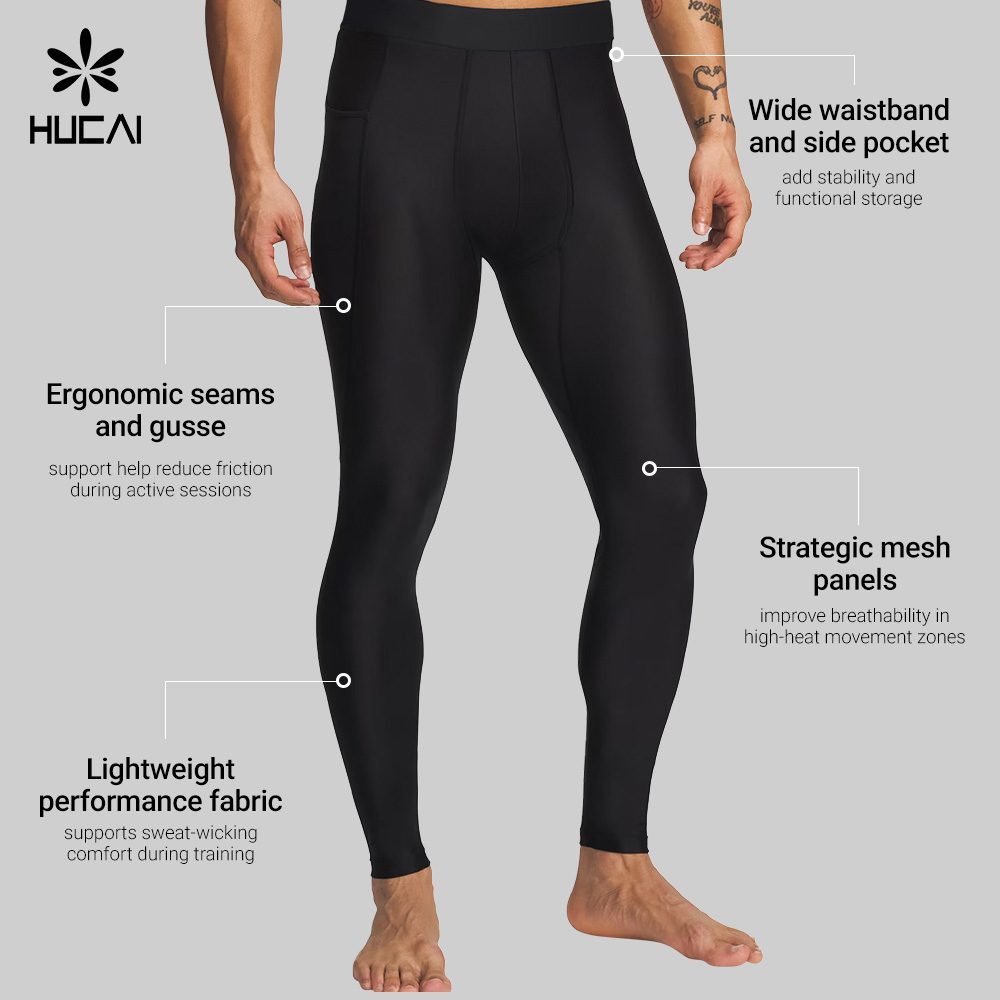
On a garment worn directly against the skin, seam bulk is a comfort decision before it is a strength decision. A flat seam keeps the join low and wide so that it does not create a ridge under a midlayer. Where a raised seam lands on a moving area, the effect shows up as friction over time rather than as an immediate fault, which is why it is easy to miss in a short wear test.
Gussets matter for the same reason. A crotch gusset in tights and an underarm gusset in a top both reduce stress at the points where the fabric is pulled hardest, and they move the seam away from the highest-friction area. Where a gusset is used, the knit direction and the stretch direction of the insert should be confirmed in the same review as the main body, because a gusset cut in the wrong direction can restrict movement instead of enabling it.
Seam placement should also follow the thermal map. The transition between a denser zone and a more open zone is a natural place for a seam, but it is a poor place for a raised join. When the two requirements conflict, the usual resolution is to keep the zone transition in the knit and move the seam off the transition line.
6. Neck Opening, Body Fit and Hem
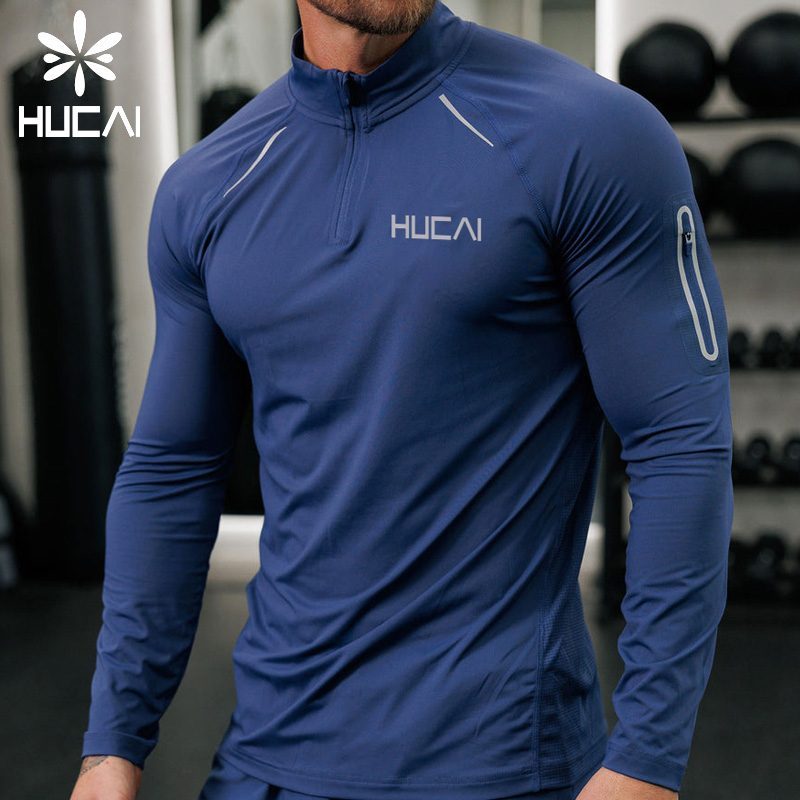
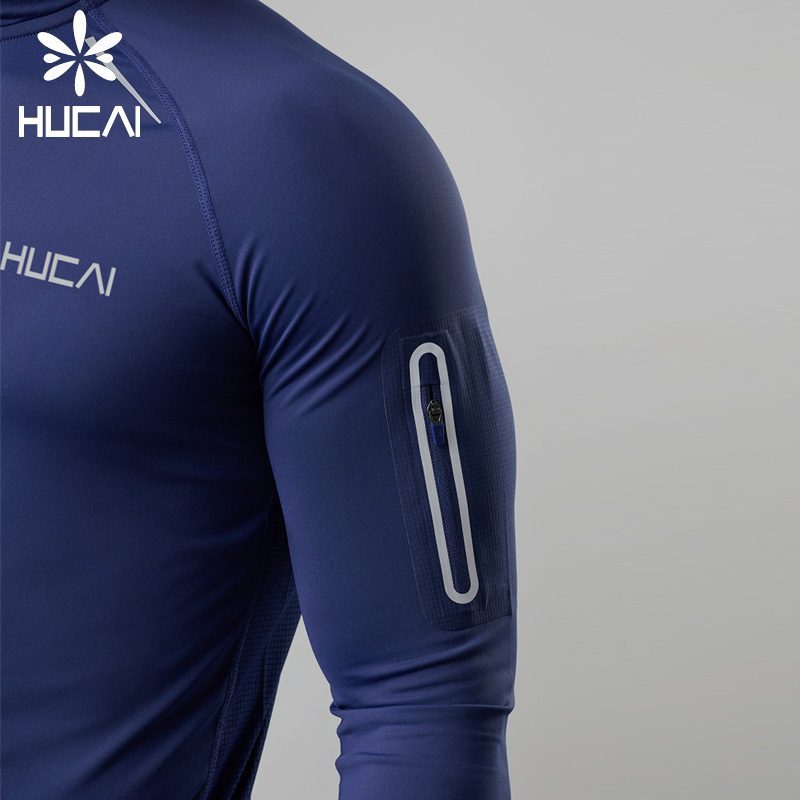
The neck opening is the detail most likely to be specified late and regretted early. A collar that sits too high creates pressure under a midlayer and under a race top, especially when the wearer is breathing hard. A collar that opens too far loses heat at the sternum and lets cold air in at the point where the body is most exposed. Crew and mock neck versions solve different problems, and the choice should follow the layering system rather than the sample room.
Body fit on a next-to-skin layer is built on negative ease, which means the garment is cut slightly smaller than the body and relies on stretch and recovery to sit clean. Too much negative ease produces restriction, seam strain and visible stress lines. Too little produces folds, and folds under a midlayer create the same friction problem as a raised seam. The useful confirmation in sampling is not only how the garment feels at rest, but how it behaves through a full range of movement with the midlayer on top.
Hem and waistband decisions follow the same logic. For tights, the rise, the waistband height and the gripper method decide whether the layer stays in place during repeated hip flexion. For tops, the hem length decides whether the layer stays tucked under a midlayer and whether it rides up during overhead movement. Both are worth confirming as part of the same fit review as the neck opening, because they are the three places where a base layer is most often reworked.
7. How the Base Layer Sits Under Midlayers
A base layer is only half of a layering system, and the half that is evaluated in isolation. Sleeve volume, hem length, waistband height and the weight of any branding all interact with the layer above, and a detail that reads clean on its own can create a ridge once a midlayer is over it.
Three checks make the interaction visible before bulk. First, confirm that seam and panel transitions do not stack on the same line as a midlayer seam. Second, confirm that the base layer hem does not bunch at the midlayer hem. Third, confirm that any print, patch or label on the base layer does not sit under the midlayer zip or the shoulder seam, where added thickness is felt most. Sleeve-led details such as thumbholes and cuff shape belong to the long sleeve layer itself and should be developed in that context, not folded into the base layer brief.
8. Decision Check Before Sampling
Before a grid base layer moves into sampling, these eight items should be confirmed in writing. Each one removes a revision loop later.
- Product role - thermal next-to-skin layer, stated separately from any compression product in the same range.
- Grid structure - raised cell scale, channel direction, and the zones where knit density changes.
- Fabric weight - a GSM range plus the yarn route, with finished garment weight measured separately.
- Recovery target - a defined measurement method, a hold interval, a recovery time and a wash repeat.
- Seam plan - flat seam type, and the list of places where a raised seam is not acceptable.
- Gussets - crotch and underarm gusset dimensions, with knit direction confirmed for the insert.
- Neck and fit - collar height and opening for crew or mock versions, plus the negative ease figure for the body.
- Layering fit - the midlayer or race top the base layer will be worn under, reviewed on the same fit model.
Manufacturer Insight: Where Base Layer Development Usually Slows Down
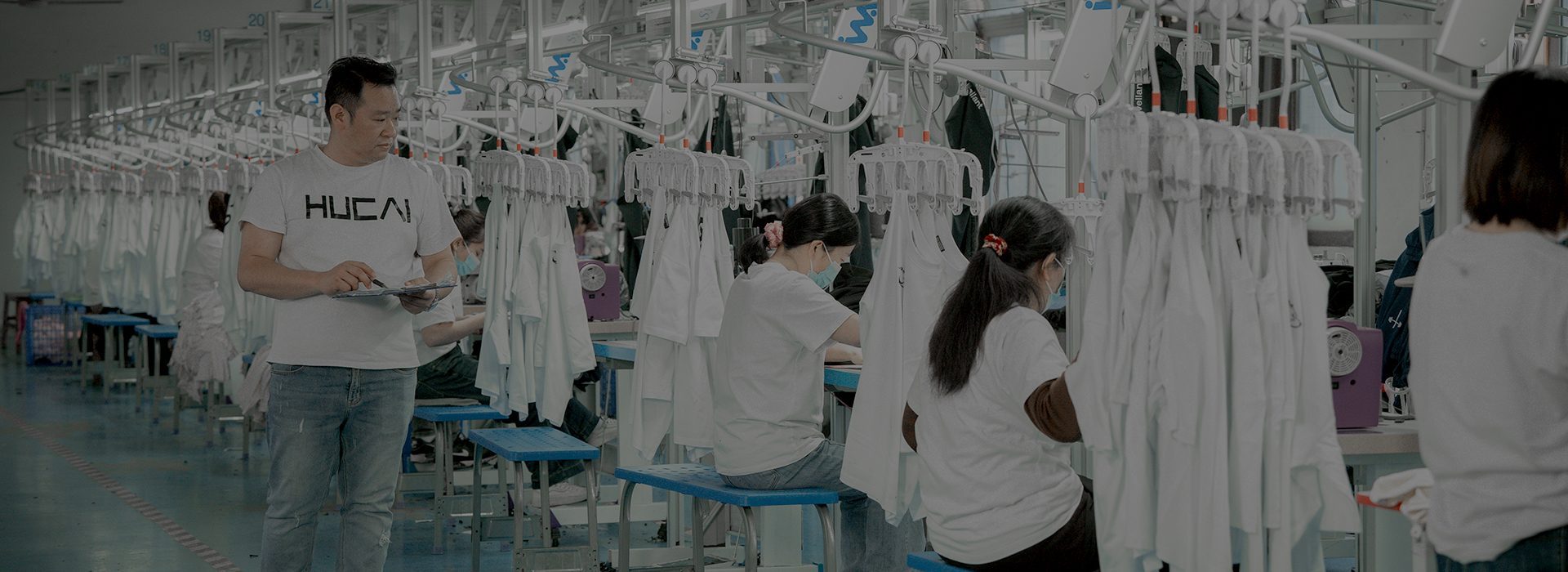
In grid base layer projects, the delay rarely comes from the fabric itself. It comes from the point where knit zone decisions meet pattern decisions. Once the garment has a thermal map expressed in knit density, the pattern has to carry that map consistently across the size range, and the seams have to be placed without interrupting it. That is a coordination task between the development, sample and pattern functions rather than a single supplier decision.
HUCAI activewear handles that coordination through a defined sample-to-bulk sequence: a pre-production review after sample approval, an AQL 2.5 quality inspection approach with checkpoints at agreed stages, and MES and ERP tracking so fabric, trims, pattern, sample and bulk status stay visible across the production window. For a base layer, the checkpoints that matter most are the recovery measurement and the seam placement confirmation, because both are cheap to verify on a sample and expensive to correct after bulk cutting.
Common Failure Pattern
A frequent early-stage issue in men's base layer projects is treating the grid base layer as a warmer version of an existing tight: the pattern is copied from a compression garment, a grid fabric is substituted, and the brief stops there. The first wear test then surfaces three linked problems at once, because recovery was never measured, the neck opening was never matched to the layering system, and the seam plan still reflects a pattern built for a different product role. All three are recoverable in sampling. Together they can cost a full revision round if they are discovered after the neck and fit review has already been signed off.
FAQ
What is the MOQ for a custom men's grid base layer?
For HUCAI activewear, MOQ starts from 200 pcs per style. The confirmed quantity still depends on fabric, colour, size range, the level of customization, trims, the logo method and how the order is structured. If a base layer uses a zoned knit, the construction can also influence the minimum, so it is worth confirming both the fabric and the construction before the quantity is fixed.
Do we need a tech pack before starting OEM or ODM development?
No. A complete tech pack makes the OEM route faster, but it is not a condition for starting. Many projects begin with reference images, a target market, a season and a product direction, and the specification is built during development. What matters is that the product role, the grid structure intention and the layering system are clear enough to sample against.
Can you help if we only have reference images?
Yes. Reference images are a workable starting point for base layer development. They are most useful when they are paired with a short statement of what the brand wants to be different, because the development work then has a direction rather than a target to copy. From there, fabric options, knit structure and fit can be narrowed into a sample.
How long does grid base layer sampling usually take?
Sample timing depends on fabric availability, pattern work, the logo method, fit adjustment and the number of revision rounds. Base layers often need one extra round compared with a loose-fit garment, because recovery and neck opening are usually confirmed by wearing rather than by measuring alone. A realistic plan should be built with that round included.
Why is a grid base layer not the same as compression tights?
They solve different problems. A grid base layer manages heat, air and moisture at the skin and is cut with modest negative ease. Compression tights manage graduated pressure and muscle support, and they are engineered around a pressure profile. Substituting one pattern for the other is a common early-stage issue because the two garments look similar on a hanger but behave differently in use.
What fabric weight should a men's thermal base layer be?
There is no single figure. Weight is selected against the intended conditions and the session type, and on a grid knit the finished garment weight will not follow the fabric GSM in a simple way. The practical route is to choose a range, confirm the yarn and knit structure, then measure finished garment weight and recovery on the first sample.
Why does recovery matter more than elastane percentage?
Elastane content is one input into recovery, not a prediction of it. Knit structure, yarn type, the balance between raised cells and ground structure, and the finishing route all influence how far the fabric returns after it is loaded. Two fabrics with the same elastane content can behave differently after repeated wear, which is why the measurement in sampling is more informative than the composition line.
What should be confirmed before the quotation stage?
Before pricing is meaningful, confirm the product role, the grid structure intention, the fabric weight range, the seam plan, the neck opening and fit direction, the branding method, the size range and the target quantity. Once those are aligned, the quotation reflects a defined garment rather than an assumption, which reduces the chance of a re-quote later in the project.
Final Takeaway
A grid base layer is a construction problem before it is a fabric problem. The grid geometry creates the air and moisture pathways, recovery decides how the garment behaves after the first month, and seam, neck and hem details decide whether it stays comfortable under a midlayer. Brands that describe those variables before sampling spend fewer rounds fixing them afterwards.
Start with the product role. State the thermal map in knit terms, not in adjectives. Set a recovery measurement method and repeat it after a wash. Confirm the seam plan, the gussets and the neck opening against the layering system the base layer will actually be worn under. Then move into sampling with a brief that a factory can build against and a brand can evaluate against the same criteria.
Next Step
Trust Notes
- HUCAI activewear is a B2B men's activewear manufacturer supporting OEM, ODM and private label development, from sample to bulk.
- Fabric, trim, logo, label and packaging customization are handled within the same project scope as pattern and sample development.
- Quality is managed through a pre-production review, an AQL 2.5 inspection approach, and checkpoints at agreed production stages.
- MES and ERP tracking keep fabric, trims, pattern, sample, bulk and QC status visible during the production window.
- Sample and bulk timing depend on confirmed details, including fabric availability, pattern work, branding method and revision rounds.