How to Plan Men's Activewear Size Grading for US, UK and EU Markets
For men's activewear brands expanding into multiple developed markets, size grading is not a one-size-fits-all spreadsheet. A size small that sells well in the US may fit like a medium in the UK and an extra-small in Japan. Established brands working with a men's activewear manufacturer need to understand how US, UK, and EU sizing systems differ in body measurements, grading increments, and fit expectations. HUCAI activewear helps brands structure size grading that matches each target market without creating unsellable inventory.
Quick Answer
US, UK, and EU men's activewear size grading differs in measurement charts, body proportion assumptions, and grade rules. US sizing tends to run larger in chest and waist, UK sizing sits between US and EU with moderate grading, and EU sizing uses centimeter-based systems with more precise increments. Brands should develop separate size charts for each market, confirm grading rules before pattern work, and test samples with local fit references rather than translating labels from one system to another.
Table of Contents
- Who This Article Is For
- US Size Grading: Body Proportions and Grade Rules
- UK Size Grading: The Middle Ground
- EU Size Grading: Centimeter Precision and Slimmer Fits
- Key Measurement Differences Across Markets
- How Grading Should Be Built Into Development
- Decision Check: Grading Before Production
- Manufacturer Insight: Common Grading Failures
- FAQ
- Final Takeaway
Who This Article Is For
- Established men's activewear brands entering new geographic markets
- Private label buyers who need multi-region size consistency
- Product development teams revising size charts for bulk production
- Brands experiencing fit complaints or returns tied to sizing mismatches
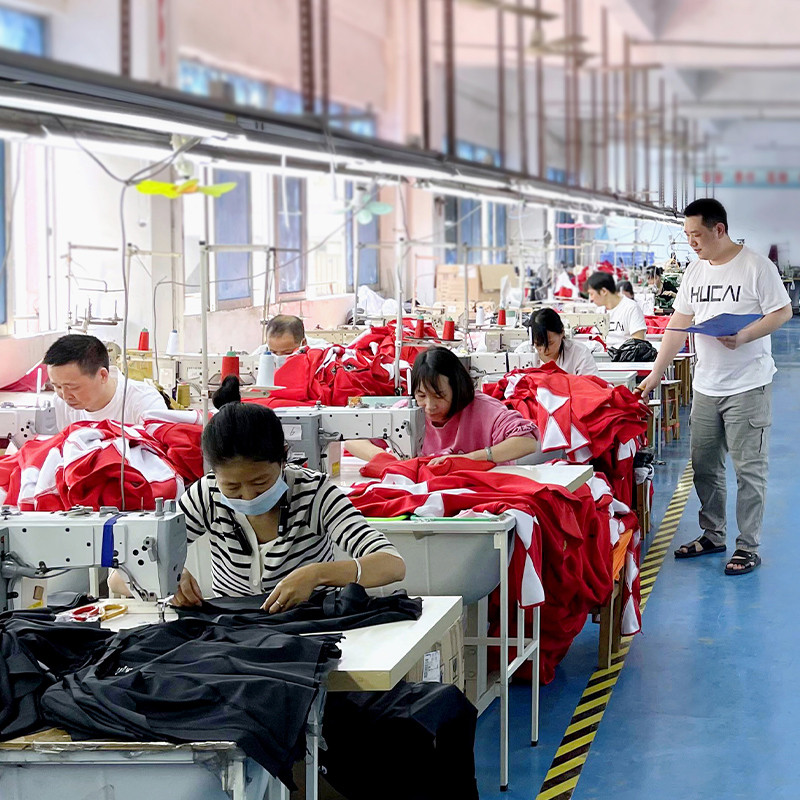
Why trust this guide? HUCAI activewear works with men's gym wear and activewear brands across the US, UK, EU, and Australia on pattern development, sample grading, and bulk production. We handle size chart alignment, fit review, and measurement tolerance checks as part of standard OEM and ODM development workflows.
US Size Grading: Body Proportions and Grade Rules
US men's sizing generally assumes larger body frames and more relaxed fits. A US medium typically corresponds to a chest measurement of 38 to 40 inches, with grading increments of 2 inches between sizes for chest and waist. This creates generous ease allowances that work for the American preference for comfort and layering.
Key characteristics of US activewear grading:
- Chest grading: 2 inches per size step is standard for medium to large ranges
- Waist grading: Often 2 to 2.5 inches, with looser fits in casual and gym-to-street styles
- Length grading: Body length and sleeve length increase by 0.5 to 0.75 inches per size
- Shoulder width: Grades by 0.5 to 0.75 inches, reflecting broader shoulder frames
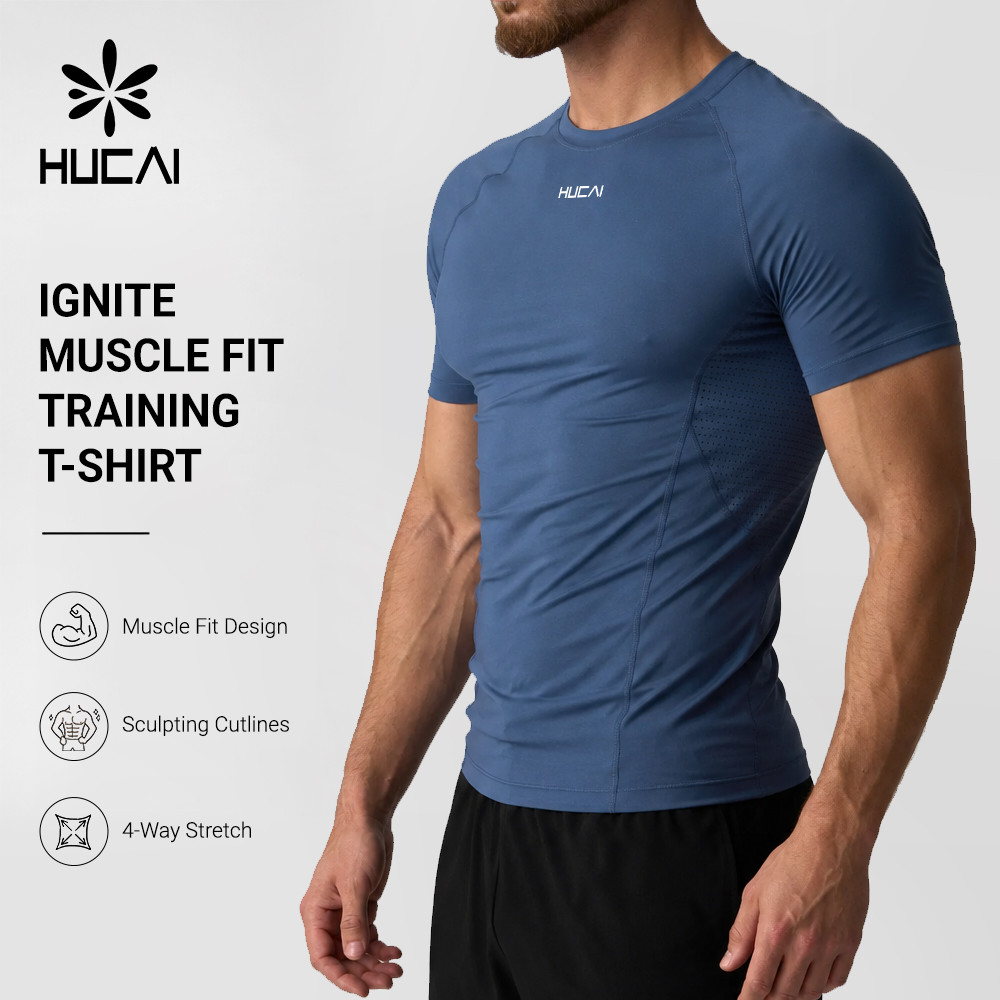
Brands targeting the US bodybuilding and performance training markets should note that muscle-fit styles may need adjusted grading. A muscle fit small needs to account for developed shoulders and chest without becoming too tight in the armhole or waist.
UK Size Grading: The Middle Ground
UK men's sizing sits between US and EU systems in both measurement values and fit philosophy. A UK medium typically measures 38 to 40 inches in the chest, similar to the US, but UK fits often run slightly trimmer through the torso and arm. This reflects a preference for cleaner silhouettes that work in both gym and casual settings.
Development notes for UK grading:
- Chest grading: 2 inches per size, but ease allowance may be 0.25 to 0.5 inches less than US equivalents
- Waist taper: More pronounced in UK fits, especially for training and running wear
- Sleeve length: Often 0.25 to 0.5 inches shorter than US equivalents at the same labeled size
- Inseam standards: UK joggers and shorts often use slightly shorter inseams for the same waist size
The UK market also shows strong demand for football-inspired training fits, which tend toward athletic-cut grading with enough room for dynamic movement but without the oversized trend common in some US gym wear.
EU Size Grading: Centimeter Precision and Slimmer Fits
EU sizing operates on a centimeter-based system that allows more precise grading increments. A EU medium typically corresponds to a 96 to 100 centimeter chest, which converts to roughly 37.8 to 39.4 inches. EU fits tend to be slimmer overall, with less ease allowance and more attention to proportional scaling across all measurement points.
Key EU grading characteristics:
- Chest grading: 4 centimeters per size step, which is approximately 1.57 inches
- Waist grading: 4 centimeters, creating a more fitted silhouette than US equivalents
- Length grading: 1.5 to 2 centimeters per size for body and sleeve length
- Shoulder grading: 1 to 1.5 centimeters, reflecting narrower average shoulder widths
Nordic and Western European brands often favor minimal, functional fits that require precise grading. The smaller grade rules mean that a half-size error in pattern work becomes more visible in the final garment.
Key Measurement Differences Across Markets
Understanding where the three systems diverge helps brands avoid the common mistake of simply relabeling sizes. A direct size translation without grading adjustment usually leads to fit complaints.
| Measurement Point | US (inches) | UK (inches) | EU (cm) |
|---|---|---|---|
| Medium chest | 38-40 | 38-40 | 96-100 |
| Chest grade rule | 2 in | 2 in | 4 cm (~1.57 in) |
| Waist grade rule | 2-2.5 in | 2 in | 4 cm (~1.57 in) |
| Body length grade | 0.5-0.75 in | 0.5 in | 1.5-2 cm |
| Typical ease allowance | More generous | Moderate | Minimal to moderate |
| Fit preference | Comfort, layering | Clean, versatile | Fitted, precise |
HUCAI activewear recommends confirming which market is primary before finalizing grade rules. A single garment cannot perfectly serve all three markets without separate size charts and potentially separate pattern sets.
How Grading Should Be Built Into Development
Size grading is not a post-pattern adjustment. It should be confirmed during the earliest stages of product development, ideally before the first sample is cut. When grading is treated as an afterthought, brands face expensive revisions or bulk goods that do not fit the target customer.
Recommended grading workflow:
- Confirm target markets. Decide whether you need one size chart or separate charts for US, UK, and EU.
- Define base size and grade rules. Choose a base size that represents your average customer, then define chest, waist, hip, length, and shoulder increments.
- Create graded nest patterns. Generate pattern pieces for each size in the range, confirming that seams and construction details scale correctly.
- Sample the smallest and largest sizes. Fit test at both ends of the range to catch proportion issues that do not appear in the base size.
- Confirm measurement tolerance. Define acceptable deviation between sample and spec before bulk production.
At HUCAI activewear, grading is reviewed alongside pattern work during the first development round. This prevents the costly mistake of approving a base-size sample only to discover that size large or small does not scale correctly.
Decision Check: Grading Before Production
Before moving from sample to bulk, confirm the following:
- Which market is primary, and do you need separate size charts for US, UK, or EU?
- Are your grade rules confirmed in writing and shared with your pattern maker?
- Have you sampled at least two sizes beyond the base size to verify grading accuracy?
- Do your measurement tolerances account for fabric stretch and recovery behavior?
- Have you reviewed size labels and size order to avoid customer confusion?
Need help aligning size grading across multiple markets? HUCAI activewear provides pattern development, grading review, and sample validation for men's activewear brands targeting the US, UK, EU, and Australia.
Discuss Your Grading Requirements
Manufacturer Insight: Common Grading Failures
In our work with men's gym wear and activewear brands, we see three recurring grading issues that cause problems in bulk:
- Direct size label translation without grading adjustment. A brand takes a US size chart, relabels it as UK and EU sizes, and assumes the fit will work. It rarely does. Each market needs grade rules matched to local body proportions.
- Grade rules that ignore fabric behavior. A 4-centimeter chest grade works for woven fabrics but may create fit issues in high-stretch performance knits where the fabric itself provides ease. Grade rules must account for material stretch percentage and recovery.
- Only sampling the base size. Brands often approve a medium sample and assume small and large will scale correctly. In reality, shoulder width, armhole depth, and neckline position do not always grade proportionally without pattern review.
These failures are preventable when grading is treated as a development priority, not a production afterthought.
FAQ
Can one size chart work for all three markets?
Usually not. US, UK, and EU customers have different body proportions and fit expectations. A single chart typically compromises fit in at least one market. Brands serious about multi-region sales should develop separate size charts and potentially separate pattern sets.
What measurement points matter most for men's activewear grading?
Chest, waist, shoulder width, body length, sleeve length, and armhole depth are the core points for tops. For bottoms, waist, hip, inseam, thigh, and rise are essential. Each point needs its own grade rule, and the rules should work together so the garment scales proportionally.
How does fabric stretch affect size grading?
High-stretch fabrics like performance knits and compression materials provide inherent ease, which means the pattern grade can be slightly smaller than for woven or low-stretch fabrics. Fabric stretch percentage, direction, and recovery should be factored into grade rules during pattern development.
What is a typical size range for men's activewear?
Most brands offer XS to XXL or S to 3XL. The exact range depends on the target market and brand positioning. HUCAI activewear can support extended size ranges when grade rules and pattern scaling are confirmed in advance.
Should brands provide their own size charts or rely on the manufacturer?
Established brands should provide a target size chart based on their customer data and market research. The manufacturer then translates that chart into technical patterns and grade rules. For ODM projects, the manufacturer can help develop the chart from fit targets and market direction.
How many sample sizes should be tested before bulk?
At minimum, test the base size plus one size above and one below. For wider ranges, sample the smallest, base, and largest sizes. This catches proportion issues that do not appear when only one size is evaluated.
What measurement tolerance is acceptable between sample and bulk?
Activewear typically allows 1 to 1.5 centimeters or 0.5 to 0.75 inches for key measurements like chest and waist. Tighter tolerances may apply for compression or muscle-fit styles. Tolerance should be agreed before production and checked during quality inspection.
Can HUCAI activewear help develop size charts for new markets?
Yes. As part of ODM development, we help brands research market-appropriate measurements, define grade rules, create graded patterns, and validate fit through sample rounds. For OEM projects, we work from your confirmed size charts and tech packs.
Final Takeaway
Men's activewear size grading is a technical discipline that directly affects customer satisfaction, return rates, and brand credibility. US, UK, and EU markets each have distinct body proportions, fit preferences, and measurement systems that cannot be served by simple size label translation.
Brands that invest in market-specific grade rules, sample validation across multiple sizes, and fabric-aware pattern development avoid the costly mistakes that come from treating grading as a production formality. HUCAI activewear supports this process through pattern development, grading review, and sample-to-bulk coordination for men's activewear brands expanding across regions.