How to Choose Men's Activewear Fabric Weights for Seasonal Transitions: GSM Guide for Brands
Choosing the right fabric weight is one of the first technical decisions startup brands face when developing a men's activewear line. Whether you are sourcing custom men's activewear for a spring training drop or planning a winter layering collection, understanding GSM (grams per square meter) helps you avoid mismatched expectations between sample feel and bulk delivery. At HUCAI activewear, we help brands map fabric weight to product role, season, and use case before sample development begins.
This guide explains how GSM works across men's gym wear categories, what weight ranges suit different seasons, and why the same number can feel different depending on fiber content and knit structure.
Quick Answer
GSM measures fabric weight per square meter. For men's activewear, lightweight summer layers typically fall between 130-160 GSM, midweight training staples range from 170-220 GSM, and heavier cold-weather pieces sit at 230-320 GSM. The right choice depends on product category, intended season, fiber content, and how the garment will be worn.
Table of Contents
Who This Article Is For
- Startup brands validating their first men's activewear collection
- Buyers who need to communicate fabric requirements to manufacturers
- Brand owners moving from single-piece orders to capsule planning
- Teams comparing fabric swatches but unsure how weight translates to wearability
Why Fabric Weight Guidance Helps Your Project
HUCAI activewear works with brands at the fabric selection stage to match GSM ranges with product goals. This prevents common issues like overbuilding a summer tee or underbuilding a midlayer. Our fabric library includes weight-sorted options across polyester, nylon, cotton, and blended knits, with sample support so you can validate handfeel before bulk commitment.
What GSM Means and Why It Matters
GSM stands for grams per square meter. It is a standardized measurement of fabric density, not thickness. A higher GSM generally means a heavier, more substantial fabric, but two fabrics with the same GSM can feel very different depending on fiber type, yarn count, and knit or weave structure.
For men's activewear manufacturers, GSM is a starting point for conversation. It gives both sides a numerical reference when discussing handfeel, opacity, drape, and seasonality. Without it, brands often describe fabrics using vague terms like light or heavy, which lead to mismatched samples.
The same GSM number can produce different results. A 180 GSM cotton jersey feels softer and more breathable than a 180 GSM polyester interlock, which feels smoother and more structured. Understanding this distinction helps brands specify fabric more precisely.
GSM Ranges by Product Category
Different men's activewear products have typical GSM ranges that buyers and manufacturers reference during development. These ranges are not fixed rules, but they provide useful starting points for collection planning.
| Product Category | Typical GSM Range | Common Use Case |
|---|---|---|
| Performance T-shirts | 130-170 GSM | Base layer, high-output training |
| Oversized gym T-shirts | 180-240 GSM | Streetwear crossover, pump covers |
| Tank tops / Stringers | 140-180 GSM | Bodybuilding, hot gym environments |
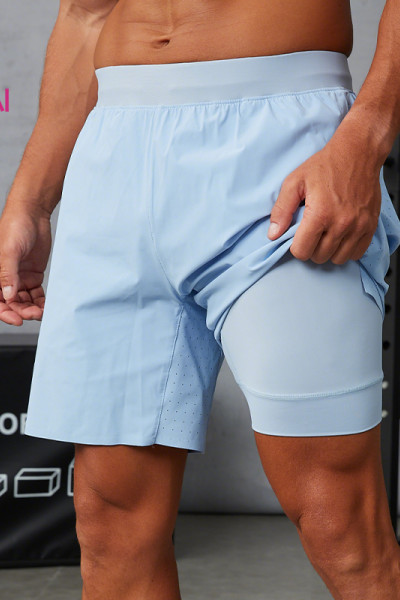
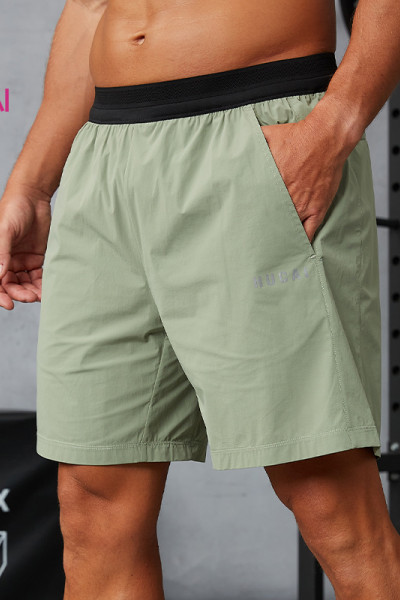
| Gym shorts (shell) | 160-220 GSM | Training, casual gym wear |
| Running shorts (liner) | 120-160 GSM | Built-in compression support |
| Joggers / Sweatpants | 240-320 GSM | Warm-up, recovery, streetwear |
| Hoodies | 280-380 GSM | Layering, cold-weather training |
| Lightweight jackets | 80-140 GSM | Wind protection, packable layers |
| Compression tights | 180-260 GSM | Run, train, recovery support |
These ranges reflect what HUCAI activewear sees across OEM and ODM projects for US, UK, Australian, and European markets. Regional preferences can shift selections within these bands.
Seasonal Fabric Weight Mapping
Seasonal transitions are where GSM decisions matter most. Brands launching across multiple seasons need to avoid using the same fabric weight for every product.
Spring / Summer (Warm Weather)
Prioritize 130-170 GSM for tops and 120-180 GSM for bottoms. Breathability and moisture movement matter more than structure. Lightweight polyester blends, single jerseys, and mesh knits dominate this range.
Autumn / Early Winter (Transitional)
Move to 180-260 GSM for tops and 200-280 GSM for bottoms. This is where layering logic begins. Tees become midweight, and hoodies or quarter-zips enter the collection at the higher end of the range.
Winter (Cold Weather)
Use 260-380 GSM for core insulation pieces. Fleece-backed knits, French terry, and brushed interiors add warmth without requiring extreme outer weights. Base layers may stay lighter to manage sweat.
HUCAI activewear helps brands plan seasonal capsules by mapping fabric weights across product roles. This prevents the common problem of creating a collection where every piece feels the same regardless of intended season.
Fiber and Knit Structure Impact
GSM alone does not determine how a fabric performs. Fiber content and construction play equally important roles.
Polyester vs Cotton vs Blends
Polyester at 160 GSM feels lighter and drier than cotton at the same weight. Cotton absorbs moisture and feels warmer. Blends offer middle-ground performance but require clear ratio specification.
Knit Structure Differences
A single jersey at 180 GSM drapes and stretches differently than an interlock at 180 GSM. French terry adds bulk through its looped back without necessarily increasing GSM dramatically. Rib knits feel heavier than their GSM suggests because of their compact structure.
Why This Matters for Sampling
When brands request a specific GSM, manufacturers need to know the intended fiber and knit type. HUCAI activewear's sample development process includes fabric handfeel confirmation so brands can compare structure, not just numbers.
Sample Feel vs Bulk Reality
One of the most common issues in men's activewear development is the gap between sample fabric and bulk fabric. Samples often use small-lot mill runs that feel slightly different from production batches.
Factors that cause variation include dye lot differences, finishing treatment consistency, and batch-to-batch yarn quality. A sample that feels perfect at 190 GSM may feel slightly different in bulk if the fiber blend shifts or the brushing process varies.
To reduce this risk, brands should confirm fabric specifications beyond GSM alone. HUCAI activewear tracks fabric, trim, pattern, sample, bulk, and QC checkpoints through MES and ERP systems. This gives buyers visibility into whether the bulk fabric matches the approved sample across weight, handfeel, and color.
Common Mistakes in GSM Selection
New brands often make predictable errors when choosing fabric weights. Recognizing these early saves revision rounds.
- Choosing GSM based on retail reference alone: A competitor's tee may list no fabric weight. Copying the look without understanding the GSM leads to mismatched expectations.
- Using one weight for every product: A collection where every piece is 180 GSM feels flat and ignores seasonal logic.
- Ignoring fiber context: Requesting 200 GSM without specifying polyester or cotton can produce very different samples.
- Overbuilding basics: A 240 GSM training tee may sound premium but can feel hot and restrictive during high-output sessions.
- Underbuilding layers: A 220 GSM hoodie marketed for winter use may disappoint buyers expecting warmth.
Avoiding these mistakes starts with clear product-role definitions. HUCAI activewear's development team helps brands define whether each piece is a base layer, training staple, or outer layer before fabric selection begins.
Decision Check
Before finalizing fabric weights for your men's activewear collection, confirm the following:
- Each product has a defined season and use case
- GSM ranges are mapped to product categories, not guessed
- Fiber content and knit structure are specified alongside weight
- Samples are evaluated for handfeel, not just numerical match
- Seasonal transitions are covered with appropriate weight steps
- Bulk fabric specifications are confirmed against approved samples
- Layering compatibility is considered for multi-piece outfits
- Regional climate differences are factored into weight choices
Need help mapping fabric weights to your collection plan? Share your product direction and HUCAI activewear will recommend GSM ranges, fiber options, and sample priorities based on your target season and market.
Manufacturer Insight
In practice, GSM selection is rarely a standalone decision. It connects to dyeing methods, finishing treatments, print compatibility, and cost structure. A 150 GSM polyester tee may cost less per meter than a 150 GSM cotton-modal blend, but the blend may perform better for your target customer.
HUCAI activewear approaches this through sample-to-bulk coordination. We help brands test 2-3 fabric options at different weights within the same fiber family, then compare handfeel, stretch recovery, and wash behavior before locking specifications. This reduces the risk of discovering mismatches after bulk production begins.
For brands with existing tech packs, we review GSM specifications against product roles and flag potential seasonal mismatches. For brands starting from reference images, we suggest weight ranges based on comparable products in our fabric library.

Frequently Asked Questions
What GSM is best for men's gym T-shirts?
For high-output training, 140-170 GSM polyester or blended knits work well. For oversized gym tees or streetwear crossover styles, 180-220 GSM provides more structure and drape.
Can you help if we only have reference images and no fabric specs?
Yes. HUCAI activewear can review reference products and recommend GSM ranges, fiber content, and knit structures based on visual assessment and comparable samples from our fabric library.
Why does the same GSM feel different across fabric types?
Fiber density, yarn thickness, and knit structure all affect handfeel. A 180 GSM cotton jersey feels softer and more relaxed than a 180 GSM polyester interlock, which feels smoother and more compact.
Do we need a tech pack before discussing GSM with a manufacturer?
No. GSM and fabric direction can be discussed early, even with reference images or product descriptions. A tech pack formalizes the details, but initial weight and fiber conversations can start without one.
How should brands plan GSM for a year-round collection?
Build a weight ladder. Use 130-170 GSM for summer cores, 180-240 GSM for transitional pieces, and 260-320 GSM for winter layers. This creates clear product roles and helps customers understand seasonality.
What should be confirmed before MOQ or quotation discussion?
Fabric weight, fiber content, color count, size range, and any special treatments. These factors affect both MOQ structure and per-unit pricing. HUCAI activewear reviews these details during the pre-sample stage.
How does GSM affect printing and branding options?
Lighter fabrics (under 160 GSM) may show ink bleed or heat press marks more easily. Heavier fabrics tolerate embroidery and thicker prints better. GSM should be considered alongside logo method during product development.
What usually causes bulk fabric to feel different from the sample?
Dye lot variation, finishing treatment differences, and batch yarn quality shifts. Confirming bulk fabric against approved samples with AQL 2.5 inspection checkpoints helps catch these variations before shipment.
Final Takeaway
GSM is a practical starting point for fabric selection, but it only works when paired with fiber content, knit structure, and product-role clarity. Startup brands building their first men's activewear collection should avoid guessing fabric weights and instead map GSM ranges to seasonal needs and use cases.
The goal is not to find one perfect GSM. It is to build a collection where fabric weight supports product function, seasonal relevance, and customer expectation across every piece.