How Men's Running Brands Should Plan an Autumn/Winter Drop in Waves Instead of One Large Launch
Planning a complete autumn/winter running range in a single pass is where many private label activewear brands lose control of both cost and calendar. When every cold-weather SKU enters development at the same time, sample rounds stack up, fabric commitments are signed before the product roles are clear, and the collection reaches the market as one heavy block instead of a sequence of sellable moments.
This guide explains how to plan an AW running drop in waves. It covers how to define wave logic from product role rather than temperature alone, which custom men's activewear base styles to develop first, when a thermal or weather layer earns its place, how to position hero styles, carryover and statement items, and how sample priority should be sequenced so the sample room is not booked with everything at once. HUCAI activewear works through this sequencing with startup and growing brands before sampling begins.
Quick Answer
An autumn/winter men's running collection is usually more stable when it is built as two or three launch waves organized by product role, not as one launch organized by weather. Wave 1 establishes the base styles that carry the drop: shorts with a warm option, a long sleeve, and a light layer that work across a wide temperature band. Wave 2 adds depth where sell-through data from Wave 1 supports it, typically a thermal midlayer and a warmer bottom. A later weather drop introduces the vest or jacket only when the wear-testing and fabric position justify a higher retail price. Hero, carryover and statement roles should be assigned before sampling, and sample priority should follow the wave sequence so revisions stay manageable and MOQ commitments are tied to confirmed roles.
On This Page
- Why an AW running range breaks when it is developed all at once
- Define waves by product role, not by temperature alone
- Wave 1: the base styles that carry the drop
- Wave 2: where a thermal layer earns its place
- The weather drop: vest, jacket and midlayer decisions
- Hero, carryover and statement: SKU roles before sampling
- Sample priority: sequencing rounds instead of booking everything
- How MOQ drivers shape wave size
- Decision check before you open development
- FAQ for running brands planning an AW drop
Who This Article Is For
- Startup running brands preparing a first autumn/winter range and unsure how many styles to develop at once.
- Growing brands with reference images, first-season sell-through and a target product direction, but no confirmed wave plan.
- Private label buyers who need to place a seasonal order without committing the whole cold-weather story in one sample round.
- Product managers deciding which styles should be sampled first, and which can wait for a second order window.
What You Can Take From This Guide
- A working definition of wave logic, so the range is sequenced by product role instead of by weather assumption.
- A practical split between base styles, thermal depth and weather-layer styles, including which ones are safer to carry over.
- A sample priority order that reduces revision loops by keeping related styles in the same sample round.
- Cost and MOQ drivers explained in wave terms, so quantity is placed where the product has already earned it.
The guidance below comes from a manufacturing position rather than a retail position. HUCAI activewear handles men's running and training development from factory capability, fabric and trim sourcing, pattern work, sample rounds and bulk planning, so the sequencing issues described here are the ones that shape how a sampling calendar is actually built.
Why an AW Running Range Breaks When It Is Developed All at Once
Autumn/winter looks like a single season from a merchandising view, but it is a set of overlapping temperature bands. A runner in early October and a runner in January are not buying the same garment, and the fabrics, weights and construction needed across that spread are not one family. Treating them as one launch forces every decision into the same sample window.
The break usually shows up in three places. First, sample capacity: a fourteen-style cold-weather range doubles the rounds needed before any style is approved. Second, fabric exposure: minimums get committed for a thermal fabric and a shell fabric before either has a confirmed role. Third, calendar: the whole range lands late because the slowest style gates the fastest one.
A wave structure does not reduce ambition. It changes the order in which ambition is spent, so each layer of the range is validated before the next one is funded.
Define Waves by Product Role, Not by Temperature Alone
Temperature is the wrong primary axis because it changes by market and by runner. Product role is more stable: what the garment is for, how often it is worn, and whether the buyer will reorder it. A wave is a group of styles that share a role, a fabric family and a sample window, and that can be launched together into a defined temperature band.
The table below shows a common three-wave structure for a men's running drop. Exact styles differ by brand, but the role logic holds across markets in the US, Canada, the UK, Ireland and the Nordics, where AW demand shifts between damp cool days and genuinely cold conditions.
| Wave | Product role | Typical styles | Sample priority |
|---|---|---|---|
| Wave 1 | Everyday running base, wide temperature band | Training and running shorts with a warm option, long sleeve top, light layer | Highest: these carry the drop |
| Wave 2 | Depth for colder days, driven by Wave 1 sell-through | Thermal midlayer, warmer bottom, heavier long sleeve weight | Second: sample after Wave 1 feedback |
| Weather drop | Weather protection and visible statement | Vest, running jacket, spray-resistant shell | Third: only with confirmed price position |
Wave 1: The Base Styles That Carry the Drop
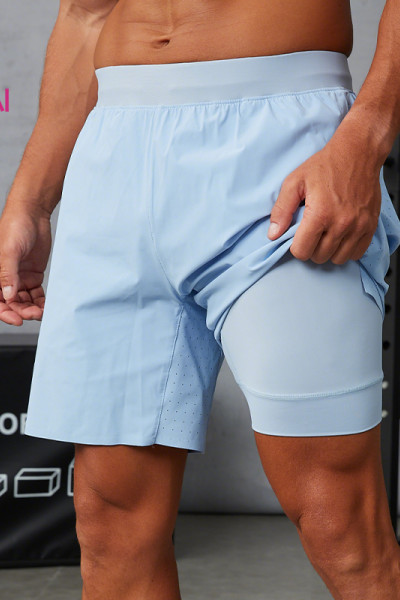
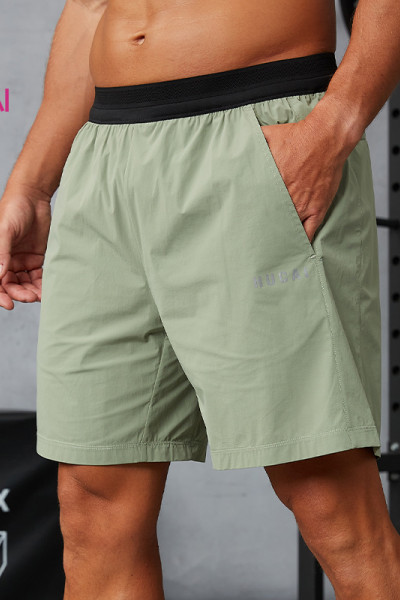
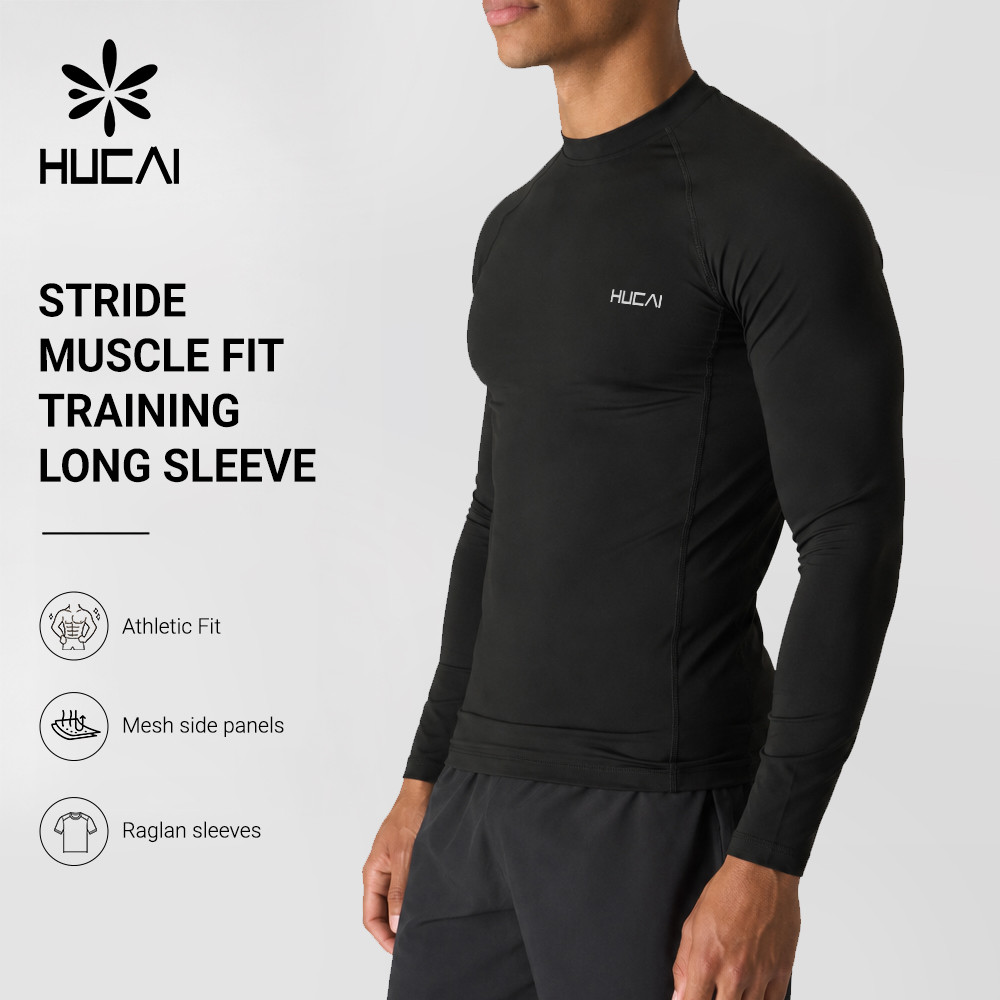
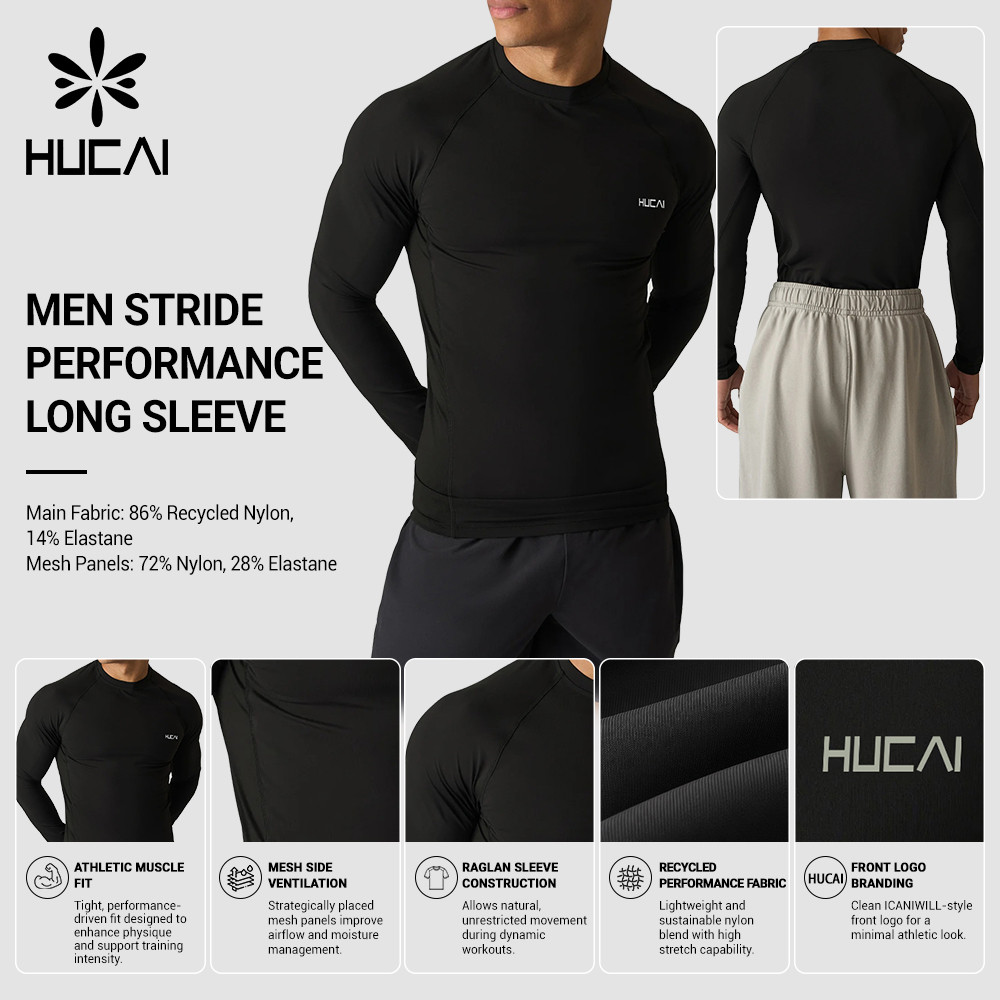
Wave 1 should be the smallest number of styles that can serve the widest temperature band. In men's running this usually means one short, one long sleeve and one light layer, each capable of working on its own or as part of a combination. These are also the styles with the highest reorder potential, which is what makes them the right place to put sample capacity first.
Fabric weight is the main variable here. A shorts weight that has enough structure to sit away from the leg, and a long sleeve weight that can be worn at the start of a run without overheating after twenty minutes, are usually the two decisions that determine whether Wave 1 holds together. Deciding those weights before pattern work starts avoids the common pattern of sampling a style, then resampling it in a second fabric.
Because the short is the highest-volume style in most running ranges, construction choices such as waistband width, drawcord position, liner versus linerless and inseam length have an outsized effect on the whole wave. Settling them once, and reusing the result, is what keeps Wave 1 tight.
Wave 2: Where a Thermal Layer Earns Its Place
Wave 2 should be funded by evidence, not by ambition. Once Wave 1 is in market, sell-through on the long sleeve and the light layer indicates whether the brand's customer actually runs cold or mostly runs in transitional conditions. If the light layer sells through early and the long sleeve reorders, a thermal midlayer has a role. If the range sat, adding a thermal layer only increases inventory exposure.
A thermal midlayer is also where fabric family decisions become expensive. Brushed back knits, grid constructions and stretch fleece behave differently in recovery, warmth-to-weight ratio and how they layer under a shell. Choosing a family before the wave is confirmed often means committing to a fabric minimum for a style that may not ship in the expected quantity.
Wave 2 is also the natural place for a warmer bottom and a heavier long sleeve weight, because both share the same cold-weather usage window and can be sampled together. Grouping them keeps the revision rounds focused on warmth, coverage and fit consistency rather than spreading attention across unrelated constructions.
The Weather Drop: Vest, Jacket and Midlayer Decisions
Weather protection is the highest-cost part of an AW range and the easiest to over-develop. A vest, a running jacket and a midlayer overlap in function, and building all three in the same season usually means one of them is duplicated by another. The cleaner approach is to decide which single protection story the brand is telling: blocked wind and light rain, insulation without a shell, or a packable layer for changing conditions.
Once that story is chosen, the garment specification follows it. A packable layer pushes toward lighter shell fabric, controlled panel construction and a small packed volume. A wind-focused piece pushes toward a denser face fabric and minimal seams. Water-repellent finishes, ventilation placement and pocket layout should follow the chosen story, because a garment built for three jobs is normally compromised on all three.
Because a weather drop carries the highest unit cost and the highest retail price, it is also the wave that benefits most from wear-testing before bulk. Field feedback on breathability, movement and how the layer behaves when wet is what justifies the price position, and it is much cheaper to act on that feedback in a sample round than after bulk production has started.
Hero, Carryover and Statement: SKU Roles Before Sampling
Wave planning only works if each style has an assigned role before sampling starts. A practical split is hero, carryover and statement. The hero style is the piece the drop is built around and the one that gets the most sample attention and the strongest fabric position. Carryover styles are proven bodies that return with a seasonal update and need only a fit and trim check. Statement items are the visible, lower-volume pieces that give the range its identity.
The distinction matters because these roles should not receive equal sample effort. A carryover style does not need the same number of rounds as a new hero body. A statement item does not need a full size range validated before the first order if it is planned as a limited launch. Assigning roles first turns sample priority from a negotiation into a sequence.
It also clarifies the color story. A carryover style returns in a core color plus one seasonal addition. A hero style carries the season's main color direction. A statement item can hold the most expressive color because it is not expected to reorder at the same volume. This keeps the seasonal color decision attached to product role instead of applied evenly across the range.
Sample Priority: Sequencing Rounds Instead of Booking Everything
The single most expensive planning error in an AW range is booking every style into one sample round. It removes the ability to apply what is learned. The alternative is to sequence rounds by wave, and to group styles inside a round by fabric family and construction similarity so one set of fit corrections can be applied across several styles.
A workable order is: Wave 1 bodies first, in the confirmed fabric family; then fit and trim revisions on the same bodies; then Wave 2 thermal styles once Wave 1 fit is locked; then the weather drop after the protection story is fixed. Each stage should close before the next opens. This is the point where an OEM or ODM partner's development coordination matters most, because revision control across staggered rounds is where information is normally lost.
Size grading and measurement tolerance should be confirmed during the first wave rather than at the end of the range. If the grading rules are settled on the base styles, the later waves inherit them, and the measurement review in each subsequent round becomes a check rather than a rebuild.
How MOQ Drivers Shape Wave Size
Wave size is ultimately limited by what the order structure can support. Several factors move the minimum quantity in a men's running style, and most of them are decided at the wave-planning stage rather than at the quotation stage.
- Fabric: a fabric used across two or three styles in the same wave shares a minimum, while a fabric used once carries it alone.
- Color: each additional colorway multiplies the effective commitment, so a wave with three colors is a different order from a wave with one.
- Size range: a full size run in a low-volume statement style raises cost per unit unless it is planned as a limited launch.
- Customization: logo method, woven labels, care labels and packaging add setup steps that are more efficient when they repeat across a wave.
- Trims: zippers, liners and elastic are often shared across styles and should be consolidated inside a wave rather than across waves.
MOQ from 100 pcs per style applies on the men's activewear side, and the exact figure still depends on fabric, color, size range, customization, trims, logo method and order structure. Consolidating fabric families and trims inside each wave is the most reliable way to keep the effective commitment aligned with what the wave is expected to sell.
Decision Check Before You Open Development
- Can you name the product role of every style in the drop in one line?
- Is Wave 1 small enough that all of its styles can be sampled in one round?
- Is the fabric family shared across at least two styles in each wave?
- Is the color story attached to hero, carryover and statement roles separately?
- Have you decided which wave carries the highest retail price, and why?
- Is the sample order sequenced, or is everything booked into one round?
- Are grading and measurement tolerance confirmed on the base styles first?
- Does each later wave have a sell-through or wear-test trigger before it is funded?
Manufacturer Insight
From a production seat, wave planning shows up as a scheduling and consistency problem. A common early-stage pattern in private label running projects is a first sample round containing shorts, a long sleeve, a midlayer and a jacket, which pulls four different fabric positions and three different construction directions into one revision cycle. When something needs to change, the change is harder to isolate, and the following round often reopens decisions that were already settled.
At HUCAI activewear, sample-to-bulk coordination is tracked across fabric, trims, pattern, sample and bulk stages through an MES and ERP setup, with pre-production review and AQL 2.5 quality inspection used as checkpoints rather than as a result guarantee. In practical terms, that helps a staggered wave plan stay readable: which style is in which round, which fabric is confirmed, which trim is pending, and what has already been approved. For many growing running brands, that visibility is what makes a second wave possible without reopening the first one.
If you are comparing development routes, the practical split is straightforward. A confirmed specification with a full tech pack usually suits OEM. A direction set out in reference images, target activity and price position usually suits ODM for fabric, fit and collection planning. Either way, the wave sequence should be agreed before the first sample order is placed. You can review the product range at custom men's activewear products or send your direction through the inquiry page.
FAQ for Running Brands Planning an AW Drop
How many styles should a first autumn/winter running drop include?
For a startup brand, a first drop usually works between five and eight styles in Wave 1 plus a small later wave, rather than a full cold-weather range. The limit is sample capacity and order structure, not ambition. If every style needs its own fabric, trim set and colorway, the effective commitment rises faster than the range can sell.
What should be developed first in a men's running AW collection?
The styles with the widest usage window and the highest reorder potential: a running short, a long sleeve and a light layer. They cover the widest temperature band and generate the sell-through information that tells you whether a thermal layer is justified. Weather protection is normally developed last because it carries the highest cost.
Is a wave launch only useful for large brands?
It is usually more important for smaller brands. A large brand can absorb the cost of an over-developed range across more volume. A startup or growing brand cannot, so sequencing reduces the amount of capital exposed before the product has proven a role.
What is the MOQ for custom men's running styles?
MOQ from 100 pcs per style applies on the men's activewear side. The exact figure depends on fabric, color, size range, customization, trims, logo method and how the order is structured across the wave. Consolidating a fabric family across two or three styles in the same wave is the most common way to make a smaller drop workable.
What should we prepare before contacting a men's activewear manufacturer?
Bring the intended product roles, the temperature band each style is aimed at, reference images or an existing tech pack, target colors, an estimated quantity per style and your launch timing. You do not need a complete tech pack to start; a cleared direction is enough for an ODM conversation, and it keeps the first sample round focused.
Do we need a tech pack before starting OEM or ODM development?
For OEM, a tech pack with measurement and construction detail is normally the working document. For ODM, reference images, target activity, fit preference and price position can start development, with the technical specification built during the sample stage. In both cases the wave sequence should be agreed first.
How long does a sample round usually take for men's running styles?
Sample timing depends on fabric availability, pattern work, logo method, fit adjustment and how many revision rounds the styles need. Grouping styles that share a fabric and construction into the same round is what keeps the total number of rounds down, and the wave plan is what determines that grouping.
What usually causes repeated revisions across an AW range?
Two causes dominate. One is sampling styles from different fabric families in the same round, which makes a fit correction difficult to interpret. The other is assigning equal sample priority to carryover and new bodies. Separating waves and roles removes most of the rework before it happens.
Final Takeaway
An autumn/winter running drop is a sequencing decision before it is a design decision. Build Wave 1 from the styles that cover the widest temperature band and reorder most often. Add thermal depth only when Wave 1 gives you a reason. Hold the weather layer until the protection story and the price position are both confirmed. Assign hero, carryover and statement roles before sampling, and let sample priority follow the wave order.
That structure keeps the sample room focused, keeps fabric commitments tied to confirmed roles, and gives the range more than one point at which it can sell. It also makes the development conversation with a manufacturer much shorter, because the sequence is already defined.
Next Step
Trust Notes
Development at HUCAI activewear runs through a single chain: fabric and trim sourcing, pattern and sample work, bulk production, quality control and logistics follow-up. Sample-to-bulk consistency is managed across those stages, with pre-production review and AQL 2.5 inspection used as checkpoints. Detail on the working approach is available on the about page.