How Men's Activewear Brands Should Specify Training Shorts: Inseam, Liner, Pocket, Fabric and Anti-Chafe Details
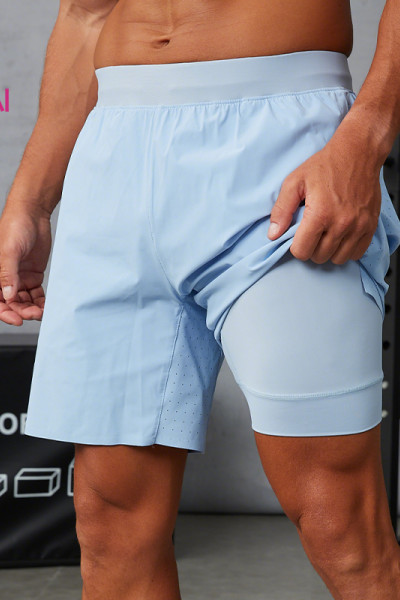
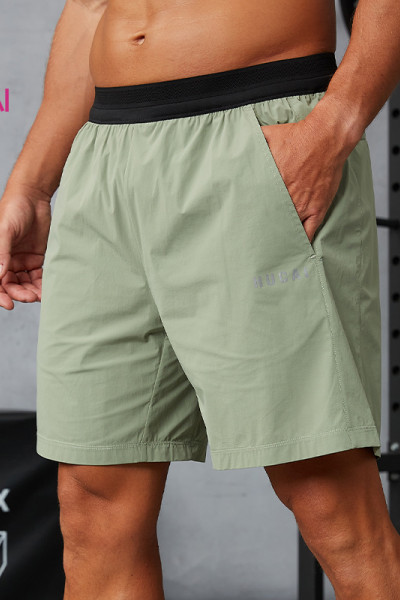
For private label men's activewear brands developing training shorts, specification starts from inseam length, liner type, pocket configuration, fabric weight, waistband construction and anti-chafe details. This guide helps brands confirm each specification before sampling.
HCActivewear supports men's activewear brands with OEM and ODM training shorts development — from fabric and trim selection, pattern development, sample review, measurement approval to bulk production follow-up.
Quick Answer
Before sending a training shorts tech pack, confirm: inseam by product role (5" for running/HIIT, 7" for training, 9" for strength), liner type (brief, compression or linerless), pocket configuration (phone pocket depth, zip pocket or side split), shell fabric (stretch woven, quick-dry knit or mesh), waistband style (elastic with drawcord or flat front), and anti-chafe construction (flatlock seams, bonded hem or gusset). Each decision affects sample success.
Table of Contents
Who This Article Is For
Growing men's activewear brands developing their first shorts line — you have a product direction but need to confirm specifications before sampling.
Startup brands with reference images — you need guidance on what to specify in your tech pack.
Established brands adding new inseam options or liner types — you need to understand compatibility between existing specs and new features.
Private label buyers — you need to prepare specification documents before manufacturer discussion.
1. Inseam Selection: 5, 7 and 9 Inch
Inseam length is the most visible specification decision in training shorts development. It determines the product role, affects size grading across the size range, and influences fabric consumption and pricing.
| Inseam | Best For | Fit Profile | Key Considerations |
|---|---|---|---|
| 5 inch | Running, HIIT, Sprint training | Close to body, maximum mobility | Liner is critical; phone pocket may bounce; grading needs careful thigh-to-hem transition |
| 7 inch | Multi-sport training, CrossFit, Gym | Versatile, most common choice | Balances coverage and movement; works with most liner types; safest first-selection option |
| 9 inch | Strength training, Leisure, Tall builds | Relaxed, more coverage | Side split depth matters; larger fabric area means more weight; grading across sizes needs attention |
The choice also affects size grading. A 5-inch inseam changes proportionally less across sizes than a 9-inch inseam. Brands developing multiple inseam options should confirm each length fits the target body in every size, not just the fit model size.
2. Liner vs Linerless Decision
The liner decision is often the most debated specification in training shorts development. It directly affects comfort, movement feel, wash care and production complexity.
| Liner Type | Best Activity | Stretch Compatibility | Development Note |
|---|---|---|---|
| Brief liner | General training, CrossFit | Mid-stretch (40-60%) | Most common; need to match shell stretch percentage; test for ride-up during squat |
| Compression liner | Running, HIIT, Sprint | High-stretch (50-80%) | Better support for running; needs higher recovery fabric; longer liner length adds stability |
| Linerless | Gym-to-street, Casual training | N/A — no internal layer | Simpler construction; buyer wears own compression; more versatile for lifestyle styling |
3. Pocket Engineering for Training Shorts
Pocket design affects both functionality and production complexity. Different pocket types require different construction approaches and movement testing.
| Pocket Type | Best For | Construction | Risk |
|---|---|---|---|
| Side split hand pocket | Gym training, Casual wear | Open side, mesh or shell fabric bag | Gap too wide exposes leg; bag too deep adds fabric weight |
| Zip pocket (rear or side) | Running, HIIT | Zip installed into shell, facing or lining | Zip bulk against body; stitch quality affects durability |
| Phone pocket (inner or side) | Running, HIIT, Training | Compression fabric sleeve bonded into liner or seam | Depth too shallow causes bounce; wrong angle causes phone to fall out |
Phone pockets require the most attention during sample review. The pocket must be tested with an actual phone during movement. A pocket that passes flat on the table may still fail during running. The pocket depth should match the phone model, and the angle should prevent the phone from shifting upward during movement.
4. Fabric Weight and Stretch Selection
Fabric selection for training shorts involves balancing weight, stretch, quick-dry performance and handfeel. The shell fabric must match the intended use scenario and the chosen liner type.
| Fabric Type | GSM Range | Best Use | Key Property |
|---|---|---|---|
| Stretch woven | 160-220 GSM | Performance training, Running | Holds shape well; structured appearance; good pocket support |
| Quick-dry knit | 140-180 GSM | HIIT, Running, Hot weather | Lightweight; fast drying; soft handfeel; may show pocket outline |
| Mesh knit | 120-160 GSM | Running, High ventilation | Maximum airflow; lightweight; translucent at high stretch; limited structure for pockets |
| Cotton-poly blend | 180-240 GSM | Gym-to-street, Lifestyle | Comfortable; less technical; holds graphics well; slower drying |
For a more detailed discussion of fabric properties, refer to the fabric selection guide for men's activewear.
5. Waistband and Drawcord Construction
Waistband construction affects how shorts stay in place during training. The most common construction is elastic waistband with internal drawcord, but the specifics matter.
Key waistband parameters to confirm: elastic width (1.5 inch is common; wider elastic needs higher tension), elastic-to-shell stitch method (fold-over vs exposed elastic), drawcord type (flat braided vs round), drawcord exits through front or side, and whether elastic has anti-roll construction.
Waistband rolling during squat is a common first-sample failure. The root cause is usually mismatched elastic recovery to shell stretch. During sample review, test the waistband during squat and bend before approving for bulk.
6. Anti-Chafe and Seam Placement
Seam placement in training shorts directly affects wearer comfort during extended training sessions. Common anti-chafe construction methods include flatlock seams at inner thigh to reduce friction, bonded hem at leg opening for seamless finish, and gusset at crotch for movement freedom.
For brands interested in construction quality specifics, the craftsmanship and finishing page provides more detail on seam types and quality standards.
7. Key Measurement Points for Men Training Shorts
Training shorts require specific measurement points that differ from casual shorts. These must be confirmed during pattern development and reviewed at each sample stage.
| Measurement | Why It Matters | Development Risk |
|---|---|---|
| Inseam Length | Defines product role — running, training or strength | Wrong inseam changes product positioning |
| Waist Width (Relaxed/Stretched) | Controls fit across size range and drawcord function | Too tight restricts; too loose causes sliding |
| Hip Width | Determines how shorts sit during squat and bend | Narrow hip restricts movement during squat |
| Front/Back Rise | Controls waistband position and body coverage | Short rise causes front pulling; long rise creates pooling |
| Thigh Circumference | Controls leg opening fit and movement freedom | Tight restricts; loose changes silhouette |
| Leg Opening Width | Determines side split depth and overall look | Wide opening exposes too much during movement |
| Pocket Depth and Angle | Affects phone security during exercise | Shallow pocket causes bounce; wrong angle causes phone to fall |
8. Common Development Failures in Men Training Shorts
| Development Failure | Root Cause | Manufacturing Solution |
|---|---|---|
| Liner ride-up during movement | Shell and liner have different stretch and recovery rates. The liner cannot keep up with shell movement during squat or lunge. | Pair shell and liner with compatible stretch percentages during fabric selection. Test during squat and lunge in sample fitting before approving for bulk. |
| Phone pocket bounce during running | Pocket depth too shallow or fabric not tight enough to secure device against the body. | Review pocket depth and angle with actual phone during movement testing. Use compression fabric for running-specific pocket inserts. |
| Waistband roll or twist | Elastic recovery does not align with shell fabric stretch behavior. | Match elastic width and tension properties to fabric GSM during development. Test during squat before bulk approval. |
| Side split gap too wide | Split hem opening angle is too large, causing excessive leg exposure during movement. | Reduce split opening angle by 10-15% and test during full range of movement before approval. |
| Shrinkage changing inseam length | Fabric shrinks after first wash, altering the programmed inseam length. | Pre-shrink fabric before cutting. Include shrinkage allowance in pattern. Test wash during sample stage and remeasure after three wash cycles. |
9. OEM vs ODM Development Approach for Training Shorts
The right development path depends on how much specification detail the brand has before starting.
| Customer Situation | Recommended Path | Manufacturer Support |
|---|---|---|
| Established Brands Complete tech packs with confirmed measurements and specs | OEM Manufacturing | Produce to existing specs; support sample-to-bulk consistency with quality checkpoints at each stage |
| Growing Brands Reference images, competitor samples, no tech pack | ODM Development | Recommend inseam, liner, fabric and fit; develop pattern; coordinate first sample |
| Startup Brands Product direction in mind, need validation | ODM + Sample Development | Discuss use case; suggest fabric and fit direction; validate with one sample before expanding |
| Expanding Brands Adding shorts to existing activewear line | OEM or Collection Development | Adapt existing brand fit; coordinate within existing production framework |
For brands with complete specifications ready, the OEM service page outlines the manufacturing process. For brands needing development support, the ODM service page covers how we help define specs and develop samples.
Sample Review Checklist for Training Shorts
| Check Point | What to Review | Why It Matters |
|---|---|---|
| Inseam on body | Confirm measured length matches target across size range | Inseam changes product role perception |
| Liner fit and recovery | Check ride-up during squat, lunge and running movement | Liner discomfort is the most common wear complaint |
| Pocket function | Test phone fit, bounce and ease of access | Pocket failure reduces product value perception |
| Fabric handfeel and stretch | Review weight, drape, stretch percentage and recovery | Fabric behavior affects both comfort and longevity |
| Waistband movement | Test elastic comfort, drawcord function and rolling risk | Waistband rolling is a common first-sample failure |
| Movement test | Squat, lunge, run — each movement pattern before approval | Shorts that pass flat measurement may still fail in movement |
Manufacturer Insight: Sample-to-Bulk Consistency for Shorts
At HCActivewear, we review training shorts specifications against intended movement range and target product role. A 7-inch training short with a brief liner and phone pocket requires different construction attention than a 5-inch running short with a compression liner. Each combination affects liner attachment method, pocket facing, seam placement and elastic selection. We recommend reviewing these three points before sample approval:
1. Confirm inseam measurement after one wash cycle, not just from fresh cut.
2. Test pocket function with the actual device that will be carried — phone model matters.
3. Review waistband behavior during squat in the first sample — this is where most specification gaps appear.
Ready to Develop Your Training Shorts Line?
Share your tech pack, reference images or target product direction. We help confirm inseam, liner, pocket, fabric and construction specifications before sampling.
Share Your Product Direction Review OEM Path View Men's ShortsFAQ
What is the most common inseam for men's training shorts?
The 7-inch inseam is the most common choice for multi-sport training. The 5-inch inseam is preferred for running and HIIT, while the 9-inch option suits strength training and taller builds.
Should training shorts be lined or linerless?
Lined for running and high-movement training — the liner provides support and prevents chafing. Linerless for gym-to-street styling — the buyer wears their own compression or underwear.
How should brands choose fabric weight for training shorts?
GSM selection depends on product role: 120-160 GSM for running (lightweight), 160-220 GSM for training (stretch woven or quick-dry knit), 180-240 GSM for gym-to-street (cotton-poly blend). Fabric composition and knit structure affect drape more than GSM alone.
What causes phone pocket bounce during training?
Phone pocket bounce is usually caused by pocket depth that is too shallow or pocket fabric that is too loose. The pocket should be tested with an actual phone during movement. Compression fabric for the pocket insert helps reduce bounce.
What should brands prepare before contacting a shorts manufacturer?
At minimum: target inseam, liner preference, pocket requirements, fabric direction (stretch woven vs quick-dry knit), target waistband style, and reference images if available. A complete tech pack is ideal but not required for initial discussion.
Can manufacturers develop training shorts with only reference images?
Yes, many growing brands start with reference images only. With reference images and a product direction description, a manufacturer can recommend fabric, fit, inseam, liner and pocket configuration through an ODM development path.
How does size grading differ for training shorts?
Inseam length changes proportionally across sizes. A 7-inch inseam in size M may be 7.5 inches in size L and 6.5 in size S. The grading difference is larger for 9-inch shorts than for 5-inch shorts. Waist, hip and rise also need proportional adjustment.
What should brands check before bulk approval for training shorts?
Check inseam measurement after wash, liner stretch compatibility, pocket function with actual device, waistband behavior during movement, fabric handfeel after wash, and size grading across three adjacent sizes before approving bulk production.