From Joggers to Tech Pants: Understanding Men's Bottoms Categories
Men's bottoms are one of the most misunderstood categories in private label activewear development. A brand asks for "joggers" but needs tech pants. Another requests "training shorts" without clarifying inseam, liner, or pocket system. At HUCAI activewear, we see these misalignments during early-stage sampling more often than any other product category. Understanding the real differences between joggers, sweatpants, tech pants, and performance bottoms saves brands from samples that miss the mark and bulk orders that sit in inventory.
This guide breaks down men's bottoms categories from a product development and manufacturing perspective. It is written for brands planning custom men's activewear collections and for buyers working with a men's gym wear manufacturer to define what they actually need before sample development begins.
Quick Answer
Men's activewear bottoms fall into four functional families: joggers (tapered leg, cuffed ankle, gym-to-street), sweatpants (relaxed fit, straight or wide leg, warmth and recovery focus), tech pants / training pants (performance fabric, articulated movement, often slimmer and more technical), and compression tights / base layer (second-skin fit, muscle support, fabric recovery critical). Each category serves a different product role, demands different fabric and construction decisions, and appeals to different buyer segments.
Table of Contents
- Who This Article Is For
- Joggers: Tapered, Cuffed, Gym-to-Street
- Sweatpants: Relaxed, Warm, Recovery-Focused
- Tech Pants and Training Pants: Performance-Movement
- Compression Tights and Base Layer Bottoms
- Training Shorts: Where Bottoms Meet Leg Exposure
- Decision Check: Which Bottoms Fit Your Collection?
- Manufacturer Insight: Common Development Mistakes
- FAQ
- Next Steps for Your Bottoms Line
Who This Article Is For
This guide is written for:
- Startup brands deciding which bottoms categories to include in their first men's activewear drop
- Growing brands expanding from tops into bottoms and needing ODM support for fit, fabric, and construction
- Established brands with confirmed specs, looking for OEM sample-to-bulk execution for men's gym wear bottoms
- Private label buyers customizing fabric, fit, logo, and packaging for an existing bottoms silhouette
Why This Content Is Worth Your Time
HUCAI activewear develops men's activewear bottoms across joggers, sweatpants, tech pants, compression wear, and training shorts. We support fabric selection, pattern development, fit calibration, sample rounds, and bulk production with AQL 2.5 quality inspection and MES/ERP production tracking.
Joggers: Tapered, Cuffed, Gym-to-Street
Joggers are the most versatile bottoms in men's activewear. They bridge gym function and casual wear, which makes them a high-volume category for growing brands. But that versatility also creates confusion during development.
Key Technical Markers
- Tapered leg: Slimmer through the calf and ankle than sweatpants
- Cuffed or ribbed ankle: Elastic cuff, ribbed band, or zippered ankle
- Mid-rise waist: Sits at or just below the natural waist
- Drawcord and elastic waistband: Standard for adjustability
- Fabric range: 280–340 gsm French terry, brushed fleece, or cotton-poly blend
What Buyers Get Wrong
Brands often confuse "jogger fit" with "skinny fit." A jogger should taper without restricting calf movement. If the leg is too tight, the product becomes a fashion pant, not a gym-bottoms hybrid. Pattern work must balance ease through the thigh with taper below the knee.
Pocket placement is another common issue. Side pockets on joggers sit differently than on straight-leg pants. If the pattern does not account for the taper, pockets gape or pull when the wearer sits or squats.
At HUCAI activewear, jogger development includes fit calibration across standing, walking, and squatting positions. We adjust the pattern before sample cutting to avoid the revision cycles that delay collections.
Sweatpants: Relaxed, Warm, Recovery-Focused
Sweatpants serve a different product role than joggers. They prioritize comfort, warmth, and recovery over movement and street styling.
Key Technical Markers
- Relaxed or straight leg: More ease through thigh, knee, and calf
- Open hem or minimal cuff: Less constriction at the ankle
- Heavier fabric: Often 320–400 gsm brushed fleece
- Higher rise options: Some brands request a higher waist for coverage
- Minimal seaming: Fewer panels, simpler construction
Product Role Clarity
Sweatpants work for post-training recovery, loungewear positioning, and cold-weather warm-ups. They do not perform well for dynamic training or running because the extra fabric creates drag and the open hem offers no ankle support.
Brands launching a men's activewear collection sometimes default to sweatpants because they seem "safe." But if the target buyer is a functional fitness or running customer, sweatpants will underperform in that market. Product role should drive the category decision, not assumptions about universal appeal.
Tech Pants and Training Pants: Performance-Movement
Tech pants are the fastest-growing category in men's training wear. They borrow tailoring from outdoor and tactical wear but use performance fabrics and active construction.
Key Technical Markers
- Performance fabric: Nylon-blend, polyester-stretch, or woven tech fabric with DWR finish
- Articulated knees: Pre-shaped for squat and lunge movement
- Slim or athletic fit: Closer to the body than joggers, but with stretch
- Zippered pockets: Secure storage for phone, keys, card
- Gusseted crotch: Reduces seam stress during deep movement
- Tapered or zippered ankle: Clean silhouette, easy on-off over shoes
Construction Complexity
Tech pants require more pattern pieces, more seam types, and more trim decisions than joggers or sweatpants. A tech pant pattern might include:
- Multiple panel shapes for knee articulation
- Gusset insert at the crotch
- Waistband with internal drawcord channel
- Zippered pocket bags with reinforcement
- Ankle cuff or zip closure
Each of these adds cost, lead time, and quality-check complexity. Brands entering this category should confirm their target price point and technical requirements before sample development. At HUCAI activewear, we review construction complexity with brands during the pre-sample stage to align expectations.
Compression Tights and Base Layer Bottoms
Compression tights sit at the technical end of men's bottoms. They are not "tight joggers." They are engineered for muscle support, circulation, and movement recovery.
Key Technical Markers
- High elastane content: Typically 15–25% spandex or Lycra
- Graduated compression zones: Different pressure levels at calf, thigh, and hip
- Flatlock seams: Reduces chafing at high-movement areas
- Waistband pressure management: Secure without digging
- Moisture-wicking and quick-dry: Essential for performance positioning
Development Risks
Compression wear development carries specific risks:
- Compression level mismatch: Too loose fails the performance claim. Too tight creates comfort complaints and return risk.
- Seam placement: Flatlock seams must align with muscle groups, not arbitrary panel lines.
- Opacity: Thin compression fabric can become see-through when stretched. This must be tested during sampling.
- Waistband roll: Poor waistband construction causes rolling during movement. This is a pattern and construction issue, not just a fabric issue.
HUCAI activewear supports compression wear development with fabric recovery testing, fit calibration across movement positions, and quality checkpoints that catch opacity and seam issues before bulk production.
Training Shorts: Where Bottoms Meet Leg Exposure
No bottoms guide is complete without addressing shorts. Men's training shorts are a category of their own with decisions that overlap but diverge from pants and tights.
Key Categories
- Gym shorts: Usually 5"–7" inseam, linerless or with compression liner
- Running shorts: Lightweight, often 3"–5" inseam, split hem for stride
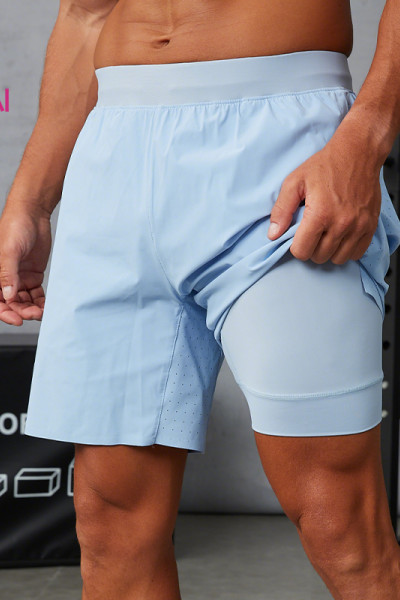
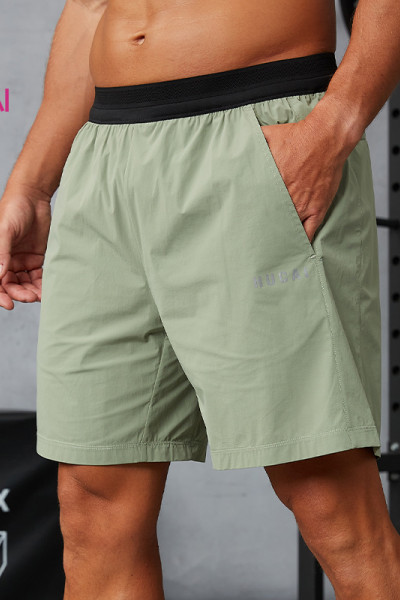
- Training shorts: Mid-length, 7"–9" inseam, versatile for gym and casual
- Compression liner shorts: Built-in compression short with outer shell
Critical Decisions
Inseam length, liner configuration, pocket system, and waistband type define the product. These should be confirmed during tech pack review or initial sampling. Changing inseam or liner type after sample approval typically requires restarting pattern work.
Decision Check: Which Bottoms Fit Your Collection?
| Category | Best For | Fabric Weight | Key Risk |
|---|---|---|---|
| Joggers | Gym-to-street, hybrid positioning | 280–340 gsm | Fit confusion (too tight vs. true taper) |
| Sweatpants | Recovery, loungewear, cold weather | 320–400 gsm | Wrong product role for active buyers |
| Tech Pants | Training, outdoor, functional fitness | Woven tech, 200–280 gsm | Construction complexity underestimated |
| Compression Tights | Running, recovery, muscle support | 180–240 gsm high-stretch | Compression level and opacity mismatch |
| Training Shorts | Gym, running, warm-weather markets | Lightweight shell + liner | Inseam and liner changes post-sample |
Building a Bottoms Collection?
HUCAI activewear supports bottoms development across joggers, sweatpants, tech pants, compression wear, and shorts. We help brands match category decisions to product role, target market, and price positioning before sample work begins.
Manufacturer Insight: Common Development Mistakes
Mistake 1: Requesting "Joggers" But Needing Tech Pants
A brand sends reference images of slim tech pants but asks for "custom joggers." The sample comes back in French terry with a cuff. The brand rejects it. The issue was category misalignment, not manufacturing error. Clarifying product role before sampling prevents this.
Mistake 2: Ignoring Inseam and Liner in Shorts Development
Brands focus on shell fabric and color but delay inseam and liner decisions. These two factors affect pattern, fit, cost, and buyer satisfaction more than almost any other shorts detail. Lock them in the first sample round.
Mistake 3: Compression Level Chosen Without Testing
A brand requests "medium compression" without defining what that means in fabric percentage or pressure measurement. The sample feels wrong. Compression wear requires specific fabric recovery testing and fit calibration. Generic requests produce generic results.
Mistake 4: Waistband Assumptions
Different bottoms categories demand different waistband construction. Joggers use elastic plus drawcord. Tech pants often use a structured waistband with internal adjustment. Compression tights need pressure-managed waistbands. Using the wrong waistband type for the category creates comfort and return issues.
FAQ
What is the MOQ for custom men's joggers or tech pants?
MOQ typically starts from 100 pcs per style, depending on fabric, color range, size breakdown, and construction complexity. Tech pants with articulated knees and multiple zippers may have different thresholds than simple joggers.
How long does bottoms sample development usually take?
Sample timing depends on fabric availability, pattern complexity, trim sourcing, and revision rounds. Tech pants and compression wear usually require more rounds than joggers or sweatpants due to fit sensitivity.
Can you develop bottoms from reference images without a tech pack?
Yes. HUCAI activewear supports ODM development for brands with reference images, target direction, or competitor samples. We define fabric, fit, construction, and branding details through structured development rounds.
What should be confirmed before quoting bottoms?
Category (joggers, tech pants, shorts, etc.), fabric weight and composition, fit direction, inseam or length, waistband type, pocket system, logo method, size range, and estimated order structure.
How do brands choose between joggers and tech pants?
Joggers for gym-to-street versatility and casual positioning. Tech pants for movement-focused training, outdoor use, and performance styling. The choice should reflect target buyer behavior, not just current trend preference.
What causes fit inconsistency in bottoms across sizes?
Usually grading issues at the thigh, knee, or calf. Bottoms grading is more complex than tops because leg shape varies significantly across body types. Pattern review and multi-size sampling catch this.
Why do some compression tights fail opacity testing?
Fabric too thin or elastane content too high without opacity lining. This must be tested during sampling with the intended color and print. Dark colors mask opacity issues that appear in lighter shades.
How do brands manage sample-to-bulk consistency for complex bottoms?
Through pre-production review, confirmed patterns and trims, sewing standardization, and AQL 2.5 quality inspection. MES/ERP tracking adds production visibility for multi-style bulk orders.
Next Steps for Your Bottoms Line
Final Takeaway
Men's bottoms categories are not interchangeable. Joggers, sweatpants, tech pants, compression tights, and training shorts each serve a distinct product role, demand different fabric and construction decisions, and appeal to different buyer segments. Brands that clarify category intent before sample development avoid costly revisions and bulk misalignment.
Why Work With HUCAI activewear
HUCAI activewear is a B2B men's activewear manufacturer supporting OEM, ODM, and private label development across tops, bottoms, and compression wear. We combine sample development, fabric and trim customization, pattern and sample maker support, AQL 2.5 quality inspection, and MES/ERP production coordination to help brands move from concept to bulk with clearer visibility and stronger sample-to-bulk consistency.