Four-Way Stretch Fabric in Sportswear Manufacturing
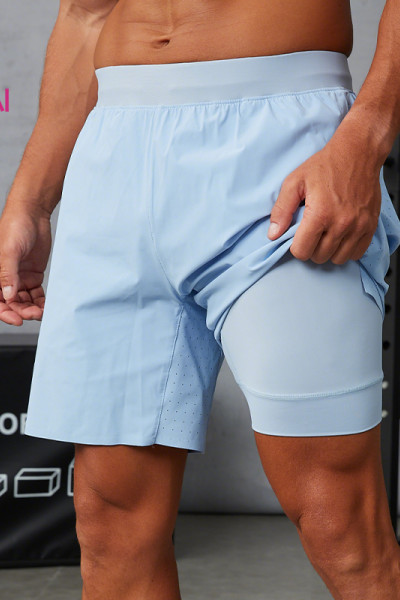
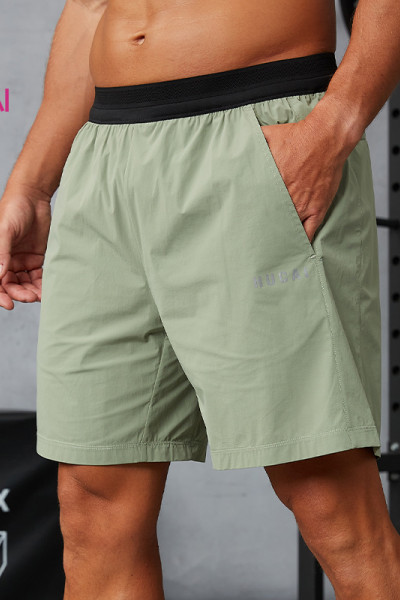
At HUCAI , we often see brands rethink their shorts only after real training feedback. focuses on four-way stretch because movement exposes what design alone can’t hide.
Why Four-Way Stretch Is Becoming the Core of Performance Apparel
Across the global activewear market, fabric functionality is no longer a secondary feature—it’s the product itself. Reports from Grand View Research show that performance-driven apparel is one of the fastest-growing segments, driven by users demanding better mobility and comfort.
Four-way stretch fabric responds directly to this shift. Unlike traditional materials, it expands in multiple directions, allowing garments to follow body movement rather than resist it. In training scenarios such as squats, lunges, or dynamic circuits, this reduces restriction and improves overall comfort. For brands, this means that fabric choice is no longer aesthetic—it directly defines product performance.
What Brands Should Understand About Fabric Behavior in Manufacturing
From a manufacturing perspective, four-way stretch is not just about elasticity—it’s about control. Fabric recovery, tension balance, and durability under repeated movement all influence how the final product performs. Data referenced by Statista indicates that consumers increasingly evaluate activewear based on comfort and long-term wear, not just first impressions.
This creates a higher requirement for sportswear OEM manufacturers. Pattern development must adapt to stretch behavior, stitching must accommodate tension without distortion, and fabric selection must remain consistent across batches. Without this level of control, even well-designed products can lose shape or stability during use.
How Four-Way Stretch Shapes Product Development for Brands
When brands develop training shorts today, the focus has shifted from design to function-led construction. Four-way stretch fabrics allow designers to create closer fits, lighter structures, and more responsive garments without sacrificing comfort. This is particularly important as training intensity increases and users become more sensitive to garment performance.
For brands working with a custom sportswear manufacturer, this means choosing partners who understand not only fabric sourcing, but also how that fabric behaves during real movement. At HUCAI , development is approached with this in mind—balancing fabric performance, pattern engineering, and production consistency to ensure that what works in sampling continues to work in bulk production.
Fabric & Design
Fabric:
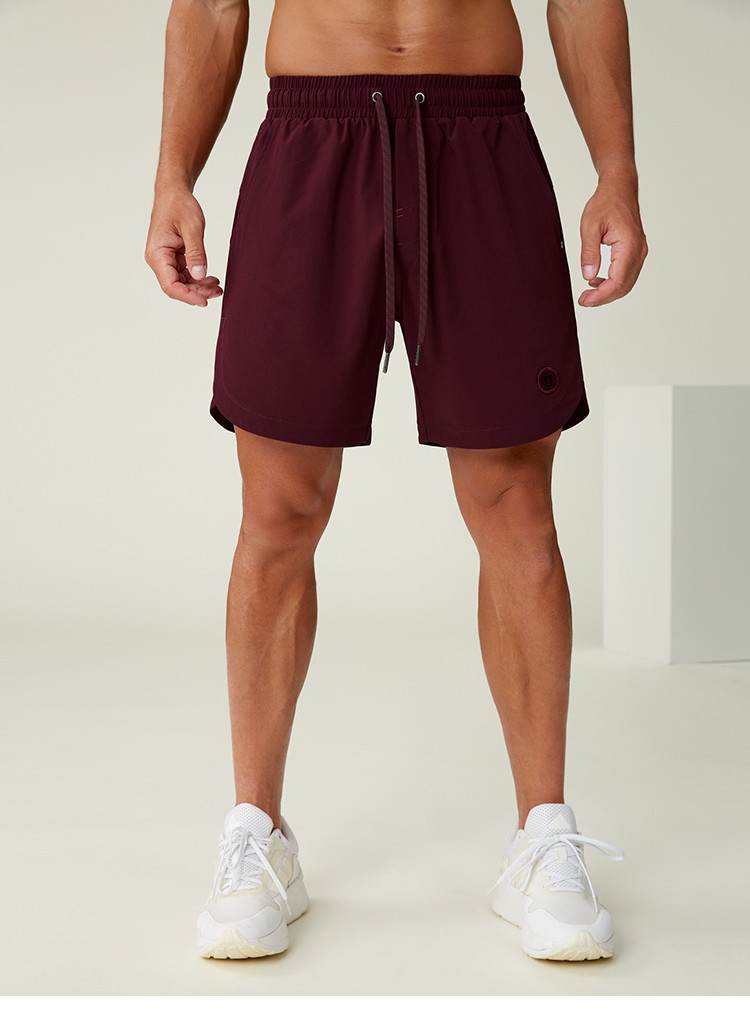
94%polyester 6%spandex
Design:
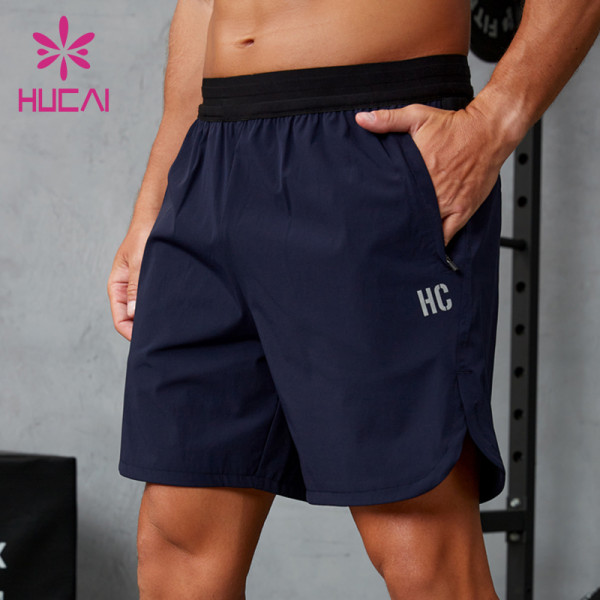
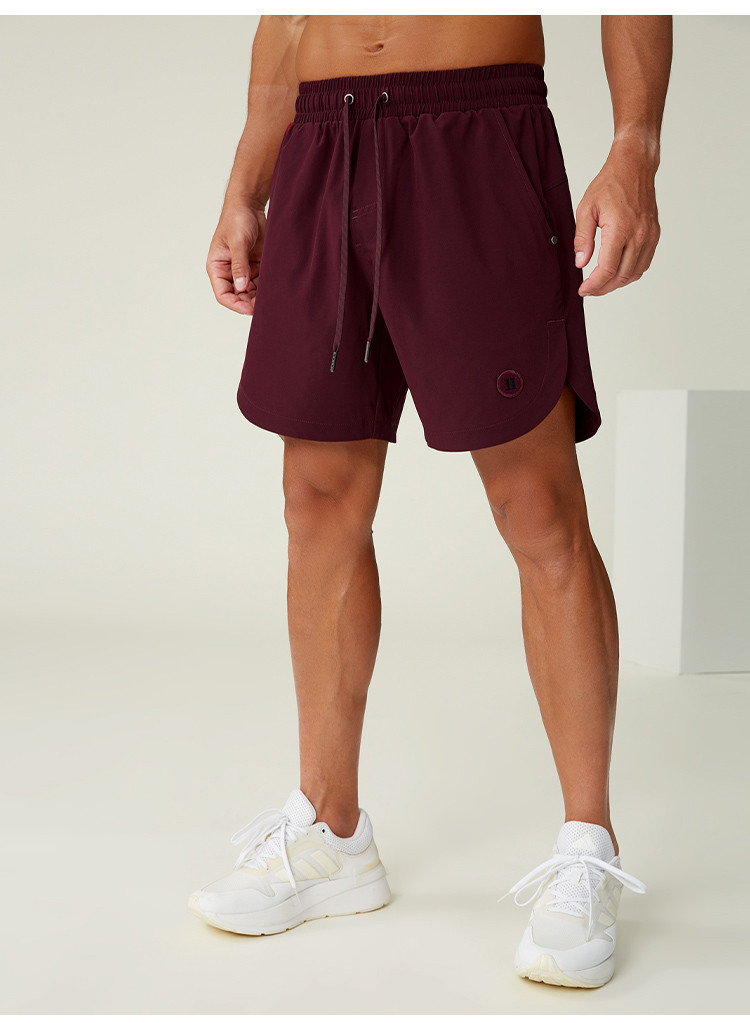
-Custom Drawstring Logo Metal Rivets And Embroidery Patch Label
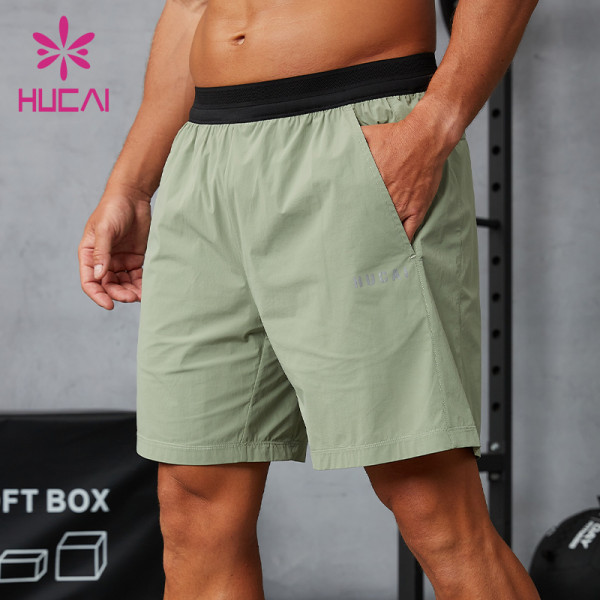
-Side Zipper Storage Pocket
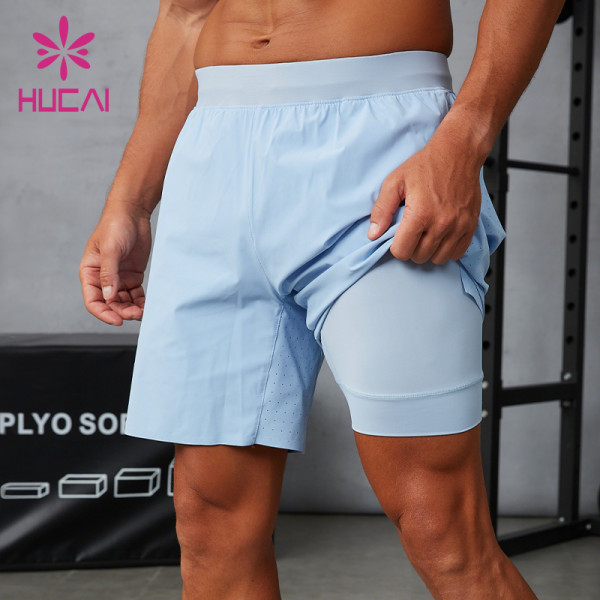
-Four Way Stretch Fabric
Application Scenarios
-Strength training (squats, deadlifts, functional workouts)
-HIIT and circuit training
-Daily gym sessions with mixed intensity
-Outdoor training / running warm-ups

Product Functions
-Four-way stretch for unrestricted movement
-Quick-dry and breathable fabric structure
-Shape retention after repeated use
-Lightweight feel for long-duration training

Target Users
-Regular gym users transitioning from casual workouts to structured training
-Fitness enthusiasts focusing on lower-body strength and mobility
-Users who have experienced discomfort from low-performance gym wear
Comparable Brand Example
A similar approach can be seen in Lululemon's T.H.E. Short (Training Short). This product uses multi-directional stretch fabric combined with lightweight construction to support unrestricted movement during training.
Users favor this product not because of branding alone, but because it performs consistently during high-intensity workouts. Its success comes from three factors: reliable stretch performance, stable fit during movement, and comfort across different training scenarios. These elements reflect a broader shift in the market—where performance validation in real use becomes the reason a product scales.
How to contact us
➡️ Contact HUCAI today for your custom outerwear solution and connect with a team committed to premium quality and authenticity.