Mistakes Affects Greatly In Men's OEM Sportswear Manufacturing

In sportswear manufacturing , production issues rarely begin as major failures. Most of them start as small, almost unnoticeable deviations. However, once these deviations enter a connected production system, they tend to expand—affecting cost, delivery, and product consistency.
The critical question is not what the mistake is, but why it happens and how far its impact can travel.
Fabric Cutting Errors
Fabric cutting errors often appear as minor deviations in size or alignment, but they quickly translate into irreversible material loss and downstream inconsistencies. Once panels are incorrectly cut, they cannot be corrected through sewing, which means the error either leads to re-cutting or full material waste. In high-value fabrics such as nylon-spandex used in activewear , this directly increases cost and delays production.
At the surface level, these errors are typically caused by inaccurate markers, insufficient fabric relaxation, or mismatches between digital cutting data and actual fabric behavior. However, the deeper cause lies in the absence of a unified data system. When pattern updates, fabric properties, and cutting instructions are not synchronized across departments, the cutting process operates on assumptions rather than verified inputs. The mistake is not the cut itself, but the system allowing inconsistent data to reach execution.
Pattern and Grading Errors
Pattern or grading issues are often not detected until bulk production, where they manifest as consistent sizing problems across the entire order. Unlike isolated defects, these errors affect every garment produced, leading to customer complaints, returns, and loss of brand credibility. The cost impact is therefore not limited to production, but extends into the market.
On the surface, such problems arise from patterns developed under static conditions, incorrect grading logic, or failure to adjust patterns after fabric changes. At a deeper level, the issue originates from a disconnect between design intent and material behavior. When pattern development is treated as a fixed step rather than a dynamic process linked to fabric performance, the system fails to account for how garments behave in real use. The error is embedded in the decision logic, not just the pattern itself.
Fabric Mismatch
Fabric mismatch is often underestimated because the product may appear acceptable during sampling, yet fail in actual use. Issues such as insufficient support, excessive transparency, or unstable stretch behavior reduce product performance and negatively affect customer perception. In many cases, this leads to poor sales and low repeat purchase rates, turning a technical mistake into a commercial loss.
At the surface level, this mismatch is caused by selecting fabric based on composition or cost rather than structure and application. Substituting materials during bulk production or optimizing for price without reevaluating performance are also common triggers. The deeper cause is a lack of decision framework linking fabric selection to end-use requirements. Without this framework, material choice becomes subjective, and the product loses alignment with its intended function.

Sewing Quality Issues
Sewing defects such as skipped stitches, seam distortion, or inconsistent tension are often treated as execution errors, but their impact extends beyond rework. These issues slow down production, reduce efficiency, and create variability in finished products. Even when corrected, they consume additional labor time and disrupt production flow.
On the surface, these problems are associated with unclear standard operating procedures, incorrect machine settings, or mismatches between operator skill and task complexity. At a deeper level, they reflect a lack of process stability. When production relies on individual adjustment rather than standardized control, variation becomes inevitable. The issue is not that mistakes occur, but that the system allows variability to persist.
Trims and Accessories Errors
Errors in trims and accessories, such as incorrect elastic tension, misplaced logos, or mismatched components, often result in rework, delayed delivery, or partial product rejection. While these issues may not always render a product unusable, they disrupt timelines and increase handling costs.
Surface causes typically include incomplete specifications, inconsistent supplier batches, or weak incoming inspection. However, the deeper cause lies in the disconnect between information flow and material flow. When bill of materials data is not tightly controlled or synchronized with physical components, discrepancies become unavoidable. The problem is not the trim itself, but the lack of alignment between what is specified and what is delivered.
Color Variation
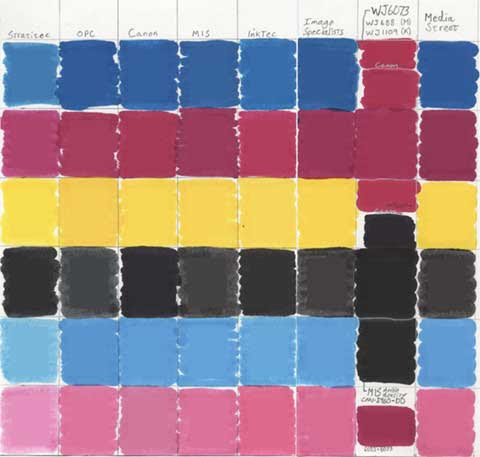
Color variation is especially common in custom dye processes and often becomes visible only after production is complete. Differences between batches can prevent products from being sold together, leading to inventory fragmentation or forced markdowns. Although the product remains functional, its commercial value is reduced.
At the surface level, this issue is linked to dye lot differences, inconsistent lab dip standards, or variations in raw material batches. The deeper cause is insufficient process control. Dyeing is a variable-sensitive process, and without strict standardization and monitoring, small fluctuations become visible outcomes. The problem is not color itself, but the inability to maintain consistency across production cycles.
Packing and Label Errors
Packing and labeling mistakes typically occur at the final stage, yet they can delay shipment, cause compliance issues, and create confusion for end customers. Although these errors are usually correctable, they introduce inefficiencies and may affect delivery commitments.
Surface causes include manual sorting errors, outdated labeling information, or lack of verification steps. At a deeper level, these mistakes result from the absence of system-based validation. When final-stage processes rely heavily on manual checks without digital control, error rates increase as order complexity grows. The issue is not the packaging process, but the lack of structured verification within it.
Small production mistakes do not become costly because they are severe in isolation, but because they occur within a connected system where each step depends on the previous one. The earlier the mistake appears, and the less controlled the system is, the greater its impact becomes.
What appears as execution error is often the result of deeper structural gaps—in decision-making, data consistency, and process integration.
👉 In sportswear manufacturing , controlling cost is ultimately not about reacting to mistakes, but about reducing the conditions under which they occur.
How to contact us
➡️ Contact HUCAI today for your custom outerwear solution and connect with a team committed to premium quality and authenticity.